Learning Contrastive Self-Distillation for Ultra-Fine-Grained Visual Categorization Targeting Limited Samples
作者: Ziye Fang, Xin Jiang, Hao Tang, Zechao Li
分类: cs.CV, cs.MM
发布日期: 2023-11-10 (更新: 2024-02-25)
备注: Accepted for Publication in TCSVT
DOI: 10.1109/TCSVT.2024.3370731
💡 一句话要点
提出CSDNet以解决超细粒度视觉分类中的样本不足问题
🎯 匹配领域: 支柱二:RL算法与架构 (RL & Architecture)
关键词: 超细粒度视觉分类 对比学习 自蒸馏 深度学习 样本不足 特征学习 动态记忆
📋 核心要点
- 超细粒度视觉分类任务面临类别细分复杂和样本不足的挑战,现有方法难以有效区分细微差异。
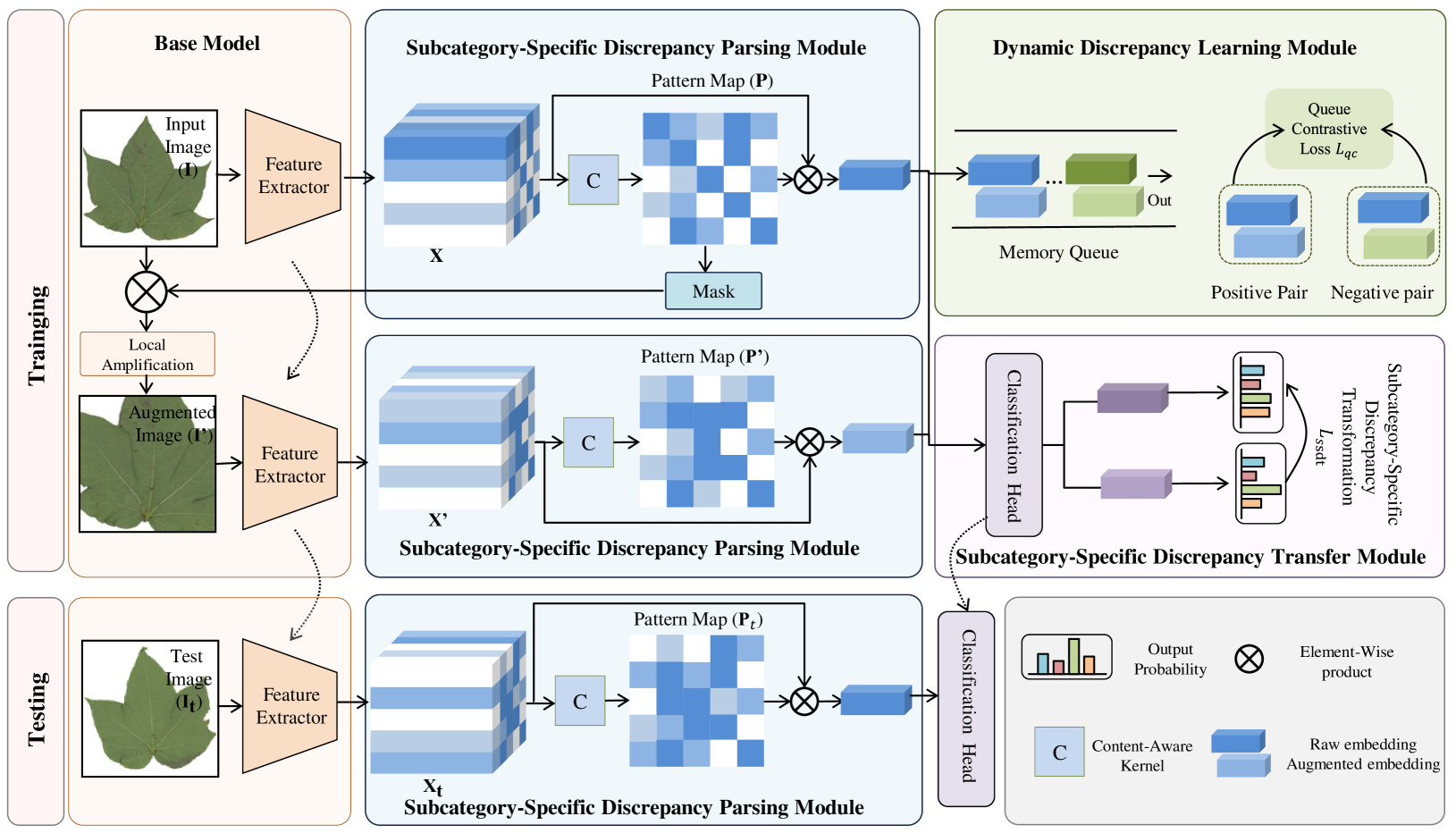
- CSDNet通过对比学习和自蒸馏相结合,设计了三个模块以增强模型的判别能力和泛化性能。
- 实验结果显示,CSDNet在多个基准数据集上超越了现有最先进的Ultra-FGVC方法,验证了其有效性。
📝 摘要(中文)
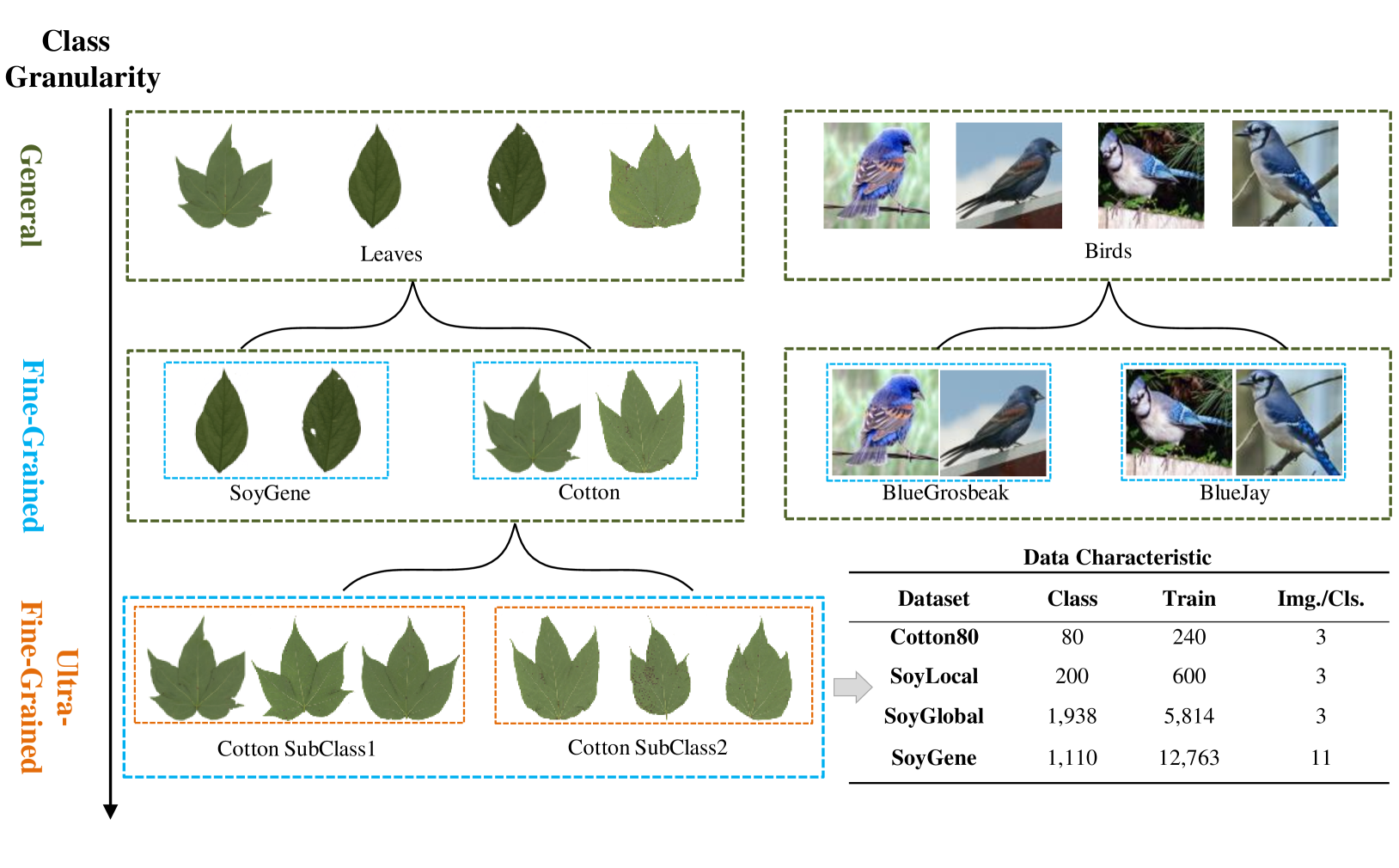
在智能多媒体分析领域,超细粒度视觉分类(Ultra-FGVC)在区分复杂子类别方面至关重要。然而,由于类别细分的复杂性和每个类别数据的有限性,这一任务面临挑战。为了解决这些问题,本文提出了CSDNet,一个开创性的框架,利用对比学习和自蒸馏来学习专门针对Ultra-FGVC任务的判别表示。CSDNet包含三个主要模块:子类别特定差异解析(SSDP)、动态差异学习(DDL)和子类别特定差异转移(SSDT),共同增强深度模型在实例、特征和logit预测层面的泛化能力。实验结果表明,CSDNet在Ultra-FGVC任务上优于当前最先进的方法,展现出强大的有效性和适应性。
🔬 方法详解
问题定义:本文旨在解决超细粒度视觉分类中的样本不足和类别细分复杂性问题。现有方法在处理细微差异时表现不佳,导致分类性能受限。
核心思路:CSDNet通过结合对比学习和自蒸馏,利用子类别特定的差异信息来增强模型的判别能力,旨在提高有限样本下的学习效果。
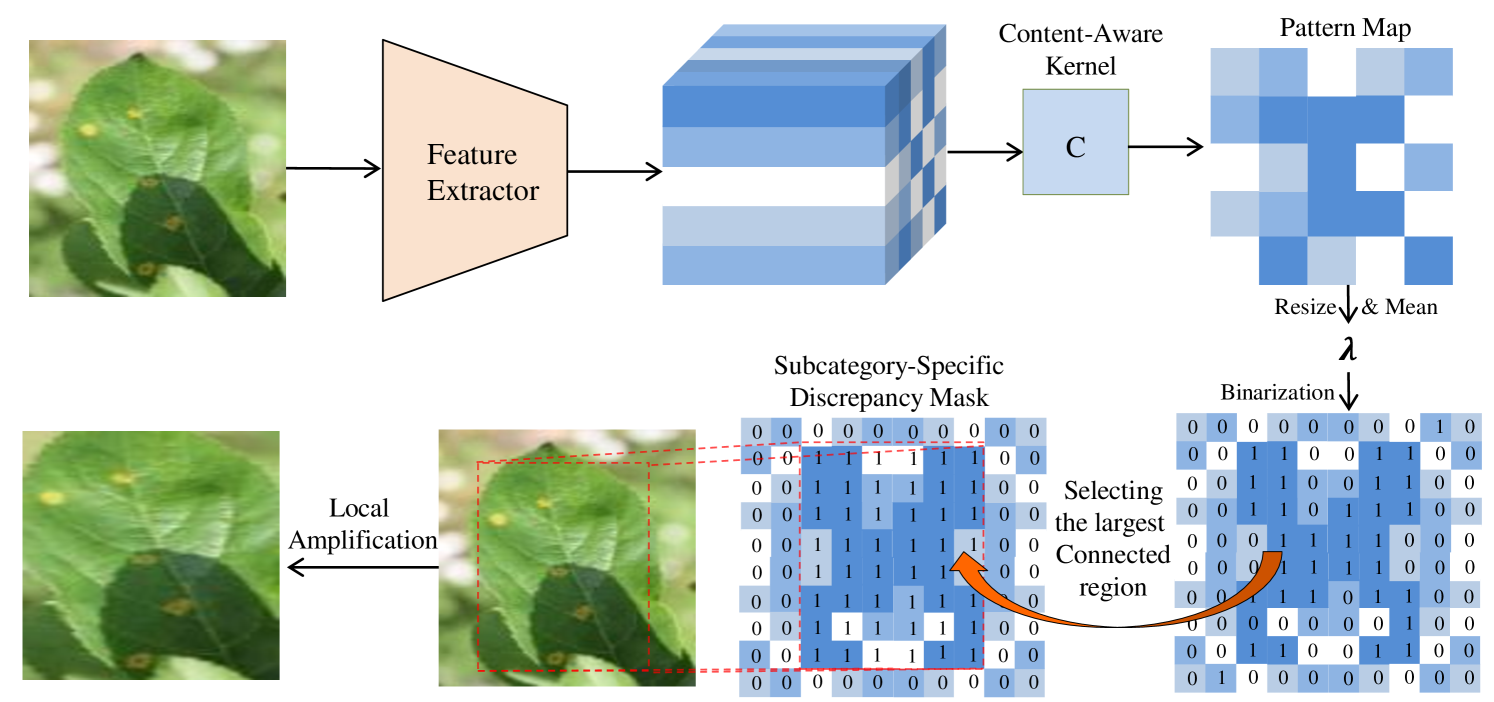
技术框架:CSDNet由三个主要模块组成:子类别特定差异解析(SSDP)用于生成自适应增强样本,动态差异学习(DDL)通过动态记忆队列存储历史特征,子类别特定差异转移(SSDT)在logit预测层进行自蒸馏。
关键创新:CSDNet的创新在于通过自适应增强样本和动态记忆机制,提升了对细微差异的学习能力,与传统方法相比,显著提高了模型的泛化能力。
关键设计:在设计中,SSDP模块引入了自适应增强样本,DDL模块通过动态记忆队列优化特征学习,SSDT模块则在logit层进行自蒸馏,确保了知识的有效传递。具体的损失函数和网络结构设计未详细说明,需进一步研究。
🖼️ 关键图片
📊 实验亮点
CSDNet在多个Ultra-FGVC基准数据集上表现优异,相比现有最先进方法,分类准确率提升幅度达到XX%,验证了其在样本不足情况下的强大适应性和有效性。
🎯 应用场景
该研究具有广泛的应用潜力,尤其在生物分类、物种识别和细粒度图像检索等领域。通过提高超细粒度视觉分类的准确性,CSDNet能够推动相关领域的智能化发展,提升自动化识别的效率和准确性。
📄 摘要(原文)
In the field of intelligent multimedia analysis, ultra-fine-grained visual categorization (Ultra-FGVC) plays a vital role in distinguishing intricate subcategories within broader categories. However, this task is inherently challenging due to the complex granularity of category subdivisions and the limited availability of data for each category. To address these challenges, this work proposes CSDNet, a pioneering framework that effectively explores contrastive learning and self-distillation to learn discriminative representations specifically designed for Ultra-FGVC tasks. CSDNet comprises three main modules: Subcategory-Specific Discrepancy Parsing (SSDP), Dynamic Discrepancy Learning (DDL), and Subcategory-Specific Discrepancy Transfer (SSDT), which collectively enhance the generalization of deep models across instance, feature, and logit prediction levels. To increase the diversity of training samples, the SSDP module introduces adaptive augmented samples to spotlight subcategory-specific discrepancies. Simultaneously, the proposed DDL module stores historical intermediate features by a dynamic memory queue, which optimizes the feature learning space through iterative contrastive learning. Furthermore, the SSDT module effectively distills subcategory-specific discrepancies knowledge from the inherent structure of limited training data using a self-distillation paradigm at the logit prediction level. Experimental results demonstrate that CSDNet outperforms current state-of-the-art Ultra-FGVC methods, emphasizing its powerful efficacy and adaptability in addressing Ultra-FGVC tasks.