Multimodal deep representation learning for quantum cross-platform verification
作者: Yang Qian, Yuxuan Du, Zhenliang He, Min-hsiu Hsieh, Dacheng Tao
分类: quant-ph, cs.CV, cs.LG
发布日期: 2023-11-07
💡 一句话要点
提出多模态深度表示学习以解决量子跨平台验证问题
🎯 匹配领域: 支柱二:RL算法与架构 (RL & Architecture) 支柱九:具身大模型 (Embodied Foundation Models)
关键词: 量子计算 跨平台验证 多模态学习 深度学习 量子设备 相似性表征 噪声模型
📋 核心要点
- 现有的随机测量方法在量子设备数量增加时面临准指数级的计算需求,限制了其在大规模量子系统中的应用。
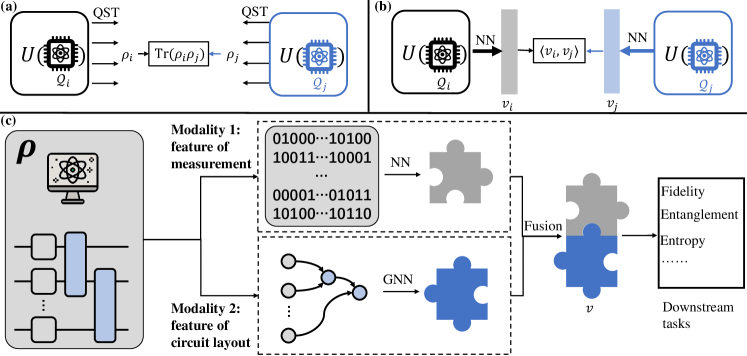
- 本文提出了一种多模态神经网络,能够独立提取测量结果和量子电路描述的信息,并进行有效融合。
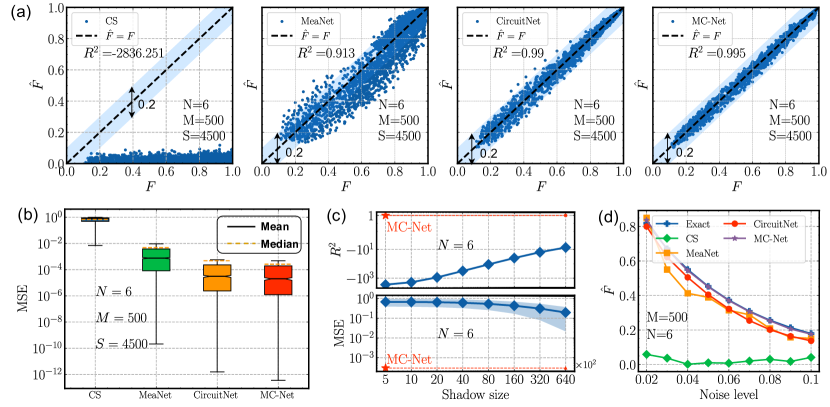
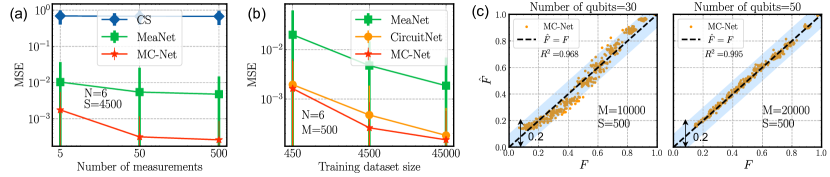
- 在多种噪声模型下进行的实验表明,该方法的预测准确性比随机测量提升了三个数量级,显示出显著的效果。
📝 摘要(中文)
跨平台验证是早期量子计算中的一项关键任务,旨在通过最小化测量来表征两个执行相同算法的量子设备的相似性。尽管随机测量方法在此背景下发挥了重要作用,但随着量子比特数量的增加,其计算需求呈准指数级增长,限制了其在大规模量子设备中的可行性。为此,本文提出了一种创新的多模态学习方法,识别出测量结果和量子电路的经典描述这两种不同的模态。通过构建多模态神经网络,独立提取这两种模态的信息,并通过融合操作生成综合数据表示。实验结果表明,该方法在多种噪声模型下的预测准确性提升了三个数量级,展示了各模态在跨平台验证中的互补作用。
🔬 方法详解
问题定义:本文旨在解决量子跨平台验证中的相似性表征问题,现有的随机测量方法在量子比特数量增加时计算需求过高,难以适应大规模量子设备的验证需求。
核心思路:提出了一种多模态学习方法,利用测量结果和量子电路的经典描述这两种模态的信息,通过多模态神经网络独立提取并融合这些信息,以生成更全面的数据表示。
技术框架:整体架构包括两个主要模块:一是独立的模态处理网络,分别处理测量结果和电路描述;二是融合模块,将提取的信息进行整合,形成最终的表示。
关键创新:最重要的创新在于引入了多模态学习框架,充分利用了不同模态的信息互补性,显著提升了量子设备相似性验证的准确性。
关键设计:在网络结构上,采用了适应性损失函数以优化不同模态的信息融合,设计了适合量子数据特性的网络层,以提高模型的学习能力和泛化性能。
🖼️ 关键图片
📊 实验亮点
实验结果显示,所提出的多模态学习方法在不同噪声模型下的预测准确性提升了三个数量级,相较于传统的随机测量方法,表现出显著的优势。这一成果为量子跨平台验证提供了新的思路和有效工具。
🎯 应用场景
该研究的潜在应用领域包括量子计算设备的性能评估、量子算法的验证以及量子系统的设计优化。通过提高跨平台验证的准确性,能够促进量子计算技术的实际应用,推动量子计算的商业化进程。未来,该方法还可能扩展到其他领域,如量子通信和量子网络的安全性验证。
📄 摘要(原文)
Cross-platform verification, a critical undertaking in the realm of early-stage quantum computing, endeavors to characterize the similarity of two imperfect quantum devices executing identical algorithms, utilizing minimal measurements. While the random measurement approach has been instrumental in this context, the quasi-exponential computational demand with increasing qubit count hurdles its feasibility in large-qubit scenarios. To bridge this knowledge gap, here we introduce an innovative multimodal learning approach, recognizing that the formalism of data in this task embodies two distinct modalities: measurement outcomes and classical description of compiled circuits on explored quantum devices, both enriched with unique information. Building upon this insight, we devise a multimodal neural network to independently extract knowledge from these modalities, followed by a fusion operation to create a comprehensive data representation. The learned representation can effectively characterize the similarity between the explored quantum devices when executing new quantum algorithms not present in the training data. We evaluate our proposal on platforms featuring diverse noise models, encompassing system sizes up to 50 qubits. The achieved results demonstrate a three-orders-of-magnitude improvement in prediction accuracy compared to the random measurements and offer compelling evidence of the complementary roles played by each modality in cross-platform verification. These findings pave the way for harnessing the power of multimodal learning to overcome challenges in wider quantum system learning tasks.