Random Field Augmentations for Self-Supervised Representation Learning
作者: Philip Andrew Mansfield, Arash Afkanpour, Warren Richard Morningstar, Karan Singhal
分类: cs.CV, cs.LG
发布日期: 2023-11-07
💡 一句话要点
提出基于高斯随机场的局部变换以增强自监督表示学习
🎯 匹配领域: 支柱二:RL算法与架构 (RL & Architecture)
关键词: 自监督学习 数据增强 高斯随机场 图像分类 深度学习
📋 核心要点
- 现有自监督表示学习方法对数据增强的依赖性强,但增强技术尚未充分探索,导致性能提升有限。
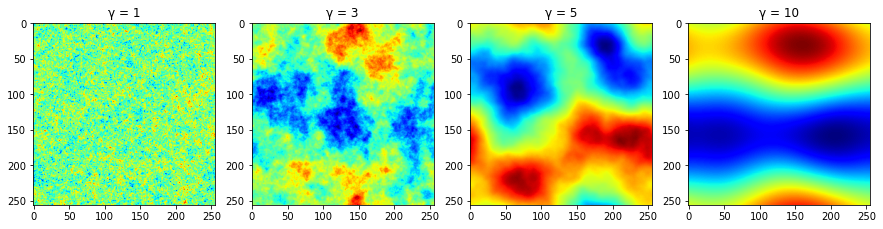
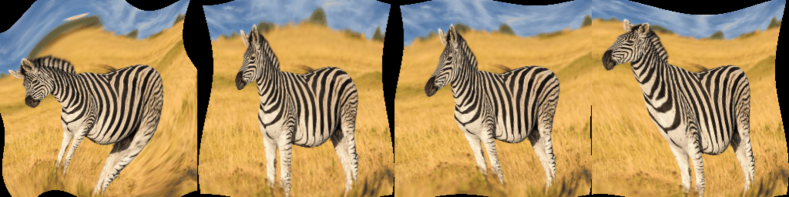
- 本文提出基于高斯随机场的局部变换,允许变换参数在像素级别变化,从而生成更丰富的图像增强。
- 实验结果显示,所提方法在ImageNet和iNaturalist任务上分别提升了1.7%和3.6%的分类准确率,验证了其有效性。
📝 摘要(中文)
自监督表示学习在很大程度上依赖于数据增强来指定表示中编码的不变性。以往的研究表明,应用多样的数据增强对下游任务性能至关重要,但增强技术仍然未被充分探索。本文提出了一种基于高斯随机场的新型局部变换家族,用于生成自监督表示学习的图像增强。这些变换扩展了已有的仿射和颜色变换,允许变换参数在像素间变化,从而大大增加了增强空间。实验证明,这些新变换在自监督表示学习中有效,尤其在ImageNet分类任务上实现了1.7%的准确率提升,在iNaturalist的分布外分类任务上提升了3.6%。然而,由于新变换的灵活性,学习到的表示对超参数敏感,适度的变换能改善表示,而强烈的变换可能会破坏图像结构,因此平衡增强的多样性和强度对提高学习表示的泛化能力至关重要。
🔬 方法详解
问题定义:本文旨在解决自监督表示学习中数据增强技术不足的问题,现有方法对增强的依赖性导致性能提升有限。
核心思路:提出基于高斯随机场的局部变换,允许变换参数在像素级别变化,从而生成多样化的图像增强,增强表示学习的效果。
技术框架:整体架构包括数据预处理、局部变换生成、特征提取和下游任务评估四个主要模块。局部变换生成模块是核心,负责根据高斯随机场生成变换参数。
关键创新:最重要的技术创新在于引入高斯随机场作为变换参数的建模方式,使得变换在空间上具有连续性和灵活性,显著扩展了增强的空间。
关键设计:在参数设置上,变换参数被视为空间坐标的连续函数,损失函数设计上注重平衡增强的多样性与强度,以避免强烈变换对图像结构的破坏。网络结构上,采用了标准的卷积神经网络架构进行特征提取。
🖼️ 关键图片
📊 实验亮点
实验结果表明,所提出的高斯随机场变换在ImageNet分类任务上实现了1.7%的准确率提升,而在iNaturalist的分布外分类任务上提升了3.6%。这些结果显著优于基线方法,验证了新变换的有效性。
🎯 应用场景
该研究的潜在应用领域包括计算机视觉中的图像分类、目标检测和图像生成等任务。通过引入更灵活的增强技术,能够提升模型在多样化数据集上的泛化能力,具有重要的实际价值和未来影响。
📄 摘要(原文)
Self-supervised representation learning is heavily dependent on data augmentations to specify the invariances encoded in representations. Previous work has shown that applying diverse data augmentations is crucial to downstream performance, but augmentation techniques remain under-explored. In this work, we propose a new family of local transformations based on Gaussian random fields to generate image augmentations for self-supervised representation learning. These transformations generalize the well-established affine and color transformations (translation, rotation, color jitter, etc.) and greatly increase the space of augmentations by allowing transformation parameter values to vary from pixel to pixel. The parameters are treated as continuous functions of spatial coordinates, and modeled as independent Gaussian random fields. Empirical results show the effectiveness of the new transformations for self-supervised representation learning. Specifically, we achieve a 1.7% top-1 accuracy improvement over baseline on ImageNet downstream classification, and a 3.6% improvement on out-of-distribution iNaturalist downstream classification. However, due to the flexibility of the new transformations, learned representations are sensitive to hyperparameters. While mild transformations improve representations, we observe that strong transformations can degrade the structure of an image, indicating that balancing the diversity and strength of augmentations is important for improving generalization of learned representations.