YuFeng-XGuard: A Reasoning-Centric, Interpretable, and Flexible Guardrail Model for Large Language Models
作者: Junyu Lin, Meizhen Liu, Xiufeng Huang, Jinfeng Li, Haiwen Hong, Xiaohan Yuan, Yuefeng Chen, Longtao Huang, Hui Xue, Ranjie Duan, Zhikai Chen, Yuchuan Fu, Defeng Li, Lingyao Gao, Yitong Yang
分类: cs.CL
发布日期: 2026-07-05
💡 一句话要点
提出YuFeng-XGuard以解决大型语言模型的安全评估问题
🎯 匹配领域: 支柱九:具身大模型 (Embodied Foundation Models)
关键词: 大型语言模型 安全防护 风险评估 可解释性 动态政策机制 推理中心模型 多维风险感知
📋 核心要点
- 现有的安全防护措施往往依赖于快速分类或事后规则,导致透明度不足和灵活性差。
- YuFeng-XGuard通过生成结构化风险预测和自然语言解释,提供可解释的安全决策。
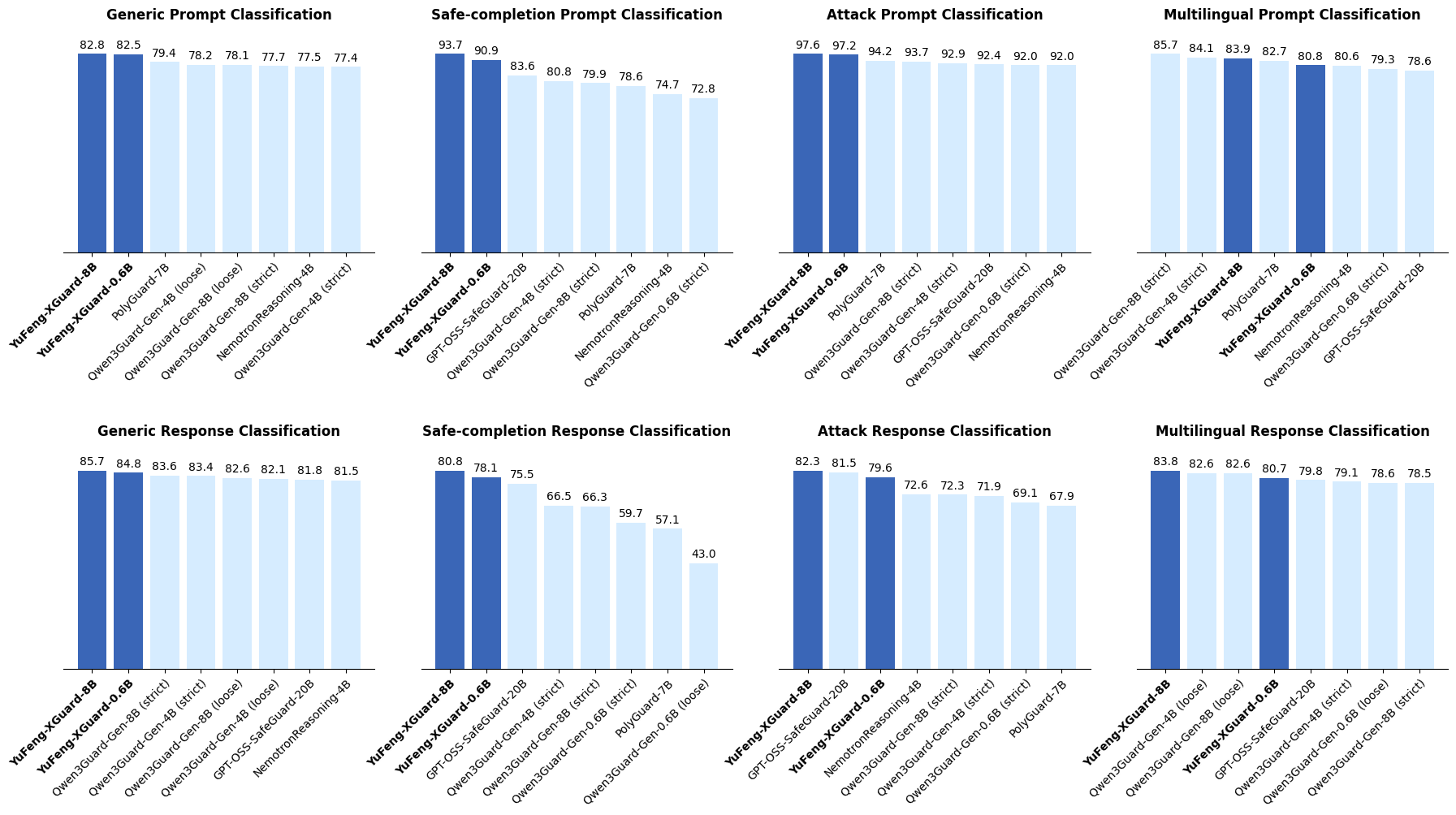
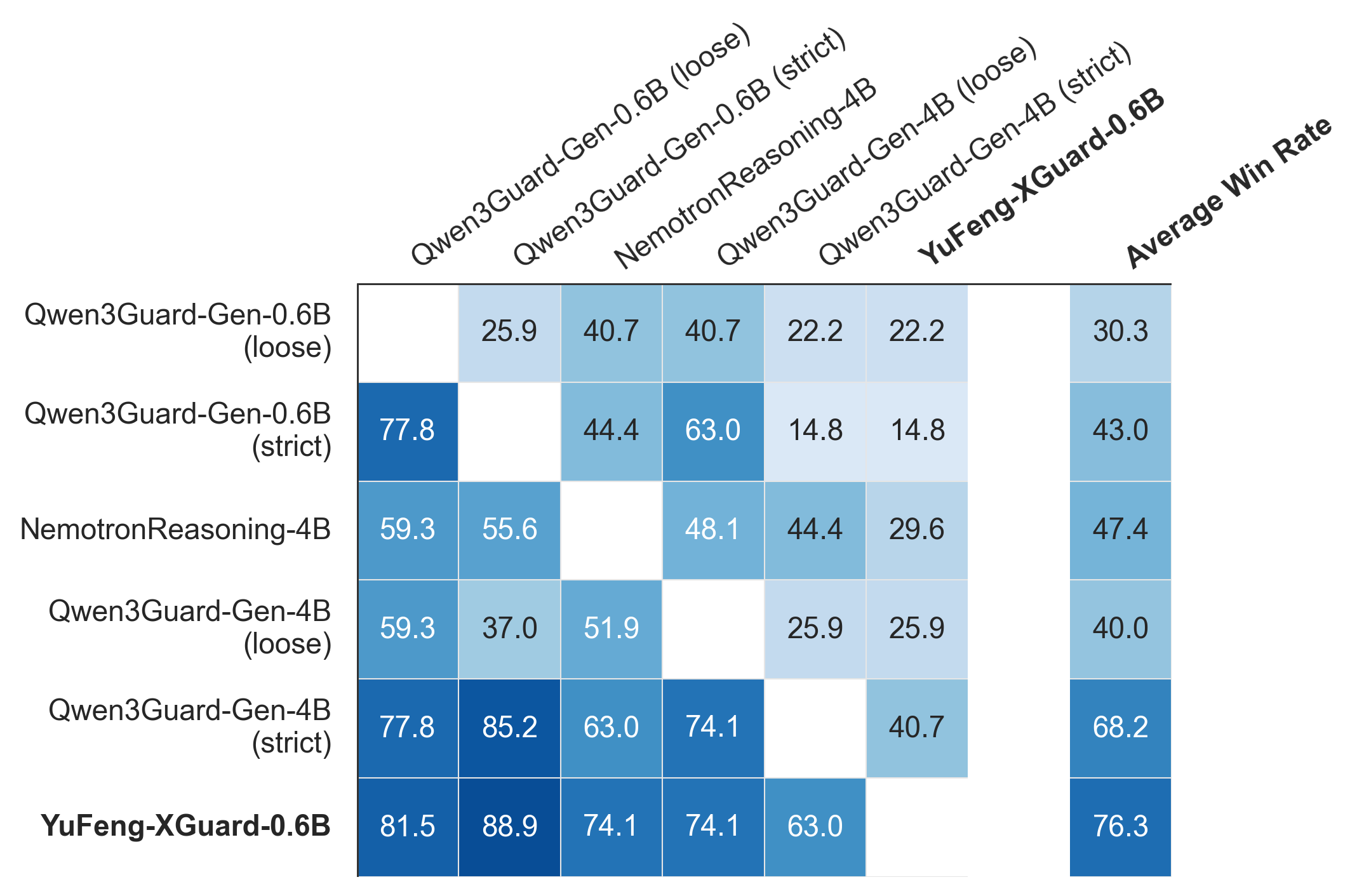
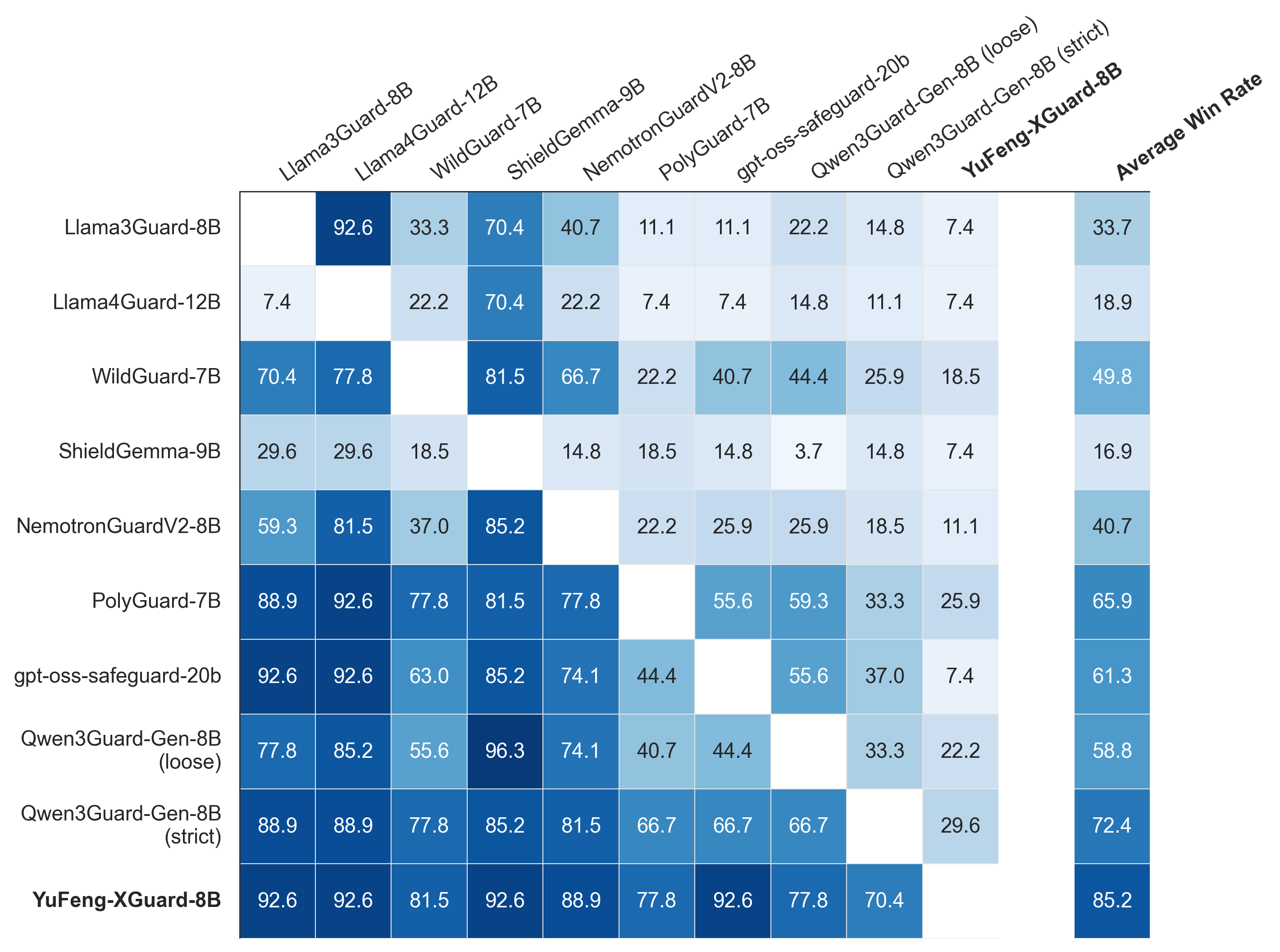
- 在多项公共安全基准测试中,YuFeng-XGuard表现出色,达到了最先进的性能水平。
📝 摘要(中文)
随着大型语言模型(LLMs)在实际应用中的广泛部署,安全防护措施需要超越粗粒度过滤,支持细粒度、可解释和灵活的风险评估。然而,现有解决方案往往依赖快速分类或事后规则,导致透明度有限、政策不灵活或推理成本高。为此,本文提出YuFeng-XGuard,一个以推理为中心的防护模型系列,旨在对LLM交互进行多维风险感知。YuFeng-XGuard生成结构化的风险预测,包括明确的风险类别和可配置的置信分数,并附有自然语言解释,揭示其推理过程。这种设计使得安全决策既可操作又可解释。通过分层推理范式,YuFeng-XGuard在初始风险决策时保持低延迟,同时在需要时提供按需解释。我们还引入动态政策机制,使风险感知与政策执行解耦,允许在不重新训练模型的情况下调整安全政策。大量实验表明,YuFeng-XGuard在多种公共安全基准上实现了最先进的性能,同时保持了效率与效能的良好平衡。
🔬 方法详解
问题定义:本文旨在解决大型语言模型在实际应用中的安全评估问题,现有方法存在透明度不足和灵活性差的痛点。
核心思路:YuFeng-XGuard通过生成结构化的风险预测和自然语言解释,提供可解释的安全决策,避免了传统方法的二元判断。
技术框架:YuFeng-XGuard采用分层推理范式,首先基于首个解码的token进行初步风险决策,并在需要时提供详细的解释。还引入动态政策机制,使风险感知与政策执行解耦。
关键创新:YuFeng-XGuard的核心创新在于其推理中心的设计,能够生成可解释的风险预测,而不是简单的二元判断,这与现有方法形成了本质区别。
关键设计:模型设计中包括可配置的置信分数、明确的风险类别,以及动态调整的安全政策机制,确保在不重新训练模型的情况下灵活应对不同场景。
🖼️ 关键图片
📊 实验亮点
在多项公共安全基准测试中,YuFeng-XGuard实现了最先进的性能,展现出优越的效率与效能平衡。具体实验结果显示,该模型在风险预测的准确性和解释性上均优于现有基线,提升幅度显著,证明了其在实际应用中的有效性。
🎯 应用场景
YuFeng-XGuard可广泛应用于需要安全评估的领域,如金融、医疗和社交媒体等。其可解释性和灵活性使得用户能够更好地理解和信任模型的决策过程,提升了实际应用的安全性和可靠性。未来,该模型有望推动更多领域的安全防护技术发展。
📄 摘要(原文)
As large language models (LLMs) are increasingly deployed in real-world applications, safety guardrails are required to go beyond coarse-grained filtering and support fine-grained, interpretable, and adaptable risk assessment. However, existing solutions often rely on rapid classification schemes or post-hoc rules, resulting in limited transparency, inflexible policies, or prohibitive inference costs. To this end, we present YuFeng-XGuard, a reasoning-centric guardrail model family designed to perform multi-dimensional risk perception for LLM interactions. Instead of producing opaque binary judgments, YuFeng-XGuard generates structured risk predictions, including explicit risk categories and configurable confidence scores, accompanied by natural language explanations that expose the underlying reasoning process. This formulation enables safety decisions that are both actionable and interpretable. To balance decision latency and explanatory depth, we adopt a tiered inference paradigm that performs an initial risk decision based on the first decoded token, while preserving ondemand explanatory reasoning when required. In addition, we introduce a dynamic policy mechanism that decouples risk perception from policy enforcement, allowing safety policies to be adjusted without model retraining. Extensive experiments on a diverse set of public safety benchmarks demonstrate that YuFeng-XGuard achieves stateof-the-art performance while maintaining strong efficiency-efficacy trade-offs. We release YuFeng-XGuard as an open model family, including both a full-capacity variant and a lightweight version, to support a wide range of deployment scenarios.