Empirical Analysis of Dialogue Relation Extraction with Large Language Models
作者: Guozheng Li, Zijie Xu, Ziyu Shang, Jiajun Liu, Ke Ji, Yikai Guo
分类: cs.CL, cs.AI
发布日期: 2024-04-27
备注: IJCAI 2024
💡 一句话要点
利用大语言模型提升对话关系抽取性能
🎯 匹配领域: 支柱九:具身大模型 (Embodied Foundation Models)
关键词: 对话关系抽取 大语言模型 信息提取 多轮对话 自然语言处理 机器学习 模型评估
📋 核心要点
- 现有对话关系抽取方法难以捕捉长且稀疏的多轮信息,并且在部分对话中提取真实关系存在困难。
- 本文通过评估不同大语言模型的能力,提出利用LLMs来解决DRE中的主要问题,特别是信息捕捉和部分对话处理。
- 实验结果显示,LLMs在DRE任务中表现优异,尤其在长对话和少样本设置下,性能提升显著。
📝 摘要(中文)
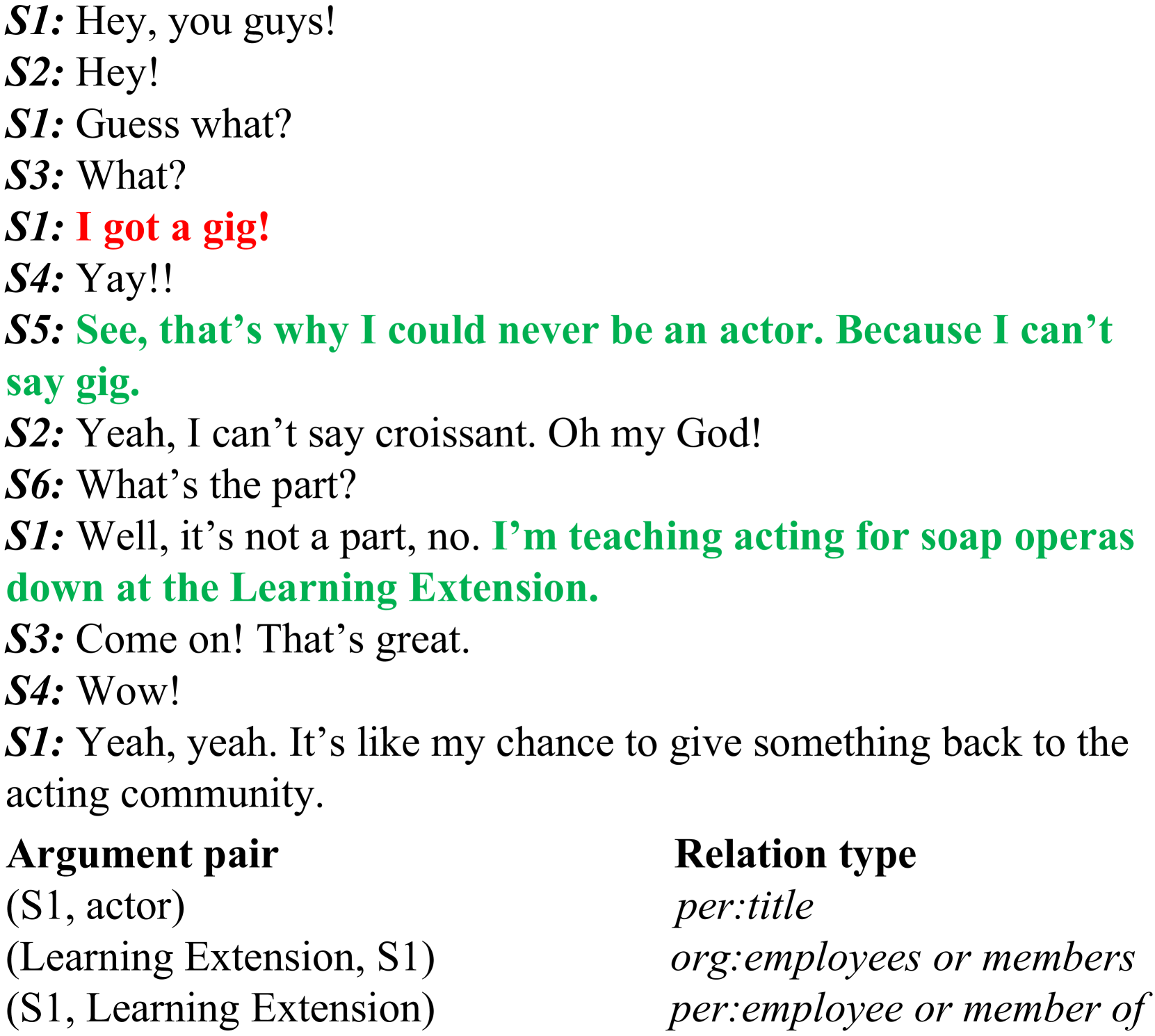
对话关系抽取(DRE)旨在从对话中提取两个论据之间的关系,这一任务比标准关系抽取更具挑战性,主要由于对话中人称代词频率较高和信息密度较低。现有DRE方法面临两个主要问题:一是难以捕捉长且稀疏的多轮信息,二是基于部分对话提取真实关系的困难。本文研究了不同大语言模型(LLMs)在DRE中的表现,发现LLMs显著缓解了这两个问题。研究结果表明,模型规模的扩大显著提升了DRE性能,LLMs在完整对话与部分对话设置下的性能下降幅度较小,并在全样本和少样本设置下表现优异。LLMs在一般关系上表现出显著提升,但在逆关系上表现一般。
🔬 方法详解
问题定义:本文旨在解决对话关系抽取中存在的两个主要问题:一是难以捕捉长且稀疏的多轮信息,二是基于部分对话提取真实关系的困难。
核心思路:通过评估不同的大语言模型,发现其在DRE任务中能够有效缓解上述问题,尤其是在信息捕捉和处理部分对话时的表现显著提升。
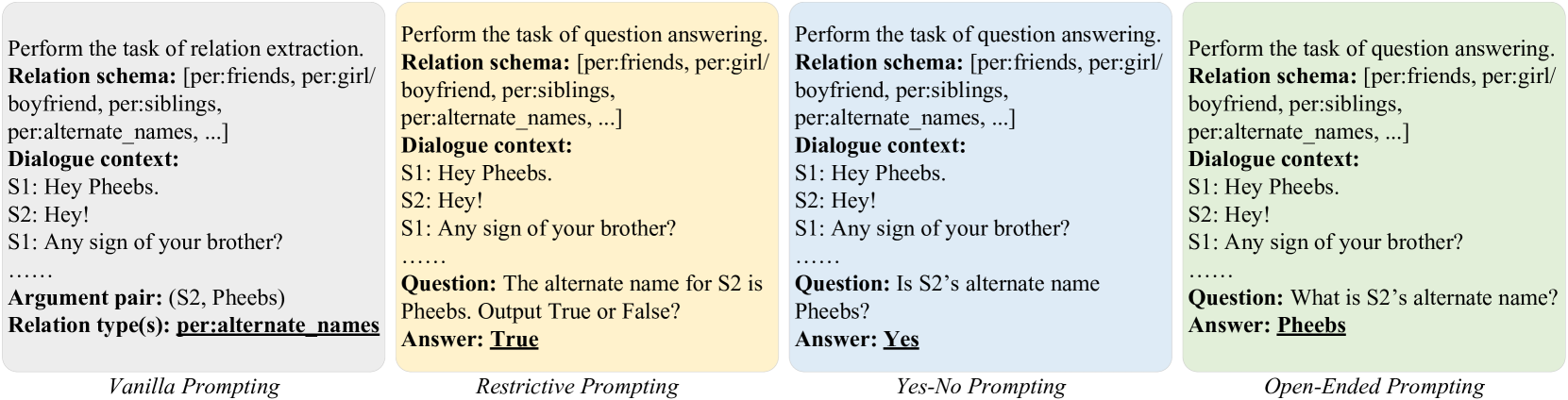
技术框架:研究中采用了多种大语言模型,包括专有模型和开源模型,进行对比实验,评估其在DRE任务中的表现。
关键创新:本文的创新点在于利用大语言模型的规模效应,显著提升了对话关系抽取的整体性能,并在完整对话与部分对话设置下表现出较小的性能下降。
关键设计:在实验中,模型的规模、训练数据的多样性以及损失函数的设计都是关键因素,尤其是在处理长对话和少样本情况下的表现。通过这些设计,LLMs在一般关系的抽取上取得了显著的提升。
🖼️ 关键图片

📊 实验亮点
实验结果表明,扩大模型规模显著提升了DRE性能,LLMs在完整对话与部分对话设置下的性能下降幅度较小,且在全样本和少样本设置下均表现优异,超越了当前的最先进方法。具体而言,LLMs在一般关系的抽取上表现出显著提升,尤其在处理长对话时效果更佳。
🎯 应用场景
该研究的潜在应用领域包括智能客服、对话系统和社交媒体分析等。通过提升对话关系抽取的性能,可以更好地理解用户意图和情感,从而改善人机交互体验。未来,该技术有望在多模态对话理解和自动化信息提取等领域发挥更大作用。
📄 摘要(原文)
Dialogue relation extraction (DRE) aims to extract relations between two arguments within a dialogue, which is more challenging than standard RE due to the higher person pronoun frequency and lower information density in dialogues. However, existing DRE methods still suffer from two serious issues: (1) hard to capture long and sparse multi-turn information, and (2) struggle to extract golden relations based on partial dialogues, which motivates us to discover more effective methods that can alleviate the above issues. We notice that the rise of large language models (LLMs) has sparked considerable interest in evaluating their performance across diverse tasks. To this end, we initially investigate the capabilities of different LLMs in DRE, considering both proprietary models and open-source models. Interestingly, we discover that LLMs significantly alleviate two issues in existing DRE methods. Generally, we have following findings: (1) scaling up model size substantially boosts the overall DRE performance and achieves exceptional results, tackling the difficulty of capturing long and sparse multi-turn information; (2) LLMs encounter with much smaller performance drop from entire dialogue setting to partial dialogue setting compared to existing methods; (3) LLMs deliver competitive or superior performances under both full-shot and few-shot settings compared to current state-of-the-art; (4) LLMs show modest performances on inverse relations but much stronger improvements on general relations, and they can handle dialogues of various lengths especially for longer sequences.