2M-NER: Contrastive Learning for Multilingual and Multimodal NER with Language and Modal Fusion
作者: Dongsheng Wang, Xiaoqin Feng, Zeming Liu, Chuan Wang
分类: cs.CL, cs.AI
发布日期: 2024-04-26
备注: 20 pages
💡 一句话要点
提出2M-NER以解决多语言多模态命名实体识别问题
🎯 匹配领域: 支柱二:RL算法与架构 (RL & Architecture) 支柱九:具身大模型 (Embodied Foundation Models)
关键词: 命名实体识别 多语言处理 多模态学习 对比学习 深度学习
📋 核心要点
- 现有的NER方法在处理多语言和多模态数据时存在数据集缺乏和模型性能不足的问题。
- 论文提出的2M-NER模型通过对比学习对文本和图像进行表示对齐,增强了多模态信息的融合。
- 实验结果表明,2M-NER在多语言多模态NER任务中取得了最高的F1分数,相较于基线模型有显著提升。
📝 摘要(中文)
命名实体识别(NER)是自然语言处理中的基础任务,涉及识别和分类句子中的实体。近年来,研究表明,结合多语言和多模态数据集可以提升NER的效果。本文构建了一个包含英语、法语、德语和西班牙语的多语言多模态命名实体识别(MMNER)数据集,并提出了2M-NER模型,通过对比学习对文本和图像表示进行对齐,集成多模态协作模块,展示了在多语言多模态NER任务中取得的最高F1分数,验证了该模型的有效性。
🔬 方法详解
问题定义:本文旨在解决多语言多模态命名实体识别(MMNER)任务,现有方法在处理多语言和多模态数据时缺乏有效的数据集和模型,导致性能不足。
核心思路:提出的2M-NER模型通过对比学习对文本和图像的表示进行对齐,利用多模态协作模块有效捕捉两种模态之间的交互信息,从而提升NER的准确性。
技术框架:整体架构包括数据预处理、对比学习模块和多模态协作模块。数据预处理阶段负责构建MMNER数据集,对比学习模块用于对齐文本和图像表示,而多模态协作模块则整合两种模态的信息。
关键创新:2M-NER模型的核心创新在于引入对比学习机制来对齐不同模态的表示,并通过多模态协作模块增强模态间的交互,这在现有NER模型中尚属首次。
关键设计:模型设计中,损失函数采用对比损失,确保文本和图像的表示在特征空间中的相对位置符合语义关系。同时,网络结构采用了深度学习框架,确保模型的表达能力和训练效率。
🖼️ 关键图片
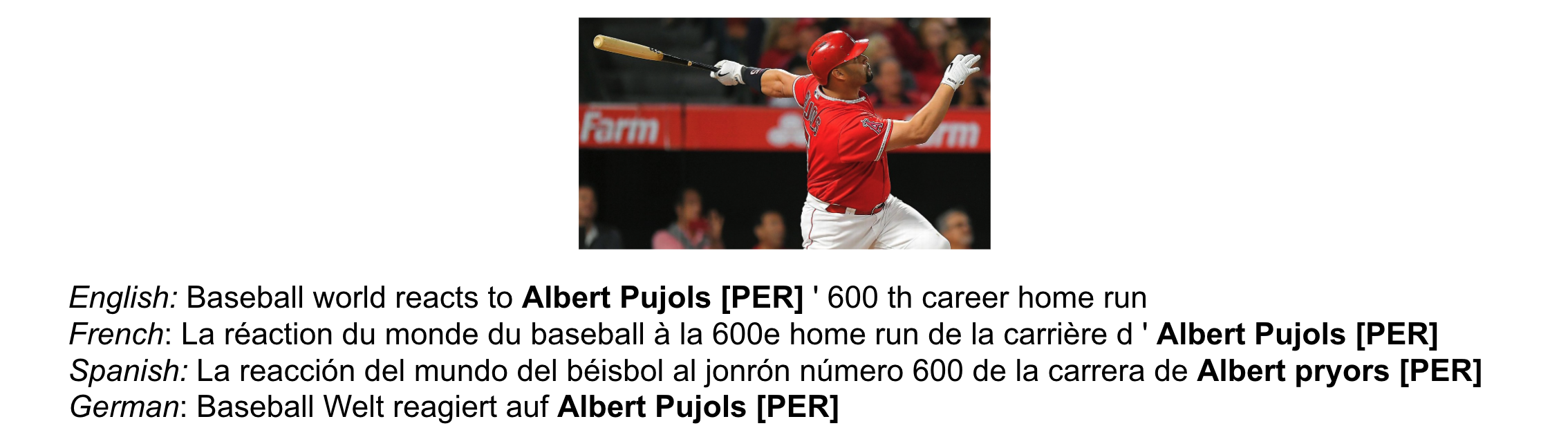


📊 实验亮点
实验结果显示,2M-NER模型在多语言多模态NER任务中取得了最高的F1分数,相较于对比基线模型,性能提升显著,验证了模型的有效性和创新性。
🎯 应用场景
该研究的潜在应用领域包括跨语言的信息检索、智能问答系统以及在线产品推荐等。通过提升多语言和多模态的NER能力,能够更好地支持多文化背景下的信息处理,具有重要的实际价值和未来影响。
📄 摘要(原文)
Named entity recognition (NER) is a fundamental task in natural language processing that involves identifying and classifying entities in sentences into pre-defined types. It plays a crucial role in various research fields, including entity linking, question answering, and online product recommendation. Recent studies have shown that incorporating multilingual and multimodal datasets can enhance the effectiveness of NER. This is due to language transfer learning and the presence of shared implicit features across different modalities. However, the lack of a dataset that combines multilingualism and multimodality has hindered research exploring the combination of these two aspects, as multimodality can help NER in multiple languages simultaneously. In this paper, we aim to address a more challenging task: multilingual and multimodal named entity recognition (MMNER), considering its potential value and influence. Specifically, we construct a large-scale MMNER dataset with four languages (English, French, German and Spanish) and two modalities (text and image). To tackle this challenging MMNER task on the dataset, we introduce a new model called 2M-NER, which aligns the text and image representations using contrastive learning and integrates a multimodal collaboration module to effectively depict the interactions between the two modalities. Extensive experimental results demonstrate that our model achieves the highest F1 score in multilingual and multimodal NER tasks compared to some comparative and representative baselines. Additionally, in a challenging analysis, we discovered that sentence-level alignment interferes a lot with NER models, indicating the higher level of difficulty in our dataset.