EPI-SQL: Enhancing Text-to-SQL Translation with Error-Prevention Instructions
作者: Xiping Liu, Zhao Tan
分类: cs.CL, cs.AI, cs.DB
发布日期: 2024-04-21
💡 一句话要点
提出EPI-SQL以解决文本到SQL转换中的错误问题
🎯 匹配领域: 支柱九:具身大模型 (Embodied Foundation Models)
关键词: 文本到SQL 大型语言模型 错误预防指令 自然语言处理 数据库查询生成
📋 核心要点
- 文本到SQL转换任务面临着现有方法在处理特定实例时容易出错的挑战。
- EPI-SQL通过生成错误预防指令,结合上下文信息来指导LLMs生成SQL查询。
- 在Spider基准测试中,EPI-SQL达到了85.1%的执行准确率,显示出显著的性能提升。
📝 摘要(中文)
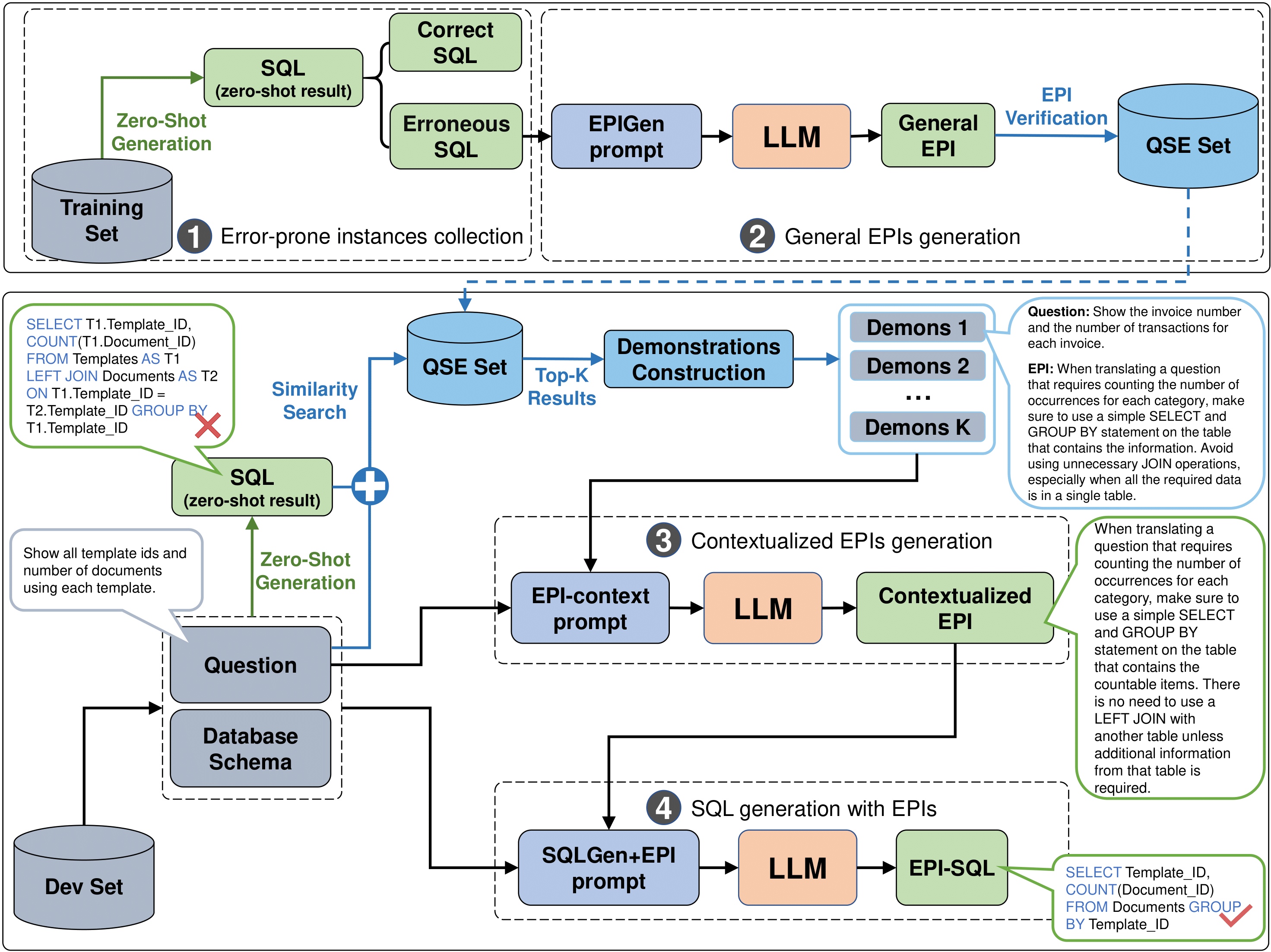
自然语言查询转化为SQL查询(文本到SQL)是一项重要且具有挑战性的任务。本文提出了EPI-SQL,这是一种新颖的方法框架,利用大型语言模型(LLMs)来提升文本到SQL任务的性能。EPI-SQL通过四个步骤进行操作:首先,从Spider数据集中收集LLMs容易失败的实例;然后,生成通用的错误预防指令(EPIs);接着,LLMs根据当前任务的具体上下文生成定制的EPIs;最后,将这些上下文特定的EPIs融入SQL生成的提示中。EPI-SQL的独特之处在于提供任务特定的指导,使模型能够规避潜在错误。通过在Spider基准上的实证评估,EPI-SQL实现了85.1%的执行准确率,显示出其在生成准确SQL查询方面的有效性。
🔬 方法详解
问题定义:本文旨在解决文本到SQL转换中,现有大型语言模型(LLMs)在特定实例上容易出错的问题。这种错误会导致生成的SQL查询不准确,从而影响实际应用效果。
核心思路:EPI-SQL的核心思路是通过生成错误预防指令(EPIs),为LLMs提供任务特定的指导,帮助其在生成SQL时规避潜在错误。通过这种方式,模型能够更好地理解上下文,从而提高生成的准确性。
技术框架:EPI-SQL的整体架构包括四个主要步骤:首先,收集Spider数据集中LLMs容易失败的实例;其次,基于这些实例生成通用的错误预防指令;接着,LLMs根据当前任务生成上下文特定的EPIs;最后,将这些EPIs整合到SQL生成的提示中。
关键创新:EPI-SQL的最大创新在于其提供了任务特定的指导,这与现有的零-shot方法形成了鲜明对比。通过引入上下文特定的EPIs,EPI-SQL能够显著提升LLMs在文本到SQL任务中的表现。
关键设计:在设计过程中,EPI-SQL关注于如何有效生成和整合EPIs,确保其能够针对特定任务提供有效指导。具体的参数设置和模型结构细节在论文中进行了详细讨论,确保了方法的有效性和实用性。
🖼️ 关键图片


📊 实验亮点
在实验中,EPI-SQL在Spider基准测试中实现了85.1%的执行准确率,显示出其在生成准确SQL查询方面的有效性。该方法的表现与先进的few-shot方法相媲美,尽管其采用的是零-shot策略,展现了显著的性能提升。
🎯 应用场景
EPI-SQL的研究成果在多个领域具有潜在应用价值,尤其是在数据库查询生成、智能问答系统和自然语言处理等领域。通过提升文本到SQL转换的准确性,该方法能够帮助开发更智能的数据库交互工具,进而推动数据驱动决策的效率和准确性。未来,EPI-SQL的思路还可以扩展到其他NLP任务中,进一步提升模型的性能。
📄 摘要(原文)
The conversion of natural language queries into SQL queries, known as Text-to-SQL, is a critical yet challenging task. This paper introduces EPI-SQL, a novel methodological framework leveraging Large Language Models (LLMs) to enhance the performance of Text-to-SQL tasks. EPI-SQL operates through a four-step process. Initially, the method involves gathering instances from the Spider dataset on which LLMs are prone to failure. These instances are then utilized to generate general error-prevention instructions (EPIs). Subsequently, LLMs craft contextualized EPIs tailored to the specific context of the current task. Finally, these context-specific EPIs are incorporated into the prompt used for SQL generation. EPI-SQL is distinguished in that it provides task-specific guidance, enabling the model to circumvent potential errors for the task at hand. Notably, the methodology rivals the performance of advanced few-shot methods despite being a zero-shot approach. An empirical assessment using the Spider benchmark reveals that EPI-SQL achieves an execution accuracy of 85.1\%, underscoring its effectiveness in generating accurate SQL queries through LLMs. The findings indicate a promising direction for future research, i.e. enhancing instructions with task-specific and contextualized rules, for boosting LLMs' performance in NLP tasks.