Can LLMs Master Math? Investigating Large Language Models on Math Stack Exchange
作者: Ankit Satpute, Noah Giessing, Andre Greiner-Petter, Moritz Schubotz, Olaf Teschke, Akiko Aizawa, Bela Gipp
分类: cs.CL, cs.AI, cs.IR
发布日期: 2024-03-30
备注: Accepted for publication at the 47th International ACM SIGIR Conference on Research and Development in Information Retrieval (SIGIR) July 14--18, 2024, Washington D.C.,USA
🔗 代码/项目: GITHUB
💡 一句话要点
探讨大型语言模型在数学问题解答中的局限性
🎯 匹配领域: 支柱九:具身大模型 (Embodied Foundation Models)
关键词: 大型语言模型 数学问题解答 案例分析 GPT-4 人工智能 自然语言处理 教育技术
📋 核心要点
- 现有大型语言模型在数学问题解答中存在准确性不足和一致性差的问题,尤其在复杂问题上表现不佳。
- 本研究采用两步法,首先生成数学问题答案,然后对表现最佳的模型进行深入案例分析,以评估其回答质量。
- 实验结果表明,GPT-4在数学问题解答基准测试中表现最佳,但仍存在一定的回答不准确性,揭示了LLMs的局限性。
📝 摘要(中文)
大型语言模型(LLMs)在多种自然语言任务中表现出色,甚至超越人类。然而,数学领域由于其特殊结构和对精确性的要求,仍然面临独特挑战。本研究采用两步法评估LLMs在解答数学问题上的能力。首先,利用在数学问题基准测试中表现最佳的LLMs生成来自数学栈交换(MSE)的78个问题的答案。其次,对表现最好的LLM进行案例分析,重点评估其答案的质量和准确性。结果显示,GPT-4在现有LLMs中表现最佳,但并未能始终准确回答所有问题。本文探讨了LLMs在复杂数学问题解决中的局限性,并为未来的研究奠定基础。
🔬 方法详解
问题定义:本研究旨在解决大型语言模型在数学问题解答中的准确性和一致性不足的问题,尤其是在复杂数学问题上表现不佳的现状。
核心思路:通过两步法评估LLMs的数学解答能力,首先生成答案,然后对表现最佳的模型进行深入分析,以识别其优缺点。
技术框架:整体流程包括两个主要阶段:第一阶段是使用表现最佳的LLMs生成78个数学问题的答案;第二阶段是对生成答案的质量和准确性进行手动评估。
关键创新:本研究的创新点在于通过系统的案例分析揭示LLMs在数学解答中的具体局限性,提供了对现有方法的深入理解。
关键设计:在实验中,选择了在数学问题基准测试中表现最佳的GPT-4,并使用nDCG和P@10等指标评估其性能,确保评估的科学性和准确性。
🖼️ 关键图片
📊 实验亮点
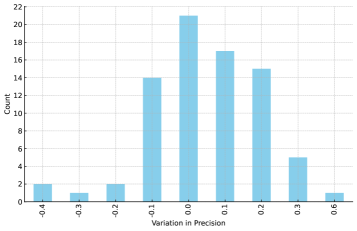
实验结果显示,GPT-4在数学问题解答基准测试中取得了nDCG为0.48和P@10为0.37的最佳成绩,超越了现有的最佳方法。这表明尽管LLMs在某些情况下能够生成相关答案,但仍未能在所有问题上保持一致的准确性。
🎯 应用场景
该研究的潜在应用领域包括教育技术、智能辅导系统和自动化数学解答工具。通过深入理解LLMs在数学问题解答中的局限性,可以为未来的研究提供指导,推动AI在数学推理方面的进步,提升教育和学习的效率。
📄 摘要(原文)
Large Language Models (LLMs) have demonstrated exceptional capabilities in various natural language tasks, often achieving performances that surpass those of humans. Despite these advancements, the domain of mathematics presents a distinctive challenge, primarily due to its specialized structure and the precision it demands. In this study, we adopted a two-step approach for investigating the proficiency of LLMs in answering mathematical questions. First, we employ the most effective LLMs, as identified by their performance on math question-answer benchmarks, to generate answers to 78 questions from the Math Stack Exchange (MSE). Second, a case analysis is conducted on the LLM that showed the highest performance, focusing on the quality and accuracy of its answers through manual evaluation. We found that GPT-4 performs best (nDCG of 0.48 and P@10 of 0.37) amongst existing LLMs fine-tuned for answering mathematics questions and outperforms the current best approach on ArqMATH3 Task1, considering P@10. Our Case analysis indicates that while the GPT-4 can generate relevant responses in certain instances, it does not consistently answer all questions accurately. This paper explores the current limitations of LLMs in navigating complex mathematical problem-solving. Through case analysis, we shed light on the gaps in LLM capabilities within mathematics, thereby setting the stage for future research and advancements in AI-driven mathematical reasoning. We make our code and findings publicly available for research: \url{https://github.com/gipplab/LLM-Investig-MathStackExchange}