Agent-FLAN: Designing Data and Methods of Effective Agent Tuning for Large Language Models
作者: Zehui Chen, Kuikun Liu, Qiuchen Wang, Wenwei Zhang, Jiangning Liu, Dahua Lin, Kai Chen, Feng Zhao
分类: cs.CL
发布日期: 2024-03-19
备注: Technical Report
🔗 代码/项目: GITHUB
💡 一句话要点
提出Agent-FLAN以解决大语言模型的代理能力不足问题
🎯 匹配领域: 支柱九:具身大模型 (Embodied Foundation Models)
关键词: 大语言模型 代理能力 微调 训练语料 幻觉问题 自然语言处理 模型优化
📋 核心要点
- 现有方法在将代理能力集成到大语言模型中时,面临训练语料与预训练数据分布不一致的问题。
- 论文提出Agent-FLAN,通过重新设计训练语料,优化大语言模型的代理能力。
- 实验结果表明,Agent-FLAN使Llama2-7B在多个评估数据集上提升了3.5%的性能,并有效缓解了幻觉问题。
📝 摘要(中文)
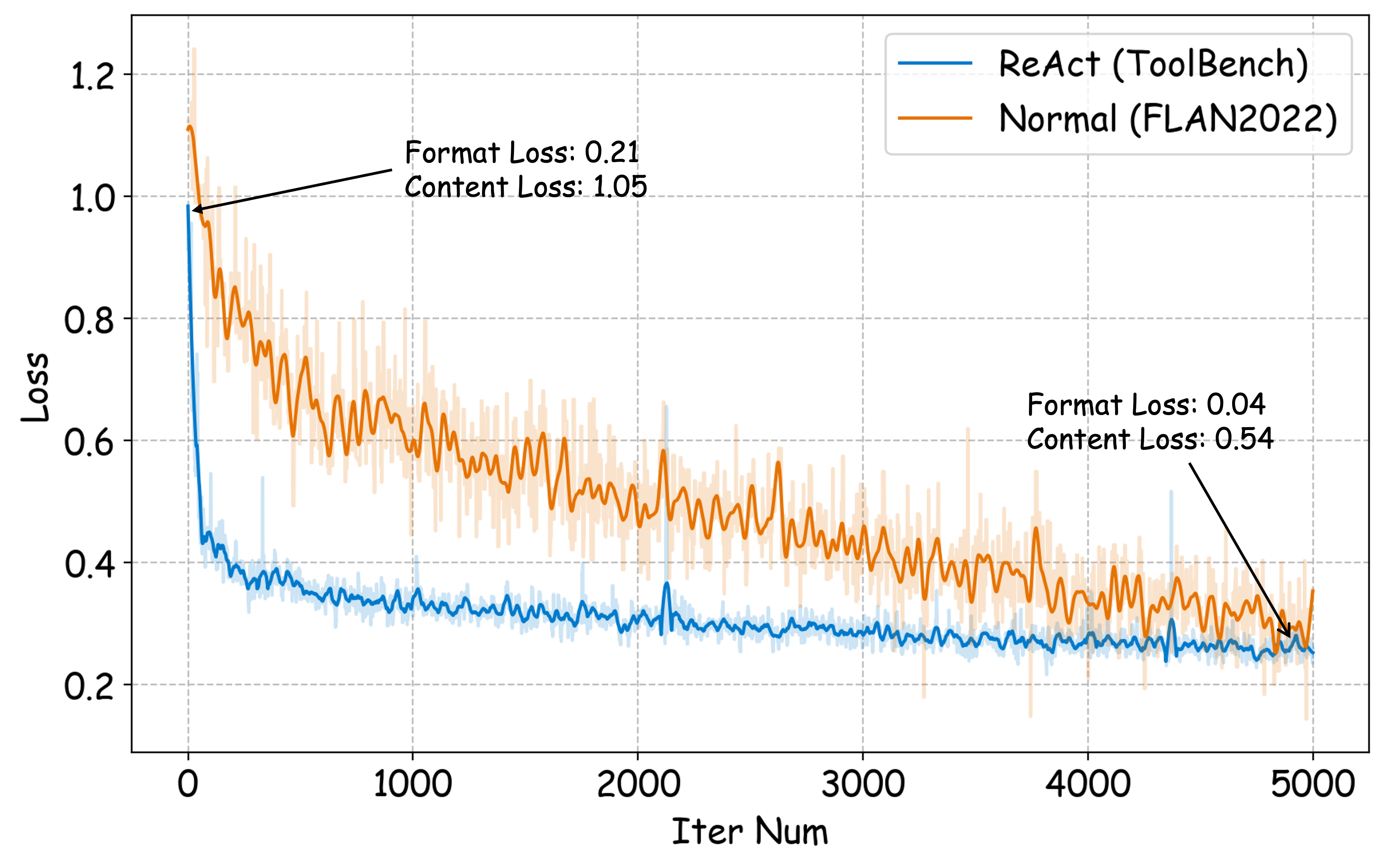
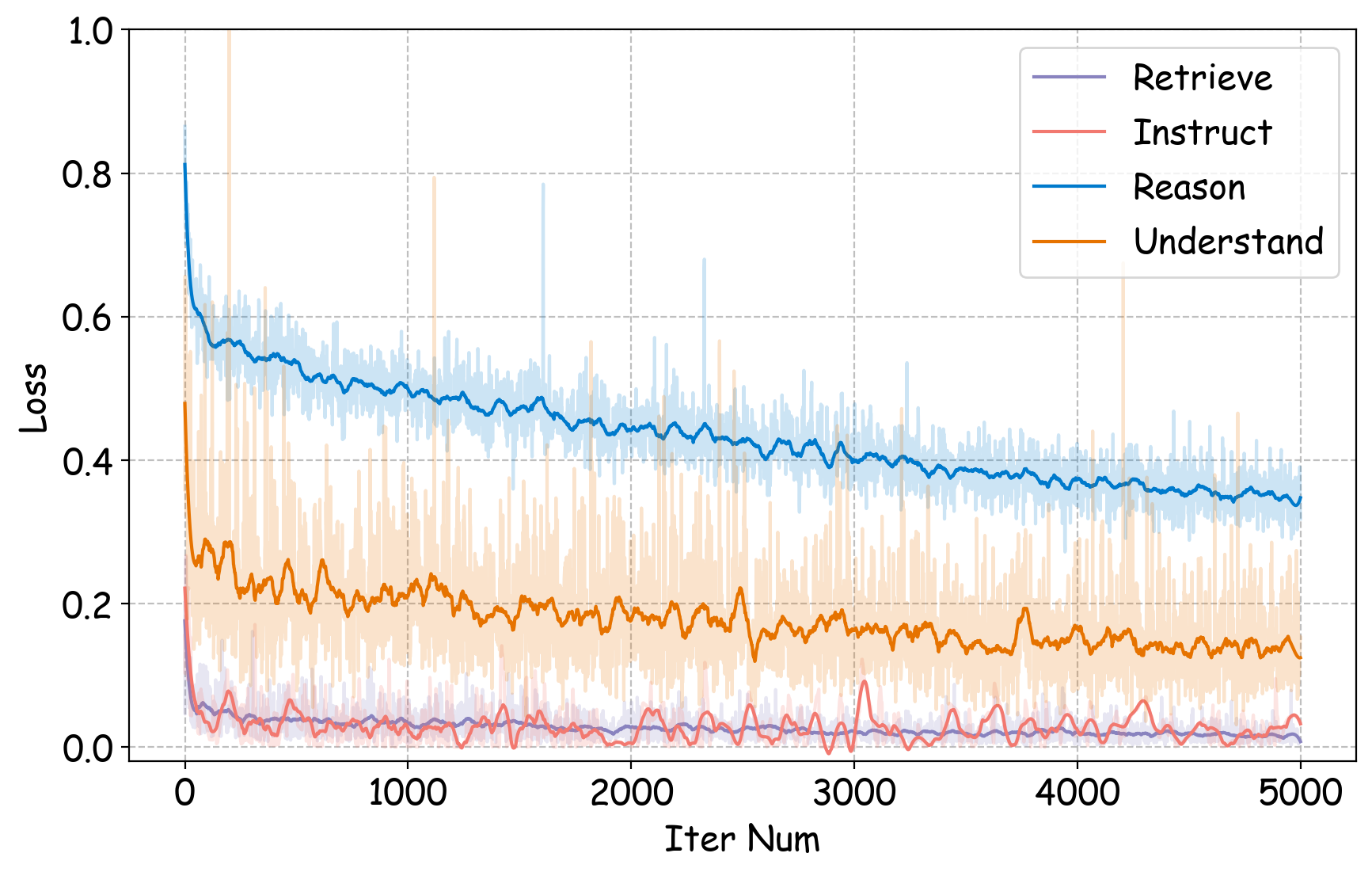
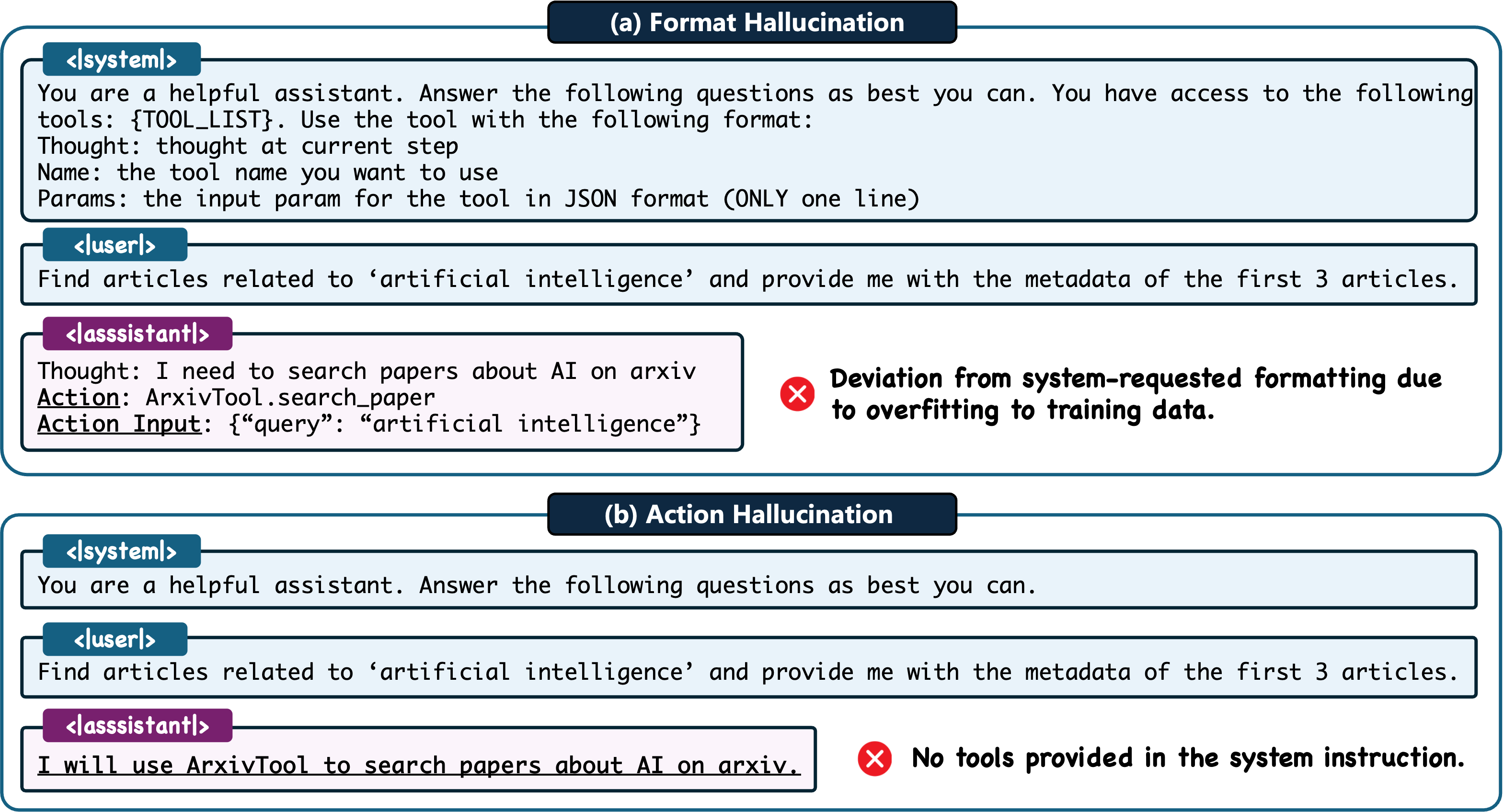
开源的大语言模型(LLMs)在各种自然语言处理任务中取得了显著成功,但在作为代理时仍远不及基于API的模型。如何将代理能力整合到通用LLMs中成为一个关键而紧迫的问题。本文首先提出三项关键观察:当前的代理训练语料与格式遵循和代理推理交织在一起,显著偏离了预训练数据的分布;LLMs在代理任务所需能力的学习速度上存在差异;当前方法在提高代理能力时引入了幻觉副作用。基于这些发现,我们提出了Agent-FLAN,有效地对语言模型进行微调。通过对训练语料的仔细分解和重新设计,Agent-FLAN使Llama2-7B在多个代理评估数据集上超越了之前的最佳工作3.5%。
🔬 方法详解
问题定义:本文旨在解决大语言模型在作为代理时能力不足的问题,现有方法在训练语料和预训练数据分布上存在显著偏差,导致模型性能不佳。
核心思路:论文提出Agent-FLAN,通过对训练语料进行细致的分解和重新设计,旨在有效地微调语言模型以提升其代理能力。这样的设计能够更好地适应代理任务的需求。
技术框架:Agent-FLAN的整体架构包括三个主要模块:训练语料的重构、模型微调过程和评估基准的建立。通过构建负样本,增强模型的学习效果。
关键创新:最重要的技术创新点在于对训练语料的重新设计,使其更符合代理任务的特点,从而有效提升了模型的代理能力,并减少了幻觉现象的发生。
关键设计:在参数设置上,Agent-FLAN采用了综合构建的负样本策略,并在损失函数中引入了针对幻觉问题的惩罚机制,以确保模型在学习过程中更为稳定。
🖼️ 关键图片
📊 实验亮点
实验结果显示,Agent-FLAN使Llama2-7B在多个代理评估数据集上性能提升了3.5%,并有效缓解了幻觉问题,展示了其在代理任务中的显著优势。
🎯 应用场景
该研究的潜在应用领域包括智能助手、自动化客服和决策支持系统等。通过提升大语言模型的代理能力,Agent-FLAN能够在实际应用中提供更高效、更准确的服务,具有重要的实际价值和未来影响。
📄 摘要(原文)
Open-sourced Large Language Models (LLMs) have achieved great success in various NLP tasks, however, they are still far inferior to API-based models when acting as agents. How to integrate agent ability into general LLMs becomes a crucial and urgent problem. This paper first delivers three key observations: (1) the current agent training corpus is entangled with both formats following and agent reasoning, which significantly shifts from the distribution of its pre-training data; (2) LLMs exhibit different learning speeds on the capabilities required by agent tasks; and (3) current approaches have side-effects when improving agent abilities by introducing hallucinations. Based on the above findings, we propose Agent-FLAN to effectively Fine-tune LANguage models for Agents. Through careful decomposition and redesign of the training corpus, Agent-FLAN enables Llama2-7B to outperform prior best works by 3.5\% across various agent evaluation datasets. With comprehensively constructed negative samples, Agent-FLAN greatly alleviates the hallucination issues based on our established evaluation benchmark. Besides, it consistently improves the agent capability of LLMs when scaling model sizes while slightly enhancing the general capability of LLMs. The code will be available at https://github.com/InternLM/Agent-FLAN.