Meta-Cognitive Analysis: Evaluating Declarative and Procedural Knowledge in Datasets and Large Language Models
作者: Zhuoqun Li, Hongyu Lin, Yaojie Lu, Hao Xiang, Xianpei Han, Le Sun
分类: cs.CL, cs.AI
发布日期: 2024-03-14
备注: Accepted by LREC-COLING 2024 as a short paper
💡 一句话要点
提出元认知分析方法以评估大语言模型的知识类型
🎯 匹配领域: 支柱九:具身大模型 (Embodied Foundation Models)
关键词: 元认知分析 大语言模型 声明性知识 程序性知识 知识评估 自然语言处理 模型优化
📋 核心要点
- 现有方法缺乏对声明性知识和程序性知识的全面比较分析,导致对大语言模型的理解不足。
- 论文通过提供真实知识并评估有效性得分,提出了一种新的分析方法,旨在填补这一空白。
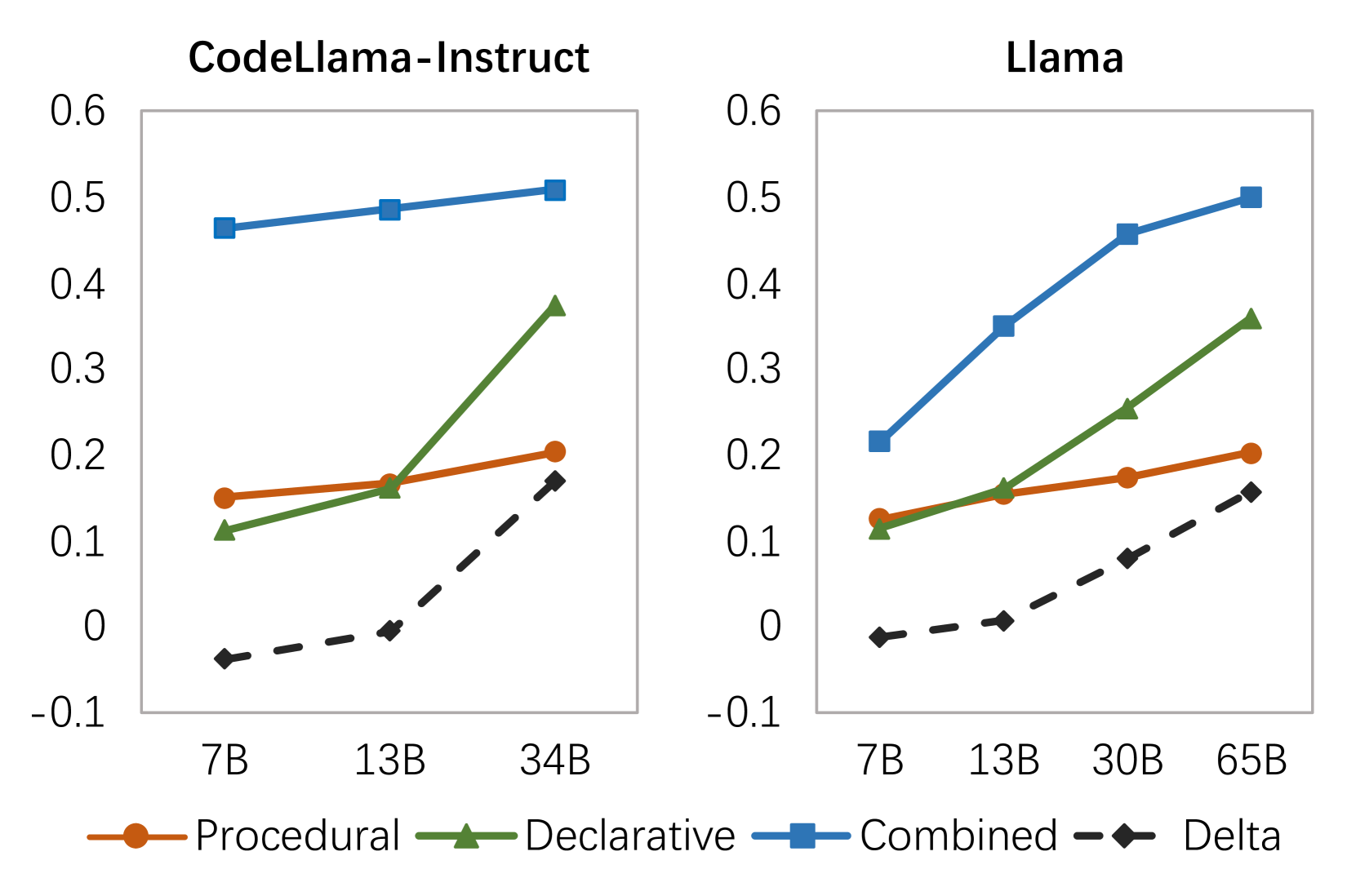
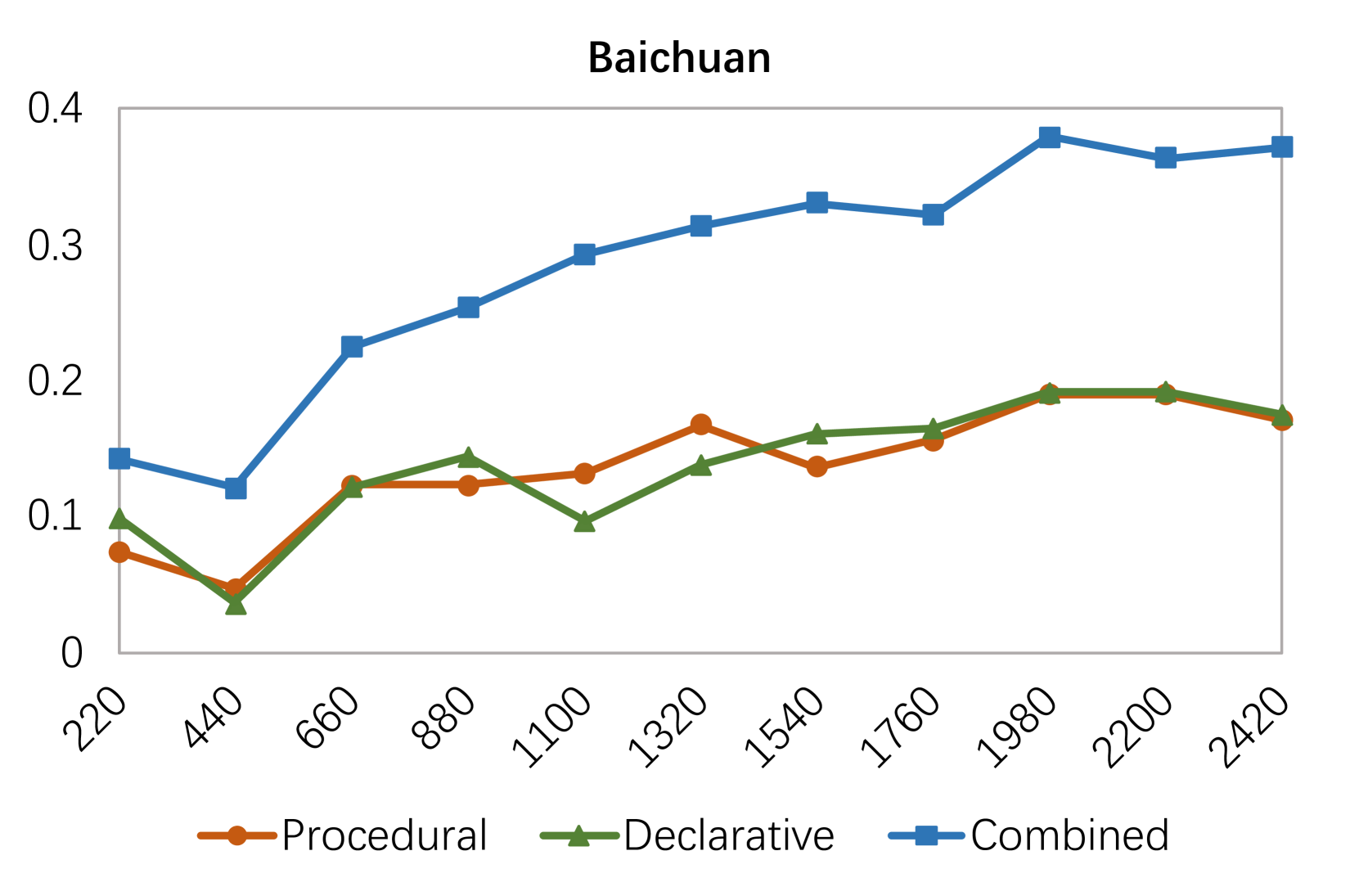
- 实验结果表明,声明性知识在大多数任务中更具优势,且模型在知识利用能力上随着预训练进展显著提升。
📝 摘要(中文)
声明性知识和程序性知识是元认知理论的两个关键部分,在大语言模型的预训练和推理中具有重要意义。然而,缺乏对这两种知识类型的全面比较分析,主要是由于定义、探测和定量评估的挑战。本文从新视角出发,为大语言模型提供真实知识并评估有效性得分。通过对广泛使用的数据集和模型进行大量实验,我们得出结论:在大多数任务中,声明性知识的收益大于程序性知识,仅在简单逻辑推理任务中,程序性知识的收益更大。随着预训练的进展和模型规模的增加,模型利用这两种知识的能力显著提高,但速度不同。我们对这些发现进行了详细分析,为大语言模型的评估和增强提供了初步指导。
🔬 方法详解
问题定义:本文旨在解决对声明性知识和程序性知识的比较分析不足的问题,现有方法在定义和评估上存在挑战。
核心思路:通过提供真实知识作为基准,评估大语言模型在不同任务中对这两种知识的利用效果,从而揭示其相对重要性。
技术框架:研究采用了广泛使用的数据集和模型进行实验,分析模型在不同任务中的表现,主要模块包括数据准备、模型训练和评估。
关键创新:最重要的创新在于首次系统性地比较了声明性知识和程序性知识在大语言模型中的作用,揭示了两者在不同任务中的相对贡献。
关键设计:在实验中,设置了多种任务和评估指标,采用了适当的损失函数和网络结构,以确保对知识利用能力的准确评估。
🖼️ 关键图片

📊 实验亮点
实验结果显示,在大多数任务中,声明性知识的利用收益显著高于程序性知识,尤其是在简单逻辑推理任务中,程序性知识的收益更为突出。随着模型规模的增加,知识利用能力的提升速度存在差异,为模型改进提供了重要参考。
🎯 应用场景
该研究的潜在应用领域包括自然语言处理、教育技术和智能问答系统等。通过对大语言模型知识类型的深入理解,可以为模型的设计和优化提供指导,提升其在实际应用中的表现和可靠性。
📄 摘要(原文)
Declarative knowledge and procedural knowledge are two key parts in meta-cognitive theory, and these two hold significant importance in pre-training and inference of LLMs. However, a comprehensive analysis comparing these two types of knowledge is lacking, primarily due to challenges in definition, probing and quantitative assessment. In this paper, we explore from a new perspective by providing ground-truth knowledge for LLMs and evaluating the effective score. Through extensive experiments with widely-used datasets and models, we get conclusions: (1) In most tasks, benefits from declarative knowledge are greater than those from procedural knowledge. (2) Profits of procedural knowledge are larger than declarative knowledge only in reasoning tasks with simple logic. (3) As pre-training progresses and size increases, model ability to utilize both kinds of knowledge significantly improves, but in different speed. We do detailed analysis for the findings and this can provide primary guidance for evaluation and enhancement of large language models.