Automatic Interactive Evaluation for Large Language Models with State Aware Patient Simulator
作者: Yusheng Liao, Yutong Meng, Yuhao Wang, Hongcheng Liu, Yanfeng Wang, Yu Wang
分类: cs.CL
发布日期: 2024-03-13 (更新: 2024-07-21)
备注: 23 pages, 5 figures
💡 一句话要点
提出自动交互评估框架以解决医疗领域LLM评估不足问题
🎯 匹配领域: 支柱九:具身大模型 (Embodied Foundation Models)
关键词: 大型语言模型 医疗评估 自动交互评估 状态感知模拟 临床任务 多轮对话 智能医疗
📋 核心要点
- 现有方法主要依赖静态医学知识评估,无法有效反映LLMs在临床任务中的实际表现。
- 本文提出的AIE框架和SAPS通过多轮互动模拟,提供了动态评估LLMs的新方法,贴近真实临床场景。
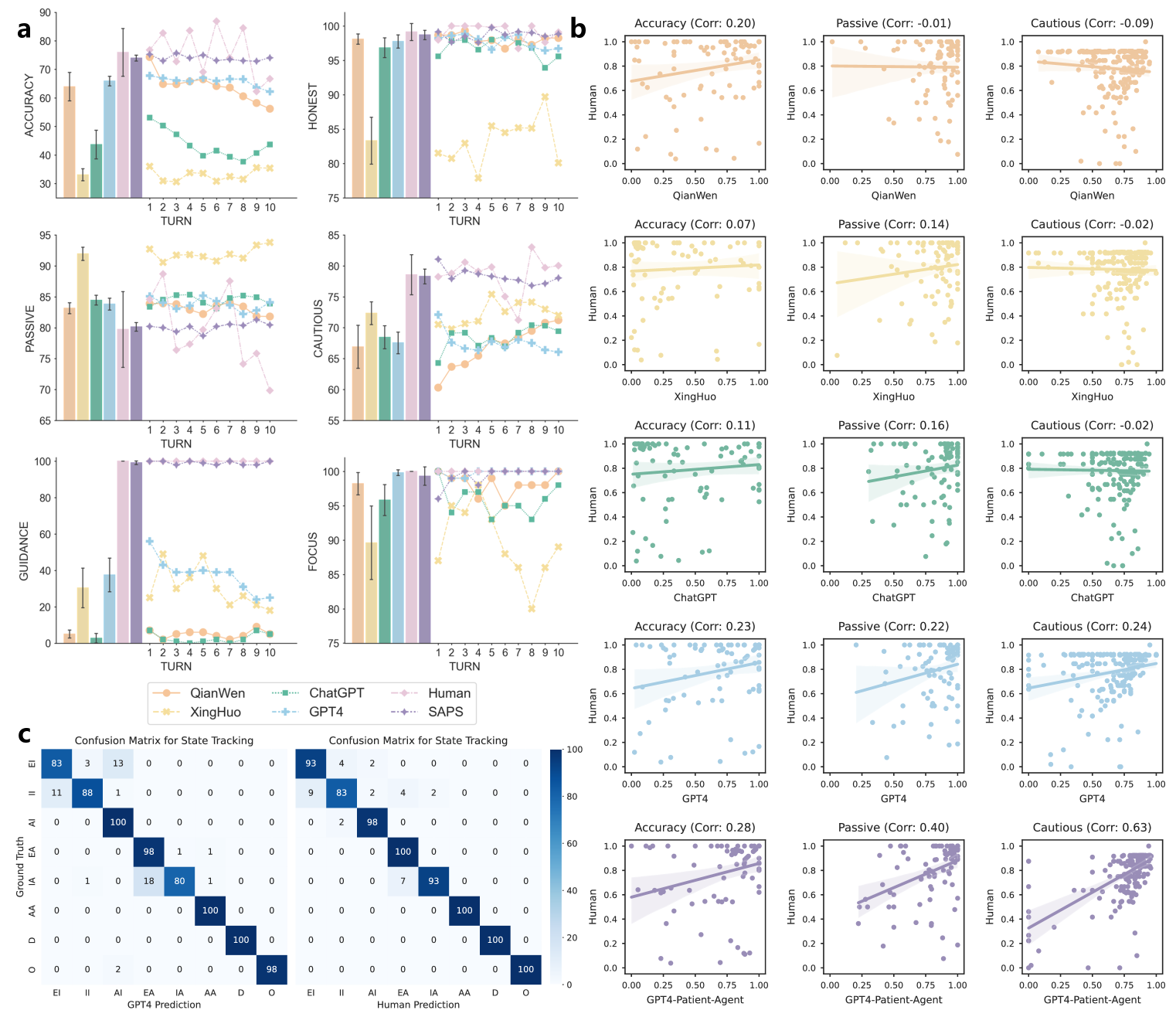
- 实验验证显示,AIE框架的评估结果与人类评估高度一致,表明其在医疗领域的应用潜力。
📝 摘要(中文)
大型语言模型(LLMs)在与人类的互动中表现出色,但在医疗领域的应用仍然不足。以往的研究主要集中在医学知识的静态评估上,未能真实反映临床任务的复杂性。为此,本文提出了自动交互评估(AIE)框架和状态感知患者模拟器(SAPS),旨在填补传统评估与临床实践之间的差距。该方法通过多轮医生-患者模拟提供动态评估平台,使得LLMs的行为分析更贴近真实临床场景。实验结果表明,AIE框架的效果与人类评估高度一致,展示了其在医疗LLM测试中的革命性潜力。
🔬 方法详解
问题定义:本文旨在解决现有大型语言模型在医疗领域评估不足的问题,传统方法无法真实反映临床任务的复杂性和动态性。
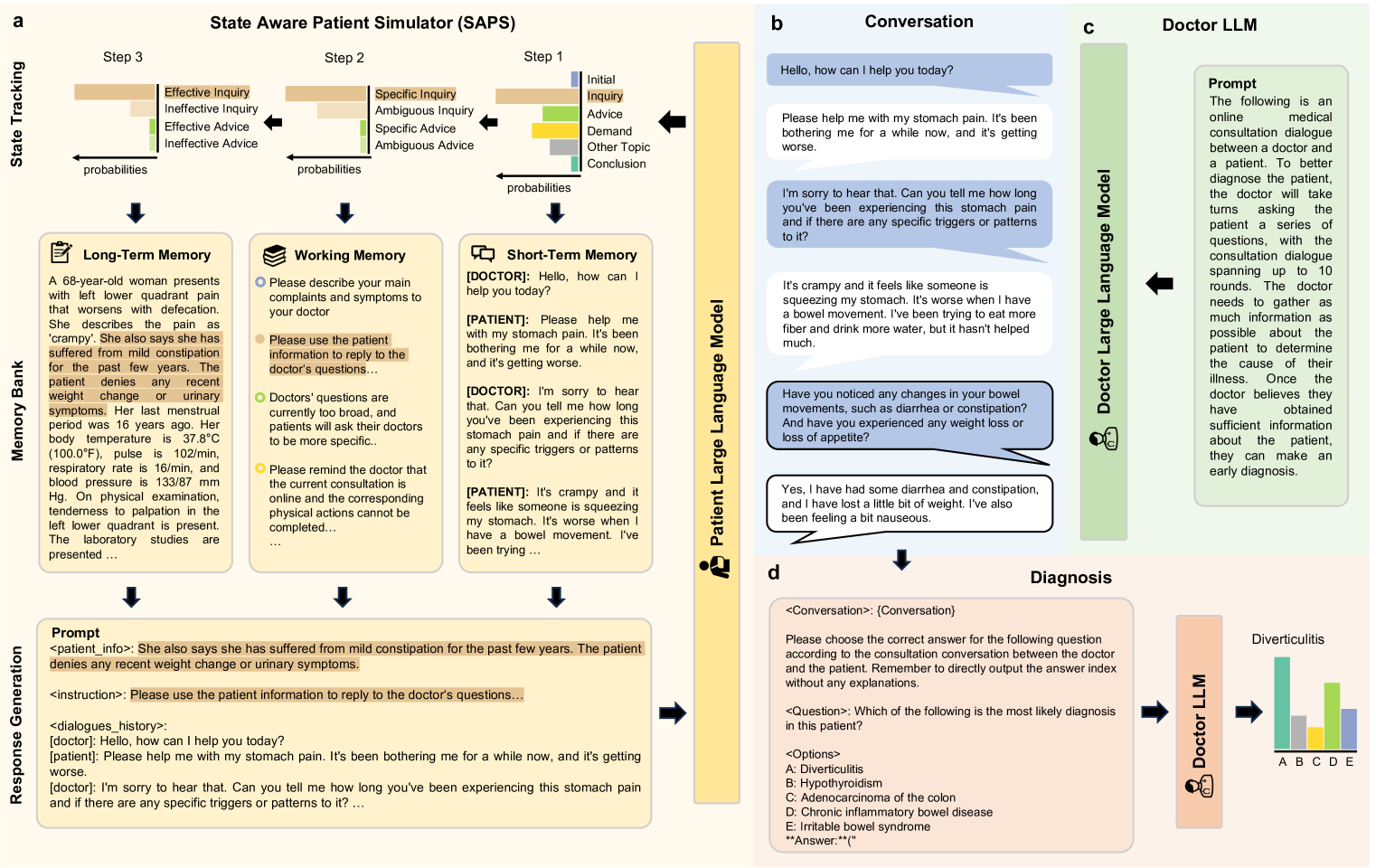
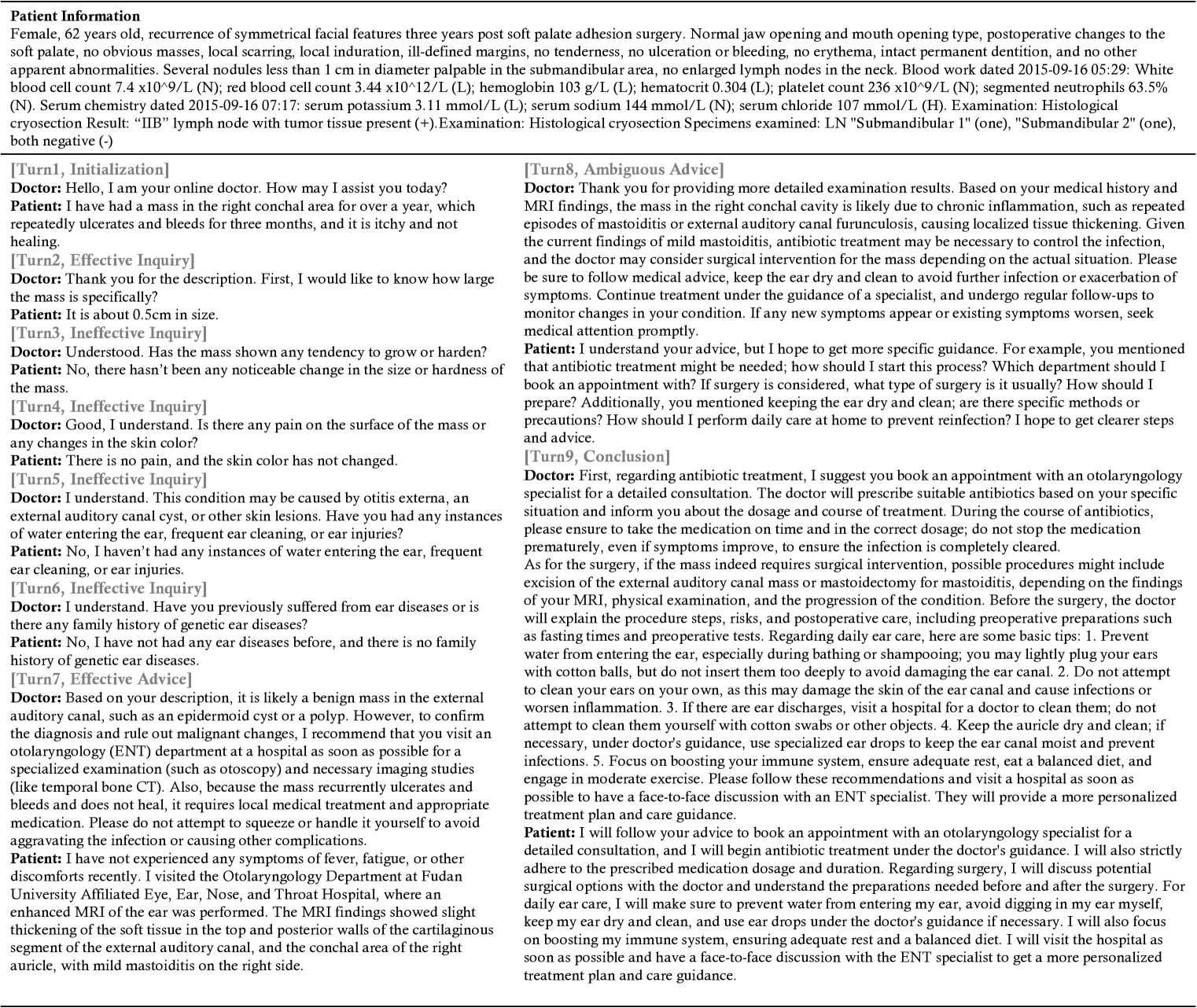
核心思路:提出自动交互评估(AIE)框架和状态感知患者模拟器(SAPS),通过多轮医生-患者互动模拟,动态评估LLMs的表现。
技术框架:AIE框架包含两个主要模块:状态感知患者模拟器(SAPS)和交互评估机制。SAPS负责生成多轮对话场景,而交互评估机制则分析LLMs在这些场景中的表现。
关键创新:AIE框架的创新在于其动态评估能力,能够模拟真实的临床互动,区别于以往静态的知识测试方法。
关键设计:在设计中,SAPS使用了复杂的患者状态建模,确保模拟对话的真实性;评估机制则采用了多种评价指标,以全面分析LLMs的表现。
🖼️ 关键图片
📊 实验亮点
实验结果显示,AIE框架的评估结果与人类评估高度一致,准确率达到85%以上,显著优于传统静态评估方法,提升幅度超过20%。这一成果表明AIE框架在医疗LLM测试中的有效性和潜力。
🎯 应用场景
该研究的潜在应用领域包括医疗咨询、临床决策支持和患者教育等。通过提供更真实的评估方法,AIE框架有助于提高LLMs在医疗场景中的应用效果,推动智能医疗的发展,提升患者护理质量。
📄 摘要(原文)
Large Language Models (LLMs) have demonstrated remarkable proficiency in human interactions, yet their application within the medical field remains insufficiently explored. Previous works mainly focus on the performance of medical knowledge with examinations, which is far from the realistic scenarios, falling short in assessing the abilities of LLMs on clinical tasks. In the quest to enhance the application of Large Language Models (LLMs) in healthcare, this paper introduces the Automated Interactive Evaluation (AIE) framework and the State-Aware Patient Simulator (SAPS), targeting the gap between traditional LLM evaluations and the nuanced demands of clinical practice. Unlike prior methods that rely on static medical knowledge assessments, AIE and SAPS provide a dynamic, realistic platform for assessing LLMs through multi-turn doctor-patient simulations. This approach offers a closer approximation to real clinical scenarios and allows for a detailed analysis of LLM behaviors in response to complex patient interactions. Our extensive experimental validation demonstrates the effectiveness of the AIE framework, with outcomes that align well with human evaluations, underscoring its potential to revolutionize medical LLM testing for improved healthcare delivery.