From human experts to machines: An LLM supported approach to ontology and knowledge graph construction
作者: Vamsi Krishna Kommineni, Birgitta König-Ries, Sheeba Samuel
分类: cs.CL
发布日期: 2024-03-13
💡 一句话要点
提出一种基于LLM的半自动本体与知识图谱构建方法
🎯 匹配领域: 支柱九:具身大模型 (Embodied Foundation Models)
关键词: 知识图谱 本体构建 大型语言模型 半自动化 深度学习 信息检索 自动化知识管理
📋 核心要点
- 现有的知识图谱构建方法高度依赖人类专家,导致效率低下和人力成本高。
- 本文提出了一种基于开源大型语言模型的半自动化知识图谱构建流程,旨在减少人类参与。
- 通过对深度学习方法的知识图谱构建实验,验证了该方法的有效性和可行性。
📝 摘要(中文)
传统的本体和知识图谱构建过程依赖于人类领域专家定义实体和关系类型,建立层次结构,维护领域相关性,并确保数据质量。本文探讨了利用开源大型语言模型(LLMs)实现知识图谱的(半)自动构建。我们提出的流程包括制定能力问题、基于这些问题开发本体、使用开发的本体构建知识图谱,并在最小化人类专家参与的情况下评估生成的知识图谱。通过利用学术出版物,我们展示了在深度学习方法上创建知识图谱的可行性。我们的研究表明,使用LLMs可能减少构建知识图谱所需的人力,但建议采用人机协作的方法来评估自动生成的知识图谱。
🔬 方法详解
问题定义:本文旨在解决传统知识图谱构建过程中对人类专家的高度依赖,导致的效率低下和人力成本高的问题。现有方法在定义实体、关系类型及数据质量维护方面存在明显的局限性。
核心思路:论文的核心思路是利用大型语言模型(LLMs)来实现知识图谱的半自动构建,减少人类专家的参与,同时保持知识图谱的质量和相关性。通过制定能力问题和开发本体,自动化知识图谱的构建过程。
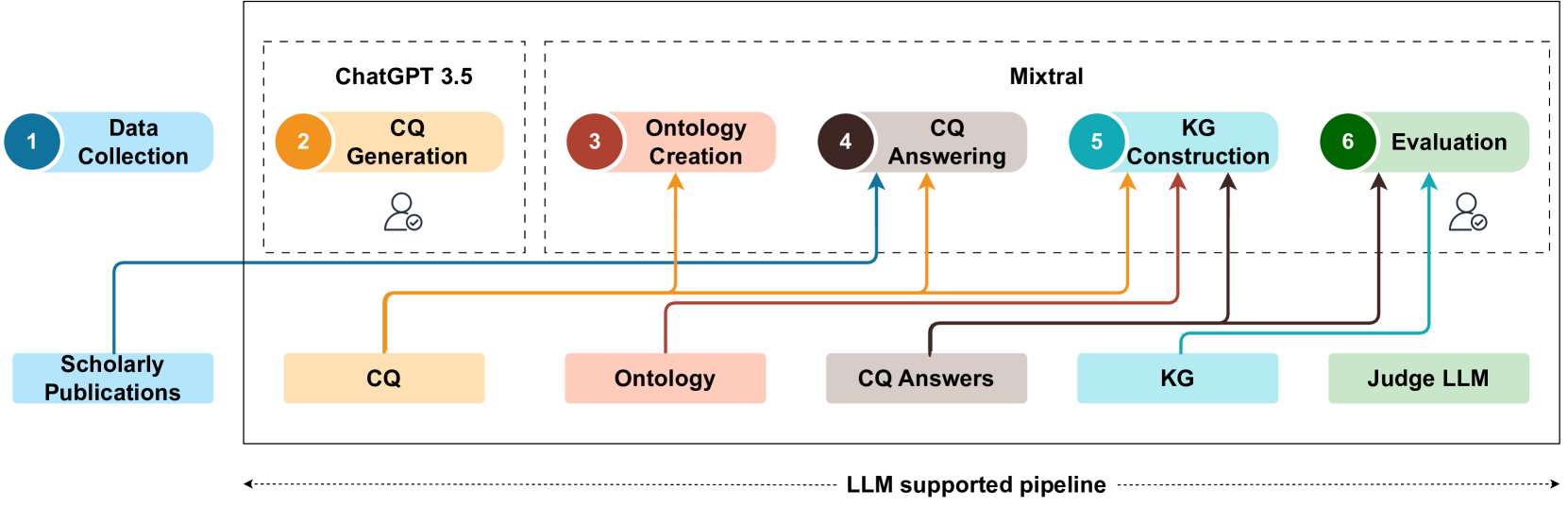
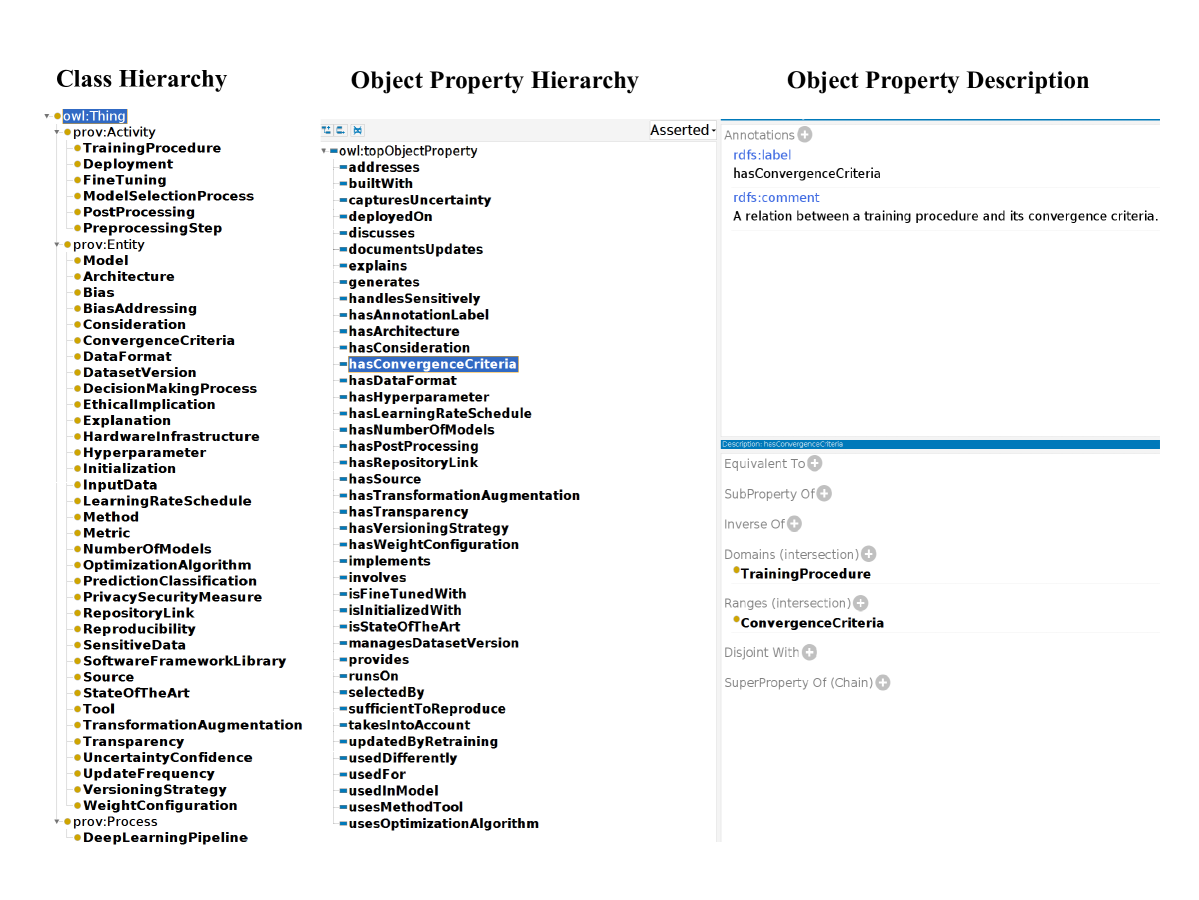
技术框架:整体架构包括几个主要模块:首先,制定能力问题(CQs),然后基于这些问题开发本体(TBox),接着使用开发的本体构建知识图谱,最后对生成的知识图谱进行评估。
关键创新:最重要的技术创新点在于通过LLMs实现知识图谱构建的半自动化,显著降低了人类专家的参与度,与传统方法相比,提升了构建效率和灵活性。
关键设计:在技术细节方面,设计了一个评估LLM生成内容的评判LLM,基于真实数据对生成的内容进行评分,以确保知识图谱的准确性和完整性。
🖼️ 关键图片
📊 实验亮点
实验结果表明,使用LLMs构建的知识图谱在准确性和完整性方面表现良好,且人类参与度显著降低。通过与传统方法的对比,展示了构建效率的提升,具体数据尚未披露。
🎯 应用场景
该研究的潜在应用领域包括自动化知识管理、智能问答系统和信息检索等。通过减少人类专家的参与,该方法可以显著提高知识图谱构建的效率,降低成本,具有广泛的实际价值和未来影响。
📄 摘要(原文)
The conventional process of building Ontologies and Knowledge Graphs (KGs) heavily relies on human domain experts to define entities and relationship types, establish hierarchies, maintain relevance to the domain, fill the ABox (or populate with instances), and ensure data quality (including amongst others accuracy and completeness). On the other hand, Large Language Models (LLMs) have recently gained popularity for their ability to understand and generate human-like natural language, offering promising ways to automate aspects of this process. This work explores the (semi-)automatic construction of KGs facilitated by open-source LLMs. Our pipeline involves formulating competency questions (CQs), developing an ontology (TBox) based on these CQs, constructing KGs using the developed ontology, and evaluating the resultant KG with minimal to no involvement of human experts. We showcase the feasibility of our semi-automated pipeline by creating a KG on deep learning methodologies by exploiting scholarly publications. To evaluate the answers generated via Retrieval-Augmented-Generation (RAG) as well as the KG concepts automatically extracted using LLMs, we design a judge LLM, which rates the generated content based on ground truth. Our findings suggest that employing LLMs could potentially reduce the human effort involved in the construction of KGs, although a human-in-the-loop approach is recommended to evaluate automatically generated KGs.