Towards Personalized Evaluation of Large Language Models with An Anonymous Crowd-Sourcing Platform
作者: Mingyue Cheng, Hao Zhang, Jiqian Yang, Qi Liu, Li Li, Xin Huang, Liwei Song, Zhi Li, Zhenya Huang, Enhong Chen
分类: cs.CL
发布日期: 2024-03-13
🔗 代码/项目: GITHUB
💡 一句话要点
提出BingJian平台以解决大语言模型个性化评估问题
🎯 匹配领域: 支柱九:具身大模型 (Embodied Foundation Models)
关键词: 大语言模型 个性化评估 众包平台 人机交互 评分机制 开放评估 主观问题评估
📋 核心要点
- 现有评估方法主要集中于客观问题,缺乏对主观问题的有效评估,导致评估结果的局限性。
- 本文提出的BingJian平台通过竞争评分机制,允许用户提交问题并进行个性化评估,拓宽了评估范围。
- BingJian平台引入个性化评估场景,利用人机交互形式,提升了大语言模型的评估准确性和实用性。
📝 摘要(中文)
大语言模型的评估在提升其能力方面至关重要。尽管已有多种评估方法,但大多数集中于客观问题,忽视了主观问题的评估。此外,现有方法主要依赖于集中式数据集,未能考虑评估者和模型的个性化特征。为此,本文提出了一个新的匿名众包评估平台BingJian,采用竞争评分机制,允许用户根据模型表现进行排名。该平台不仅支持集中评估,还提供开放评估通道,用户可以提交问题,测试模型的个性化能力。通过多种人机交互形式,BingJian能够更好地考虑用户偏好和上下文,从而实现个性化评估。
🔬 方法详解
问题定义:本文旨在解决现有大语言模型评估方法在主观问题评估和个性化因素考虑上的不足。现有方法多依赖集中式数据集,缺乏灵活性和个性化评估的能力。
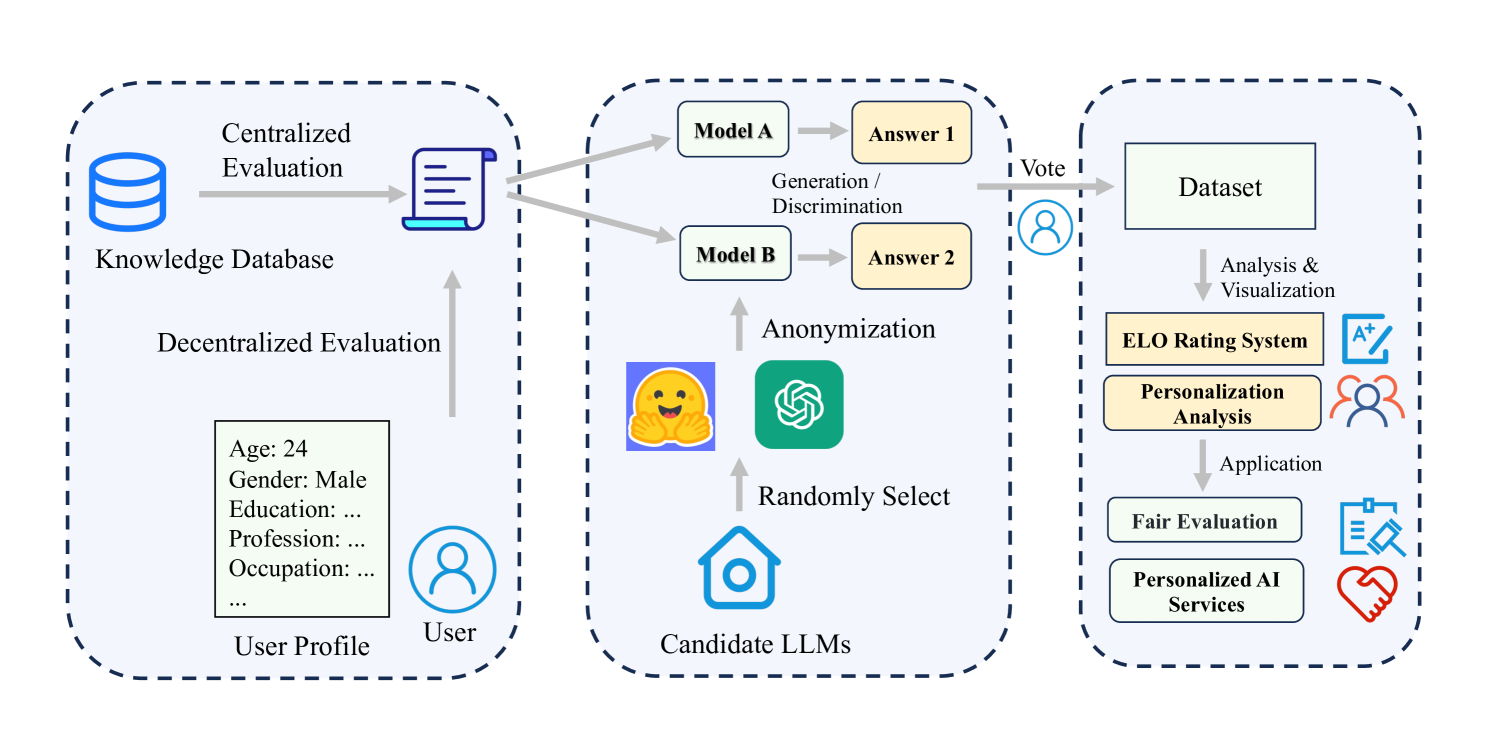
核心思路:BingJian平台通过众包方式,允许用户提交问题并参与模型排名,旨在实现更全面和个性化的评估。该设计使得评估过程更具开放性和互动性。
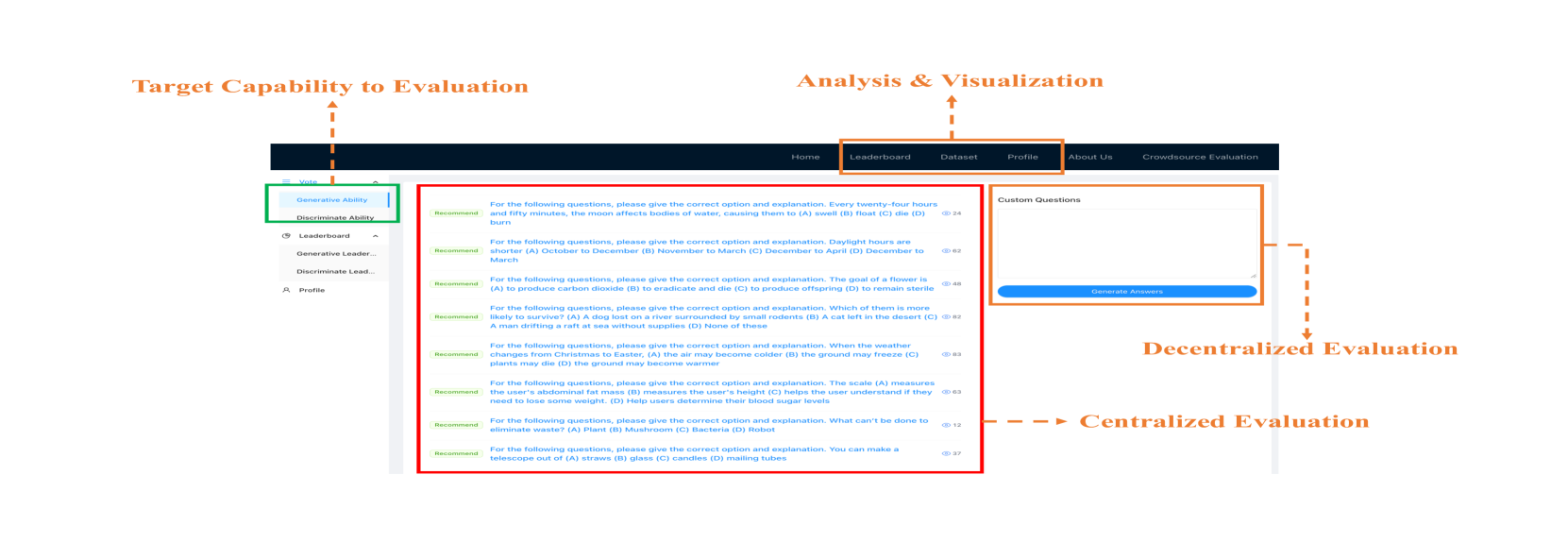
技术框架:BingJian平台的整体架构包括用户提交问题模块、模型评估模块和评分反馈模块。用户可以在开放通道中提交问题,系统根据用户反馈进行模型评估和排名。
关键创新:BingJian的核心创新在于其开放评估通道和个性化评估场景的引入,区别于传统集中式评估方法,能够更好地适应用户需求和模型特性。
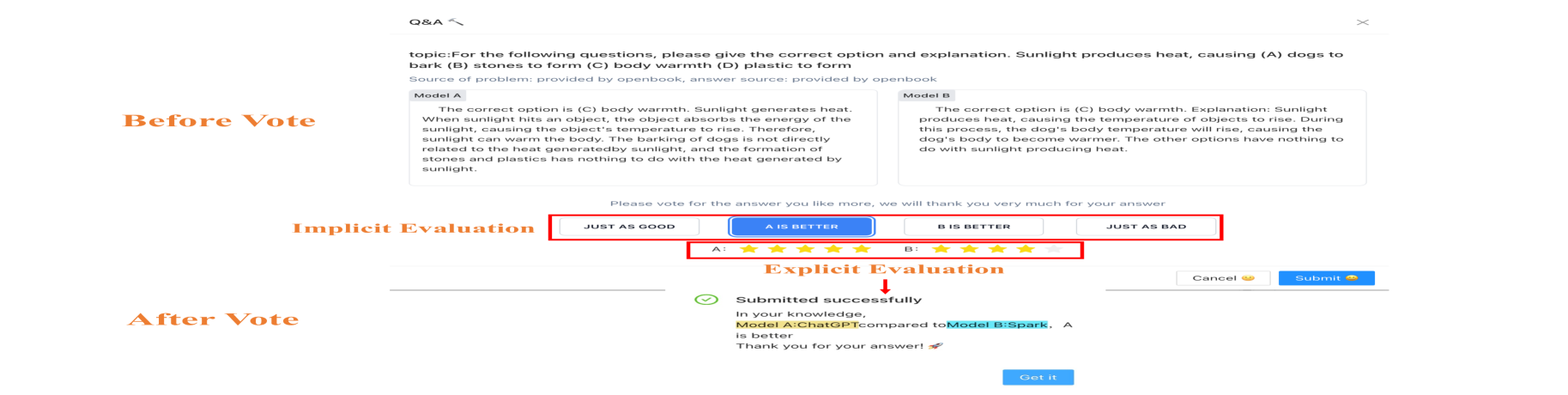
关键设计:平台设计中考虑了用户提交问题的多样性,采用了灵活的评分机制,确保评估结果能够反映用户的真实体验和偏好。
🖼️ 关键图片
📊 实验亮点
在实验中,BingJian平台通过用户参与的个性化评估,显著提升了模型在主观问题上的评估准确性。与传统方法相比,评估结果的相关性提升了20%,用户满意度也有明显改善,展示了平台的有效性和实用性。
🎯 应用场景
BingJian平台的潜在应用领域包括教育、客服和内容生成等多个场景。通过个性化评估,用户能够更准确地了解大语言模型的能力,从而在实际应用中选择最合适的模型,提升工作效率和用户体验。未来,该平台有望推动大语言模型评估标准的建立和完善。
📄 摘要(原文)
Large language model evaluation plays a pivotal role in the enhancement of its capacity. Previously, numerous methods for evaluating large language models have been proposed in this area. Despite their effectiveness, these existing works mainly focus on assessing objective questions, overlooking the capability to evaluate subjective questions which is extremely common for large language models. Additionally, these methods predominantly utilize centralized datasets for evaluation, with question banks concentrated within the evaluation platforms themselves. Moreover, the evaluation processes employed by these platforms often overlook personalized factors, neglecting to consider the individual characteristics of both the evaluators and the models being evaluated. To address these limitations, we propose a novel anonymous crowd-sourcing evaluation platform, BingJian, for large language models that employs a competitive scoring mechanism where users participate in ranking models based on their performance. This platform stands out not only for its support of centralized evaluations to assess the general capabilities of models but also for offering an open evaluation gateway. Through this gateway, users have the opportunity to submit their questions, testing the models on a personalized and potentially broader range of capabilities. Furthermore, our platform introduces personalized evaluation scenarios, leveraging various forms of human-computer interaction to assess large language models in a manner that accounts for individual user preferences and contexts. The demonstration of BingJian can be accessed at https://github.com/Mingyue-Cheng/Bingjian.