Rethinking Generative Large Language Model Evaluation for Semantic Comprehension
作者: Fangyun Wei, Xi Chen, Lin Luo
分类: cs.CL
发布日期: 2024-03-12
💡 一句话要点
提出RWQ-Elo评分系统以解决LLM评估不一致问题
🎯 匹配领域: 支柱九:具身大模型 (Embodied Foundation Models)
关键词: 大型语言模型 评估方法 RWQ-Elo 多项选择问答 真实世界问题 模型比较 自然语言处理
📋 核心要点
- 现有的多项选择问答(MCQA)评估方法在实际应用中存在与开放式响应生成不一致的问题。
- 提出RWQ-Elo评分系统,通过竞争性评估模拟真实场景,使用GPT-4作为评判者。
- RWQ-Elo系统在稳定性和新模型注册的可行性方面表现良好,有潜力重塑LLM排行榜。
📝 摘要(中文)
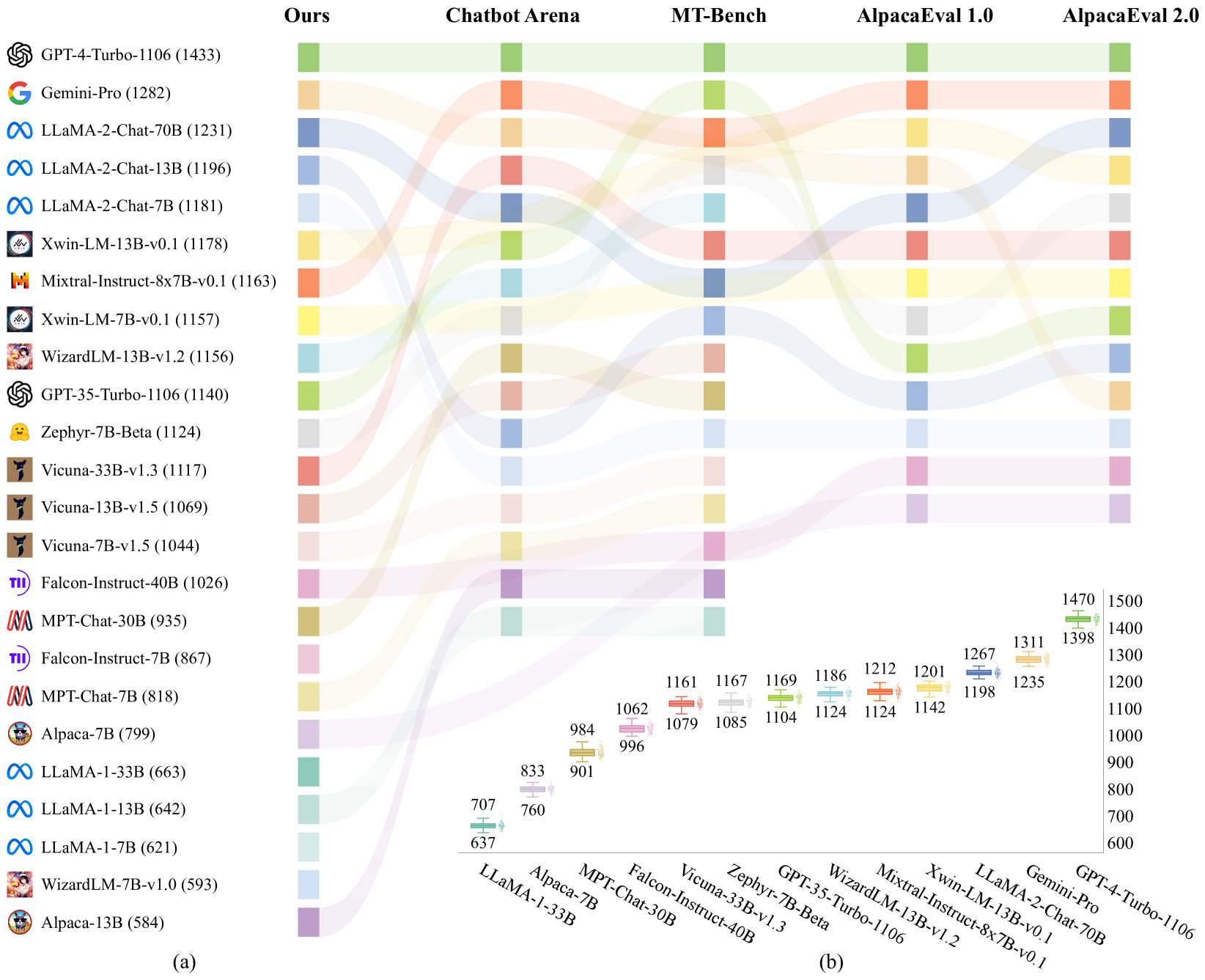
尽管大型语言模型(LLMs)具备复杂的能力,但在有效评估方面面临重大挑战。本文首先重新审视了流行的评估方法——多项选择问答(MCQA),指出其在实际场景中与开放式响应生成之间的不一致性。为此,提出了RWQ-Elo评分系统,通过24个LLM的竞争性评估,模拟真实使用场景,并编制了包含20,772个真实用户询问的新基准“真实世界问题”(RWQ)。此外,分析了RWQ-Elo系统的稳定性及其与现有排行榜的比较,展示了其在LLM评估中的潜力。
🔬 方法详解
问题定义:本文旨在解决大型语言模型(LLMs)评估中的不一致性问题,现有的多项选择问答(MCQA)方法无法有效反映模型在开放式响应生成中的表现。
核心思路:提出RWQ-Elo评分系统,通过24个LLMs的竞争性评估,使用GPT-4作为评判者,旨在更真实地模拟用户交互场景。
技术框架:RWQ-Elo系统包括两个主要阶段:首先是模型之间的竞争性问答评估,其次是基于评估结果生成Elo评分。新基准“真实世界问题”(RWQ)提供了20,772个真实用户询问,确保评估的真实性。
关键创新:RWQ-Elo评分系统的创新在于其竞争性评估机制,区别于传统的MCQA方法,能够更好地反映模型在实际应用中的表现。
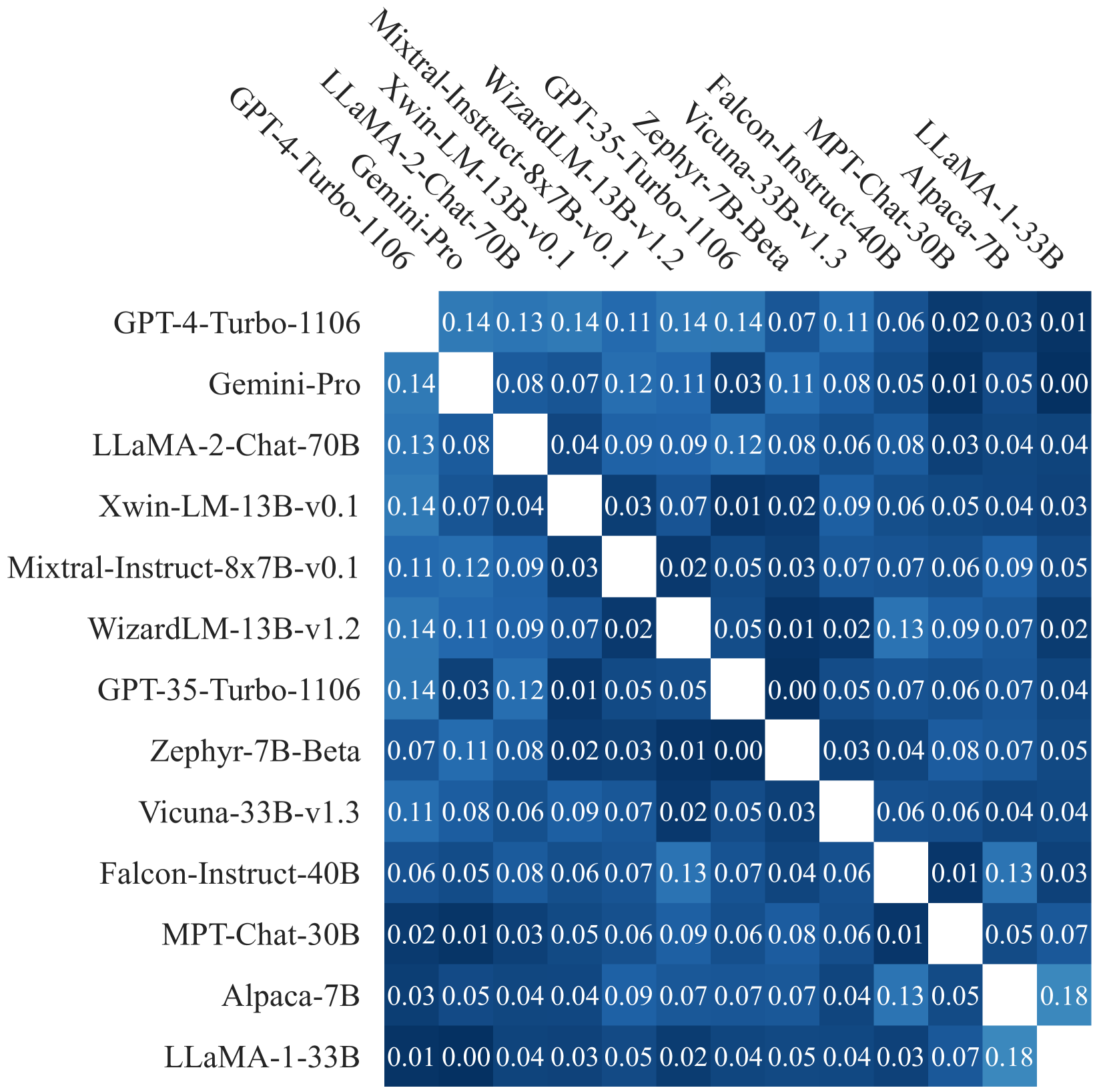
关键设计:系统设计中,Elo评分机制用于量化模型表现,确保评分的动态更新和稳定性,支持新模型的注册与比较。
🖼️ 关键图片

📊 实验亮点
RWQ-Elo系统在评估24个大型语言模型时表现出良好的稳定性和准确性,相较于传统MCQA方法,能够更真实地反映模型在开放式响应生成中的能力,具有显著的提升潜力。
🎯 应用场景
该研究的潜在应用领域包括自然语言处理、智能客服和教育技术等。RWQ-Elo评分系统能够为开发者提供更准确的模型评估依据,帮助优化模型性能,提升用户体验,未来可能影响LLM的应用标准和评估方法。
📄 摘要(原文)
Despite their sophisticated capabilities, large language models (LLMs) encounter a major hurdle in effective assessment. This paper first revisits the prevalent evaluation method-multiple choice question answering (MCQA), which allows for straightforward accuracy measurement. Through a comprehensive evaluation of 24 models across 11 benchmarks, we highlight several potential drawbacks of MCQA, for instance, the inconsistency between the MCQA evaluation and the generation of open-ended responses in practical scenarios. In response, we introduce an RWQ-Elo rating system, engaging 24 LLMs such as GPT-4, GPT-3.5, Google-Gemini-Pro and LLaMA-1/-2, in a two-player competitive format, with GPT-4 serving as the judge. Each LLM receives an Elo rating thereafter. This system is designed to mirror real-world usage, and for this purpose, we have compiled a new benchmark called ``Real-world questions'' (RWQ), comprising 20,772 authentic user inquiries. Additionally, we thoroughly analyze the characteristics of our system and compare it with prior leaderboards like AlpacaEval and MT-Bench. Our analysis reveals the stability of our RWQ-Elo system, the feasibility of registering new models, and its potential to reshape LLM leaderboards.