Naming, Describing, and Quantifying Visual Objects in Humans and LLMs
作者: Alberto Testoni, Juell Sprott, Sandro Pezzelle
分类: cs.CL
发布日期: 2024-03-11 (更新: 2024-06-04)
备注: Accepted to ACL 2024 (main conference)
💡 一句话要点
评估VLLMs在视觉对象命名与描述中的表现
🎯 匹配领域: 支柱九:具身大模型 (Embodied Foundation Models)
关键词: 视觉语言模型 对象描述 量词生成 人类语言特征 模型评估
📋 核心要点
- 现有的视觉与语言大模型在模仿人类对象描述的多样性方面存在不足,尤其是在量词的使用上。
- 论文通过评估不同VLLMs在名词、属性和量词生成上的表现,提出了对模型生成能力的系统性分析。
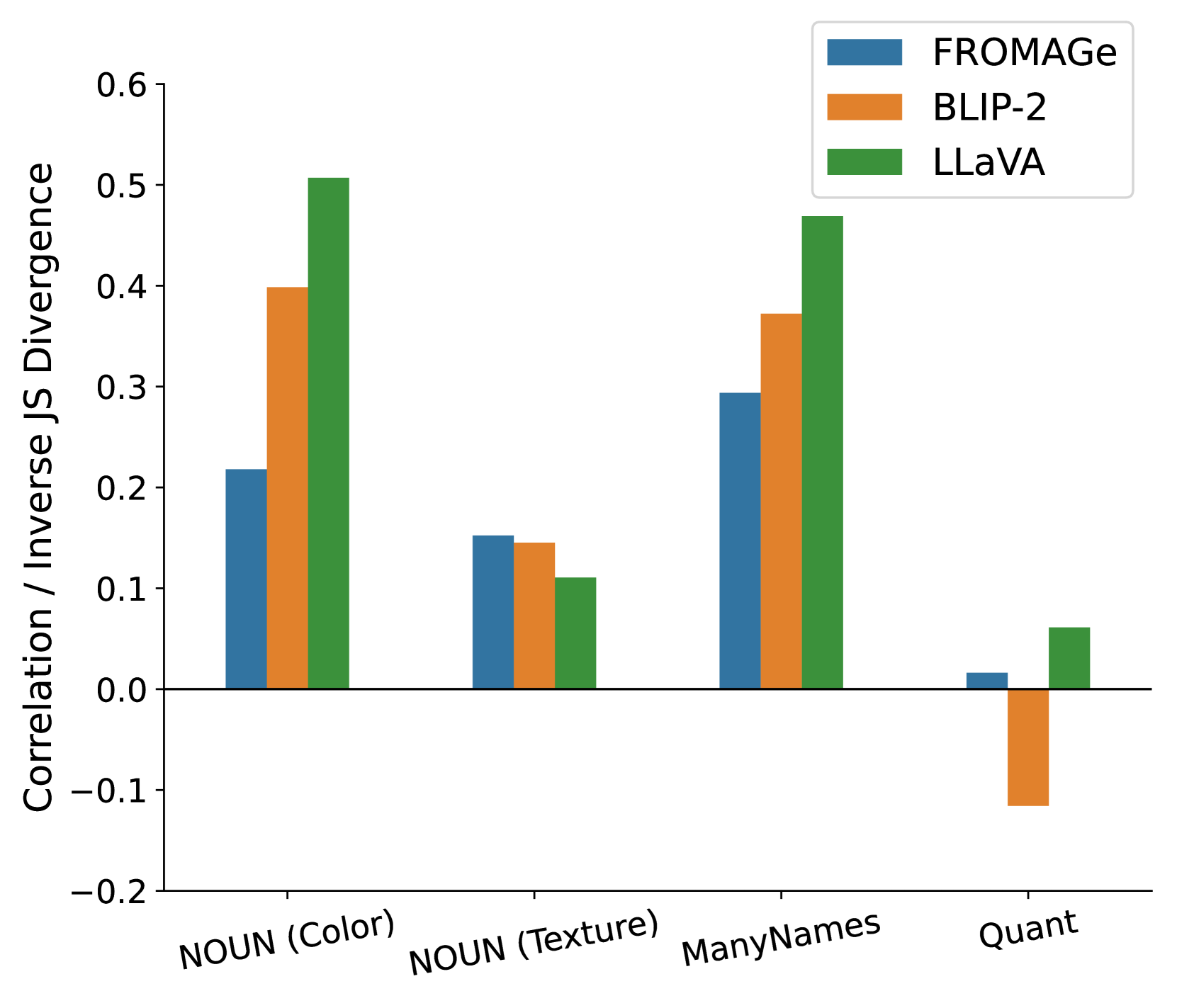
- 实验结果显示,部分模型在名词和属性生成上表现良好,但在量词分配上普遍失败,反映出推理能力的局限性。
📝 摘要(中文)
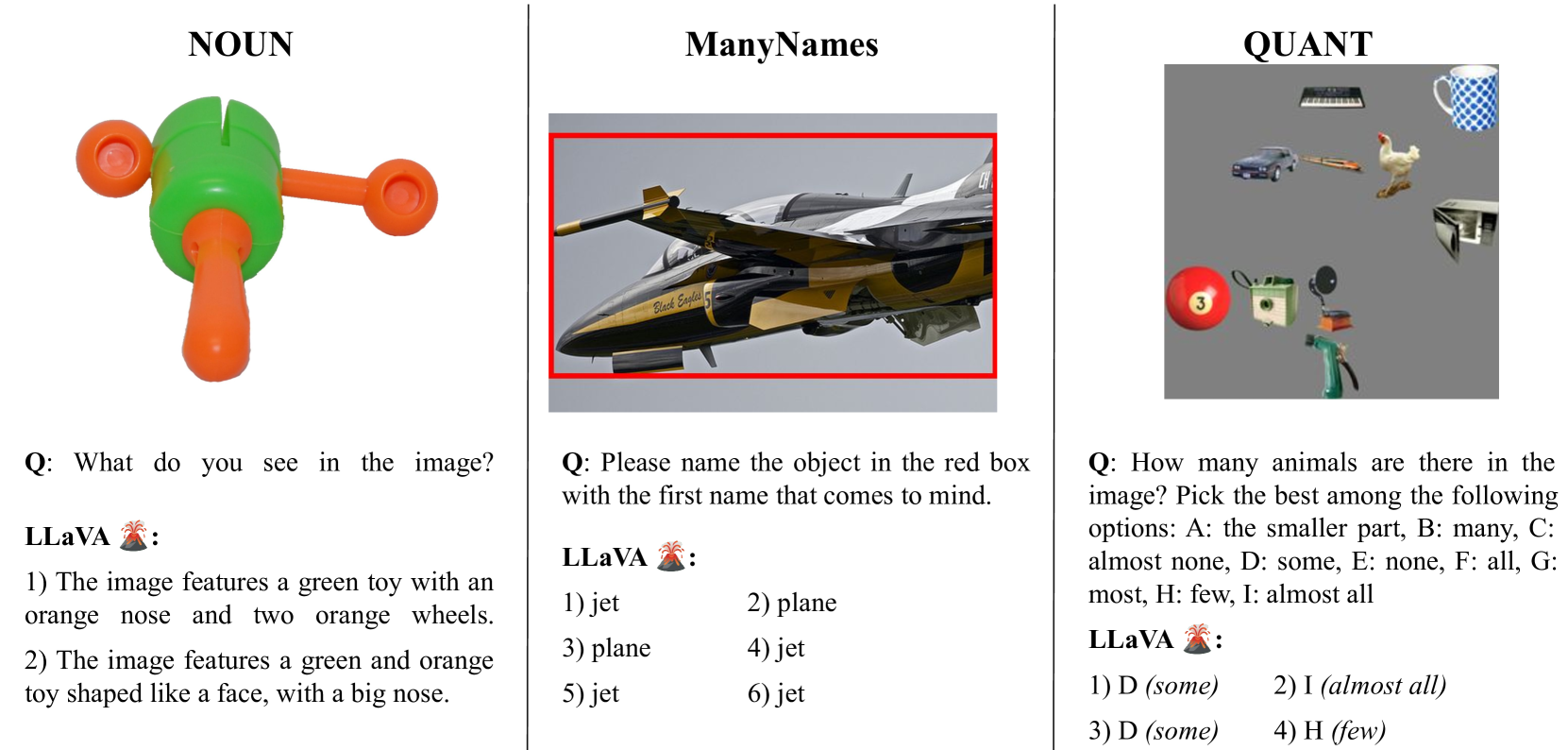
本研究探讨了人类在描述图像中对象时的多样性,以及当前视觉与语言大模型(VLLMs)在模仿这一语言特征方面的能力。研究发现,尽管一些模型在名词和属性的生成上能够较好地模拟人类的标签分布,但在量词的分配上普遍表现不佳,这表明高层次推理能力的不足。通过对未充分探索的数据集进行评估,本文为理解VLLMs的语言生成能力提供了新的视角。
🔬 方法详解
问题定义:本研究旨在解决当前视觉与语言大模型在生成对象描述时无法有效模拟人类多样性的问题,尤其是在量词的使用上存在明显不足。
核心思路:通过对VLLMs(如FROMAGe、BLIP-2、LLaVA)在名词、属性和量词生成上的评估,分析其与人类描述的差异,揭示模型的生成能力和局限性。
技术框架:研究采用了多种数据集,重点关注人类在描述对象时的主观变异性,评估模型在不同类别标签生成上的表现。
关键创新:本研究的创新点在于使用了未充分探索的数据集,系统性地评估了VLLMs在对象命名和描述中的表现,尤其是量词的生成能力。
关键设计:在实验中,模型的评估标准包括生成的标签分布与人类标签分布的相似度,特别关注量词的生成,采用了适当的损失函数和评估指标以确保结果的可靠性。
🖼️ 关键图片

📊 实验亮点
实验结果表明,部分VLLMs在名词和属性生成上能够较好地模拟人类的标签分布,但在量词生成上均未能达到预期,显示出模型在高层次推理方面的不足。这一发现为未来模型的改进提供了重要的研究方向。
🎯 应用场景
该研究的结果可为视觉与语言模型的进一步优化提供指导,尤其是在处理复杂的语言表达时。未来,改进的模型可广泛应用于图像描述、自动标注和人机交互等领域,提升用户体验和系统智能水平。
📄 摘要(原文)
While human speakers use a variety of different expressions when describing the same object in an image, giving rise to a distribution of plausible labels driven by pragmatic constraints, the extent to which current Vision & Language Large Language Models (VLLMs) can mimic this crucial feature of language use is an open question. This applies to common, everyday objects, but it is particularly interesting for uncommon or novel objects for which a category label may be lacking or fuzzy. Furthermore, similar patterns of variation are observed among human speakers for highly context-sensitive expressions, such as the quantifiers 'few' or 'most'. In our work, we evaluate VLLMs (FROMAGe, BLIP-2, LLaVA) on three categories (nouns, attributes, and quantifiers) where humans show great subjective variability concerning the distribution over plausible labels, using datasets and resources mostly under-explored in previous work. Our results reveal mixed evidence on the ability of VLLMs to capture human naming preferences at generation time: while some models are good at mimicking human distributions for nouns and attributes, all of them fail to assign quantifiers, a task that requires more accurate, high-level reasoning.