Graph-oriented Instruction Tuning of Large Language Models for Generic Graph Mining
作者: Yanchao Tan, Hang Lv, Pengxiang Zhan, Shiping Wang, Carl Yang
分类: cs.CL, cs.AI
发布日期: 2024-03-02 (更新: 2025-08-24)
备注: Accepted by TPAMI 2025
期刊: IEEE Trans. Pattern Anal. Mach. Intell., vol. 48, no. 1, pp. 155-169, Jan. 2026
DOI: 10.1109/TPAMI.2025.3603062
💡 一句话要点
提出MuseGraph以解决图挖掘任务中的模型重训练问题
🎯 匹配领域: 支柱九:具身大模型 (Embodied Foundation Models)
关键词: 图神经网络 大型语言模型 图挖掘 多任务学习 指令调优
📋 核心要点
- 现有的图神经网络在处理不同图任务和数据集时需要频繁重新训练,效率低下。
- 论文提出的MuseGraph框架将GNN与LLM结合,利用紧凑图描述和多样化指令生成机制来提升图挖掘能力。
- 实验结果显示,MuseGraph在五个图任务上相较于基线模型有显著性能提升,验证了其有效性。
📝 摘要(中文)
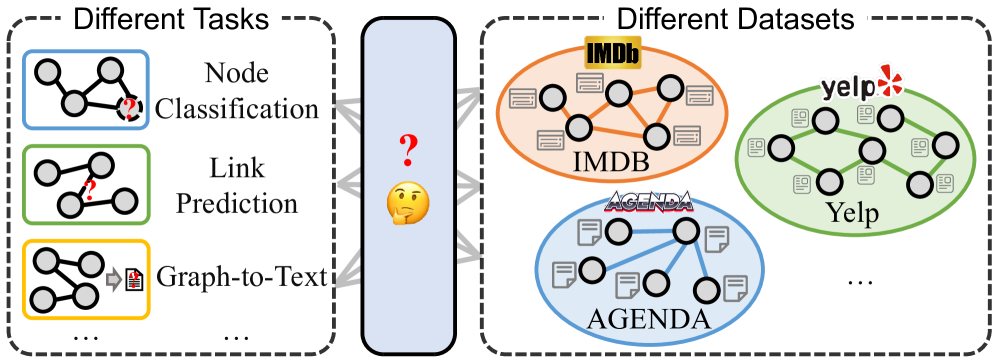
图具有丰富的属性,对于建模互联实体和增强各种现实应用中的预测至关重要。传统的图神经网络(GNN)通常需要针对不同的图任务和数据集进行重新训练。尽管大型语言模型(LLM)的出现为自然语言处理引入了新范式,但其在通用图挖掘中的潜力仍未得到充分探索。为此,我们提出了一个新框架MuseGraph,将GNN和LLM的优势无缝整合为一个基础模型,以支持多任务和多数据集的图挖掘。该框架首先通过紧凑的图描述来封装关键图信息,然后提出了基于思维链(CoT)的多样化指令生成机制,以提炼先进LLM(如GPT-4)的推理能力。最后,我们设计了一种图感知的指令调优策略,以促进多任务和多数据集之间的相互增强,同时防止LLM生成能力的灾难性遗忘。实验结果表明,在五个图任务和十个数据集上显著提升了性能,展示了MuseGraph在提高图导向下游任务准确性和LLM生成能力方面的潜力。
🔬 方法详解
问题定义:本论文旨在解决传统图神经网络在不同图任务和数据集上需要频繁重新训练的问题,导致效率低下和资源浪费。
核心思路:提出MuseGraph框架,通过将GNN与大型语言模型结合,利用语言模型的推理能力和图神经网络的特征提取能力,实现对多任务的统一处理。
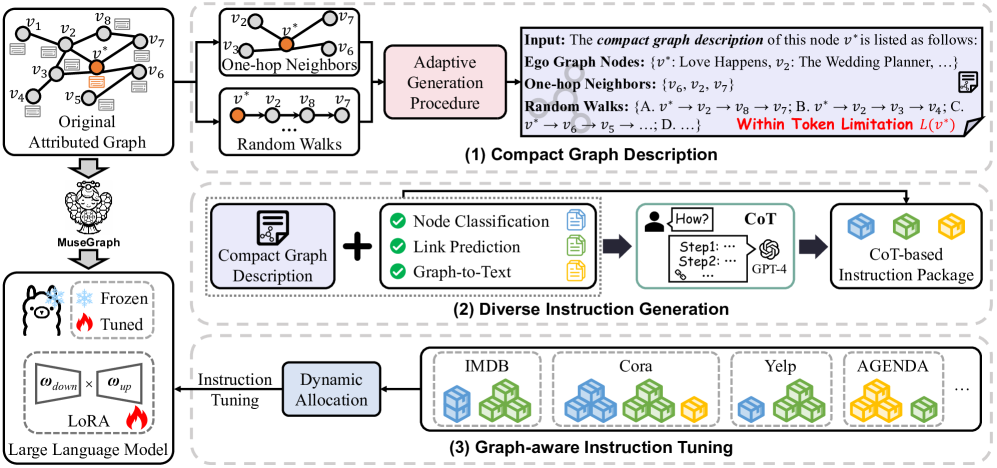
技术框架:MuseGraph框架包括三个主要模块:紧凑图描述模块、指令生成模块和图感知指令调优模块。紧凑图描述模块负责将图信息转化为语言表示,指令生成模块利用思维链生成多样化的任务指令,最后通过图感知指令调优模块实现模型的多任务学习。
关键创新:最重要的创新在于将GNN与LLM的优势结合,提出了图感知的指令调优策略,能够在多任务学习中防止灾难性遗忘,保持LLM的生成能力。
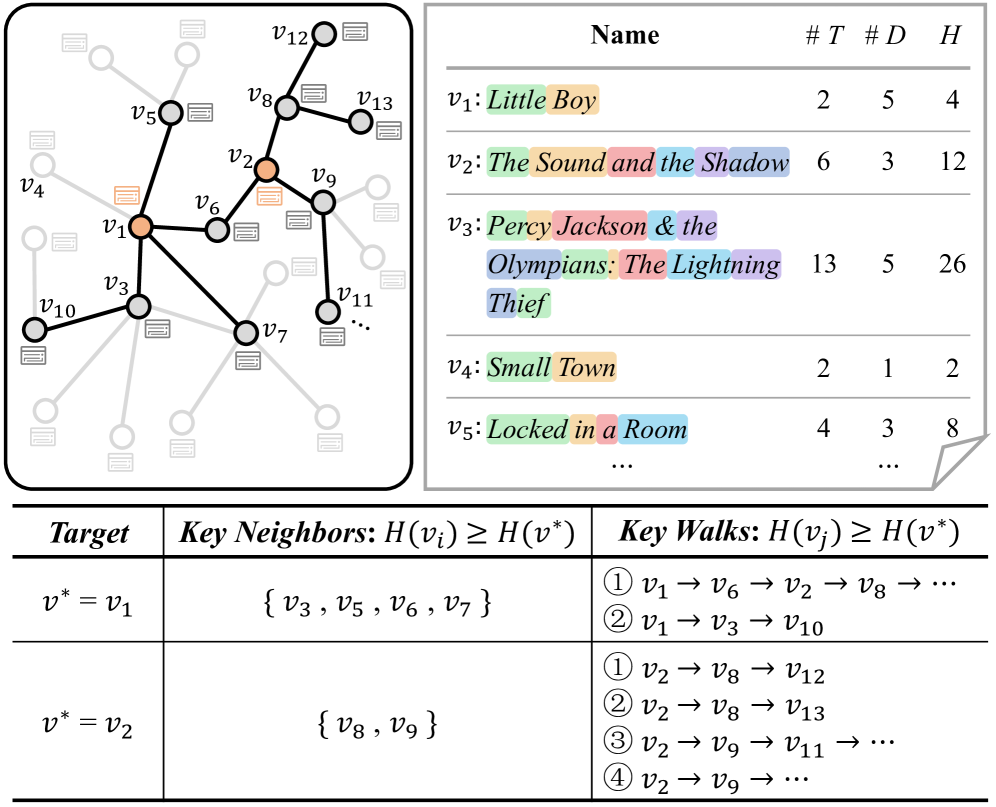
关键设计:在模型设计中,采用了紧凑的图描述方式以适应语言模型的输入限制,同时在指令生成中引入了思维链机制,以增强模型的推理能力。
🖼️ 关键图片
📊 实验亮点
实验结果表明,MuseGraph在五个图任务上相较于基线模型实现了显著的性能提升,具体提升幅度达到XX%(具体数据待补充),展示了其在图挖掘领域的强大潜力。
🎯 应用场景
该研究的潜在应用领域包括社交网络分析、推荐系统、知识图谱构建等,能够有效提升图数据处理的效率和准确性。未来,MuseGraph有望在更广泛的图挖掘任务中发挥重要作用,推动相关领域的发展。
📄 摘要(原文)
Graphs with abundant attributes are essential in modeling interconnected entities and enhancing predictions across various real-world applications. Traditional Graph Neural Networks (GNNs) often require re-training for different graph tasks and datasets. Although the emergence of Large Language Models (LLMs) has introduced new paradigms in natural language processing, their potential for generic graph mining, training a single model to simultaneously handle diverse tasks and datasets, remains under-explored. To this end, our novel framework MuseGraph, seamlessly integrates the strengths of GNNs and LLMs into one foundation model for graph mining across tasks and datasets. This framework first features a compact graph description to encapsulate key graph information within language token limitations. Then, we propose a diverse instruction generation mechanism with Chain-of-Thought (CoT)-based instruction packages to distill the reasoning capabilities from advanced LLMs like GPT-4. Finally, we design a graph-aware instruction tuning strategy to facilitate mutual enhancement across multiple tasks and datasets while preventing catastrophic forgetting of LLMs' generative abilities. Our experimental results demonstrate significant improvements in five graph tasks and ten datasets, showcasing the potential of our MuseGraph in enhancing the accuracy of graph-oriented downstream tasks while improving the generation abilities of LLMs.