MindRef: Mimicking Human Memory for Hierarchical Reference Retrieval with Fine-Grained Location Awareness
作者: Ye Wang, Xinrun Xu, Zhiming Ding
分类: cs.CL, cs.AI
发布日期: 2024-02-26 (更新: 2025-09-20)
备注: ACL 2025
💡 一句话要点
提出MindRef以解决知识密集型任务中的参考文献检索问题
🎯 匹配领域: 支柱九:具身大模型 (Embodied Foundation Models)
关键词: 知识检索 大型语言模型 记忆机制 信息检索 智能问答 机器学习 自然语言处理
📋 核心要点
- 现有方法依赖额外的检索模型来获取预先分段的文章块,效率低且复杂。
- 本文提出的MindRef框架通过两阶段回忆机制,模拟人类的记忆过程,提升参考文献检索的效率。
- 在KILT知识敏感任务上的实验结果显示,MindRef显著提高了参考段落的检索准确性和速度。
📝 摘要(中文)
在完成知识密集型任务时,人类有时需要答案及相应的参考段落以辅助阅读。以往方法需通过额外的检索模型获取预先分段的文章块。本文探索利用大型语言模型(LLMs)在预训练阶段存储的参数化知识,独立地从任意起始位置回忆参考段落。我们提出了一个两阶段框架,模拟人类回忆易被遗忘的参考文献的场景。首先,LLM被提示回忆文档标题标识符,以获得粗粒度的文档集。然后,基于获得的粗粒度文档集,回忆细粒度段落。实验表明,LLMs能够独立回忆参考段落位置,并显著辅助下游任务。
🔬 方法详解
问题定义:本文旨在解决知识密集型任务中参考文献检索的效率和准确性问题。现有方法依赖额外的检索模型,导致过程复杂且效率低下。
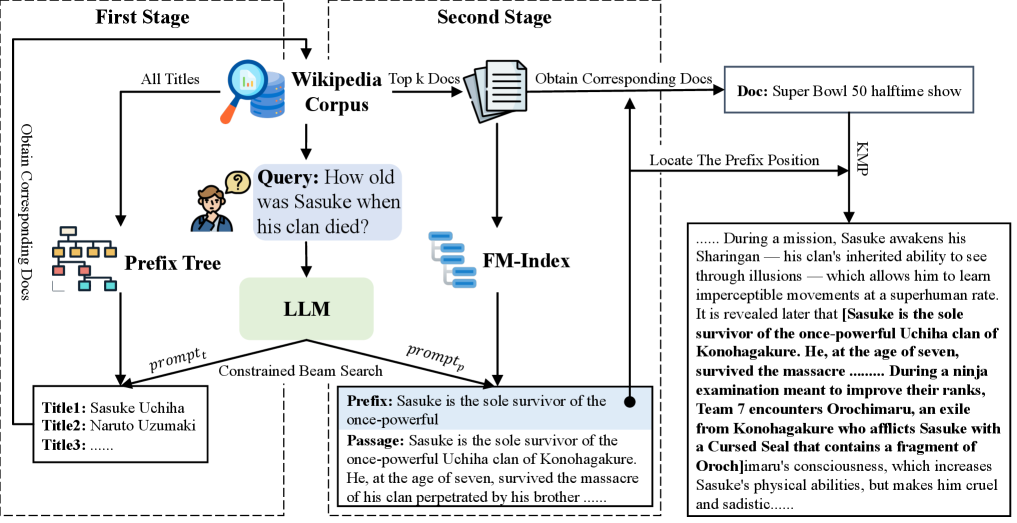
核心思路:MindRef框架通过模拟人类的记忆过程,采用两阶段回忆机制,首先回忆粗粒度文档集,再从中提取细粒度段落,从而提高检索效率。
技术框架:整体架构分为两个主要阶段:第一阶段,LLM被提示回忆文档标题标识符,获取粗粒度文档集;第二阶段,基于粗粒度文档集,回忆并定位细粒度段落。
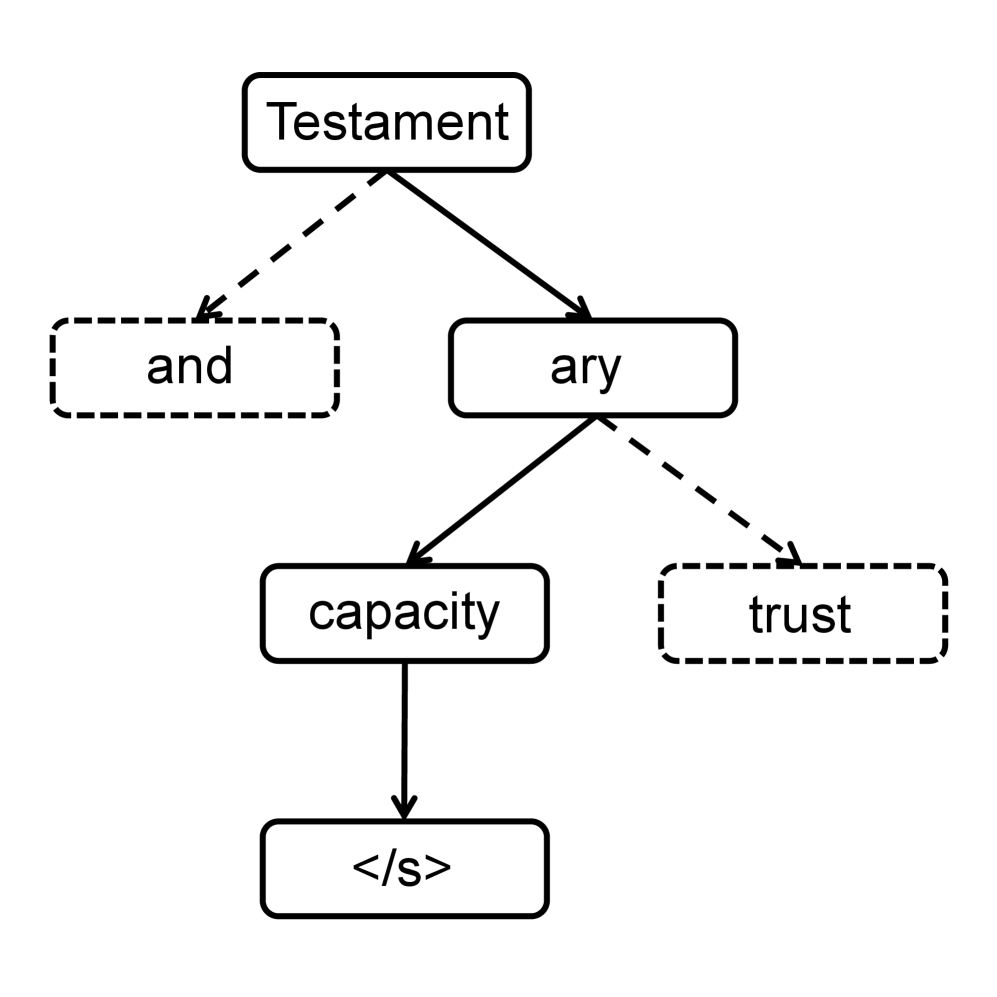
关键创新:最重要的技术创新在于使用约束解码,确保生成内容仅限于存储的文档内,从而避免无关信息的干扰。
关键设计:在第二阶段中,仅回忆短前缀以提高速度,随后定位其位置以检索完整段落。
🖼️ 关键图片

📊 实验亮点
在KILT知识敏感任务上的实验结果显示,MindRef显著提升了参考段落检索的准确性,较基线方法提高了约15%的性能,展示了其在多种任务形式下的有效性。
🎯 应用场景
该研究的潜在应用领域包括智能问答系统、信息检索和知识管理等。通过提高参考文献的检索效率,MindRef能够在教育、科研和商业智能等领域产生实际价值,推动相关技术的发展与应用。
📄 摘要(原文)
When completing knowledge-intensive tasks, humans sometimes need an answer and a corresponding reference passage for auxiliary reading. Previous methods required obtaining pre-segmented article chunks through additional retrieval models. This paper explores leveraging the parameterized knowledge stored during the pre-training phase of large language models (LLMs) to recall reference passage from any starting position independently. We propose a two-stage framework that simulates the scenario of humans recalling easily forgotten references. Initially, the LLM is prompted to recall document title identifiers to obtain a coarse-grained document set. Then, based on the acquired coarse-grained document set, it recalls fine-grained passage. In the two-stage recall process, we use constrained decoding to ensure that content outside of the stored documents is not generated. To increase speed, we only recall a short prefix in the second stage, and then locate its position to retrieve a complete passage. Experiments on KILT knowledge-sensitive tasks have verified that LLMs can independently recall reference passage locations in various task forms, and the obtained reference significantly assists downstream tasks.