GraphWiz: An Instruction-Following Language Model for Graph Problems
作者: Nuo Chen, Yuhan Li, Jianheng Tang, Jia Li
分类: cs.CL
发布日期: 2024-02-25 (更新: 2024-07-03)
备注: 27pages, 15 tables
💡 一句话要点
提出GraphWiz以解决复杂图问题
🎯 匹配领域: 支柱二:RL算法与架构 (RL & Architecture) 支柱九:具身大模型 (Embodied Foundation Models)
关键词: 图问题 语言模型 推理能力 指令调优 直接偏好优化 数据集构建 模型训练
📋 核心要点
- 现有大型语言模型在处理复杂图问题时表现不足,缺乏有效的推理能力和解决方案。
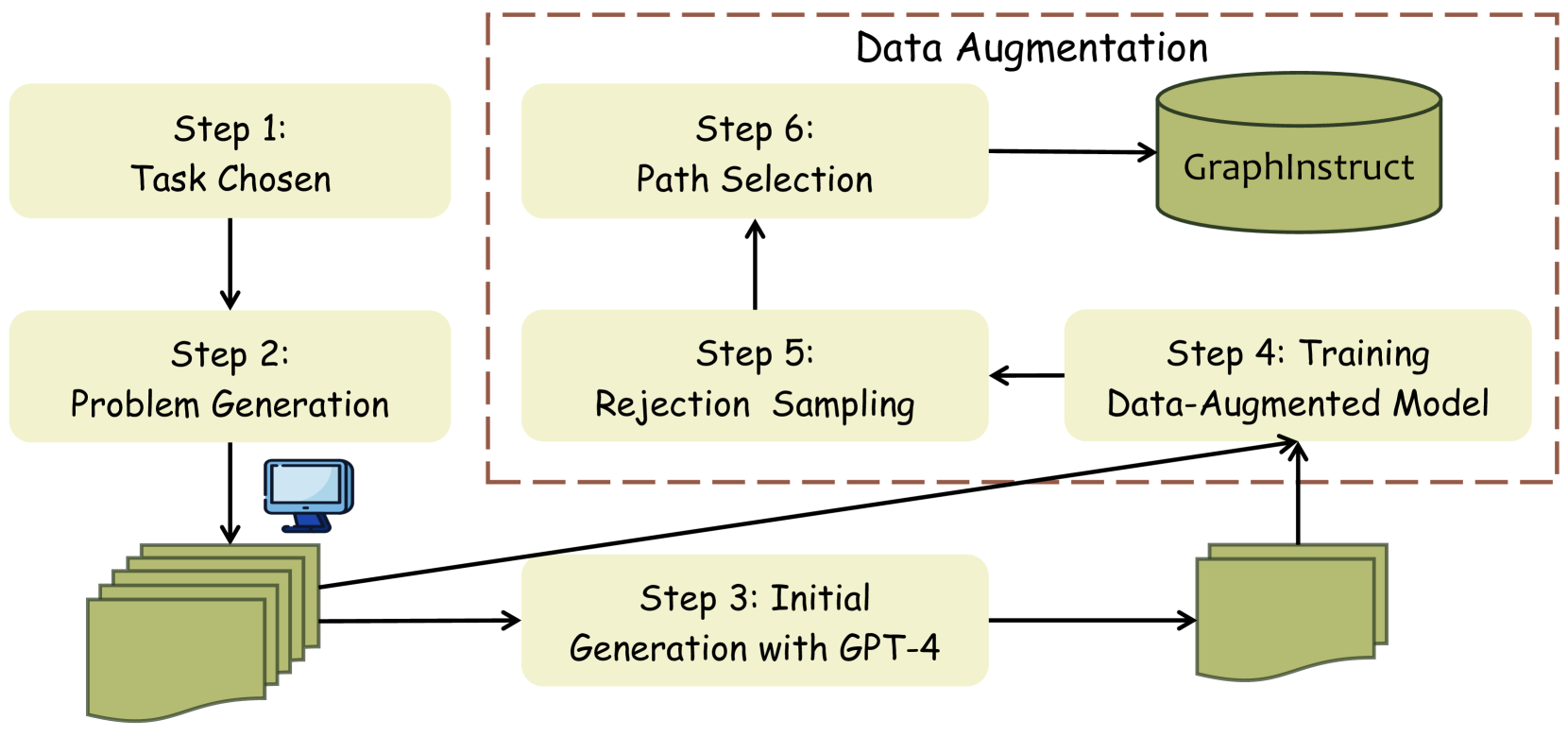
- 论文提出GraphInstruct数据集,并基于此构建GraphWiz模型,旨在通过明确的推理路径解决多种图问题。
- 实验结果显示,GraphWiz-DPO在九个任务中的平均准确率为65%,显著高于GPT-4的43.8%,展示了模型的有效性。
📝 摘要(中文)
大型语言模型(LLMs)在多个领域取得了显著成功,但在理解和解决复杂图问题方面的能力尚未得到充分探索。为此,本文引入了GraphInstruct,一个新颖且全面的指令调优数据集,旨在赋予语言模型处理广泛图问题的能力,并生成明确的推理过程。基于GraphInstruct,我们构建了开源语言模型GraphWiz,能够解决多种类型的图问题。通过将直接偏好优化(DPO)框架融入图问题解决的上下文中,增强后的模型GraphWiz-DPO在九个不同复杂度的任务中平均准确率达到65%,超越了GPT-4的43.8%。此外,研究还探讨了训练数据量与模型性能之间的微妙平衡,强调了数据增加可能导致的过拟合风险,并考察了模型推理能力在不同图任务间的可迁移性,展示了模型的适应性和实际应用潜力。
🔬 方法详解
问题定义:本文旨在解决大型语言模型在理解和解决复杂图问题时的不足,现有方法缺乏有效的推理机制和适应性。
核心思路:通过引入GraphInstruct数据集,论文赋予语言模型明确的推理路径,从而提升其在图问题上的解决能力。
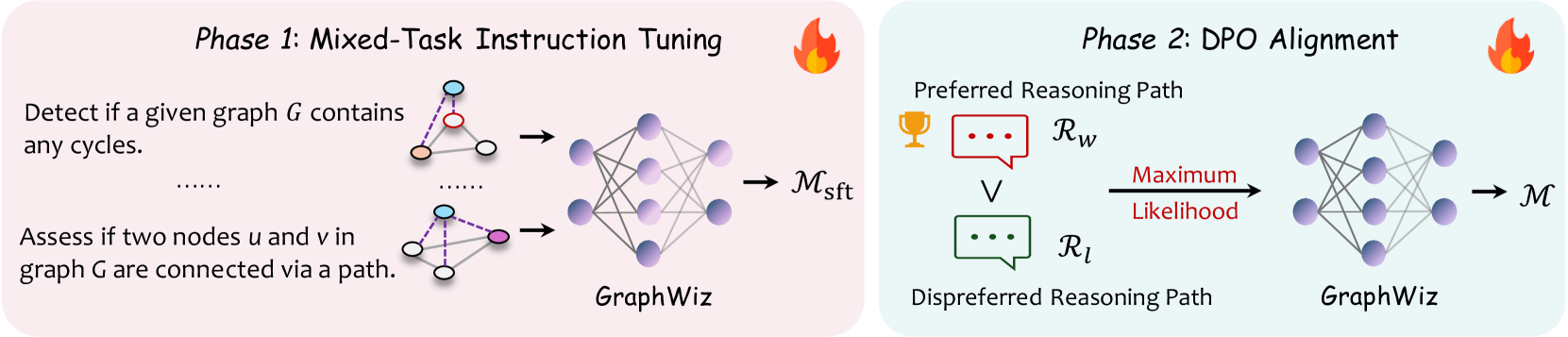
技术框架:整体架构包括数据集构建、模型训练和推理过程,主要模块涵盖指令调优和直接偏好优化(DPO)框架。
关键创新:最重要的创新在于将DPO框架应用于图问题解决中,显著提升了模型的准确性和推理能力,与传统方法相比具有本质区别。
关键设计:模型训练中采用了特定的损失函数和参数设置,以优化推理过程的清晰度和准确性,同时关注数据量与过拟合之间的平衡。
🖼️ 关键图片

📊 实验亮点
实验结果表明,GraphWiz-DPO在九个不同复杂度的图任务中平均准确率达到65%,显著优于GPT-4的43.8%。这一提升展示了模型在图问题解决中的有效性和可靠性,具有重要的研究和应用价值。
🎯 应用场景
该研究的潜在应用领域包括图数据分析、社交网络分析、路径规划等,能够为相关领域提供更高效的解决方案。未来,GraphWiz模型有望在智能决策支持系统和自动化推理任务中发挥重要作用,推动图问题解决的研究进展。
📄 摘要(原文)
Large language models (LLMs) have achieved impressive success across several fields, but their proficiency in understanding and resolving complex graph problems is less explored. To bridge this gap, we introduce GraphInstruct, a novel and comprehensive instruction-tuning dataset designed to equip language models with the ability to tackle a broad spectrum of graph problems using explicit reasoning paths. Utilizing GraphInstruct, we build GraphWiz, an open-source language model capable of resolving various graph problem types while generating clear reasoning processes. To enhance the model's capability and reliability, we incorporate the Direct Preference Optimization (DPO) framework into the graph problem-solving context. The enhanced model, GraphWiz-DPO, achieves an average accuracy of 65% across nine tasks with different complexity levels, surpassing GPT-4 which has an average accuracy of 43.8%. Moreover, our research delves into the delicate balance between training data volume and model performance, highlighting the potential for overfitting with increased data. We also explore the transferability of the model's reasoning ability across different graph tasks, indicating the model's adaptability and practical application potential. Our investigation offers a new blueprint and valuable insights for developing LLMs specialized in graph reasoning and problem-solving.