Linguistic Intelligence in Large Language Models for Telecommunications
作者: Tasnim Ahmed, Nicola Piovesan, Antonio De Domenico, Salimur Choudhury
分类: cs.CL
发布日期: 2024-02-24
💡 一句话要点
评估大型语言模型在电信领域的语言智能
🎯 匹配领域: 支柱九:具身大模型 (Embodied Foundation Models)
关键词: 大型语言模型 自然语言处理 电信领域 零-shot评估 资源受限环境 语言理解 微调模型
📋 核心要点
- 现有的LLMs在电信领域的自然语言任务中缺乏全面的评估,导致其知识和理解能力尚不明确。
- 本研究通过对四个主要LLMs进行零-shot评估,探索其在电信领域的语言理解能力,提供了一种新的评估方法。
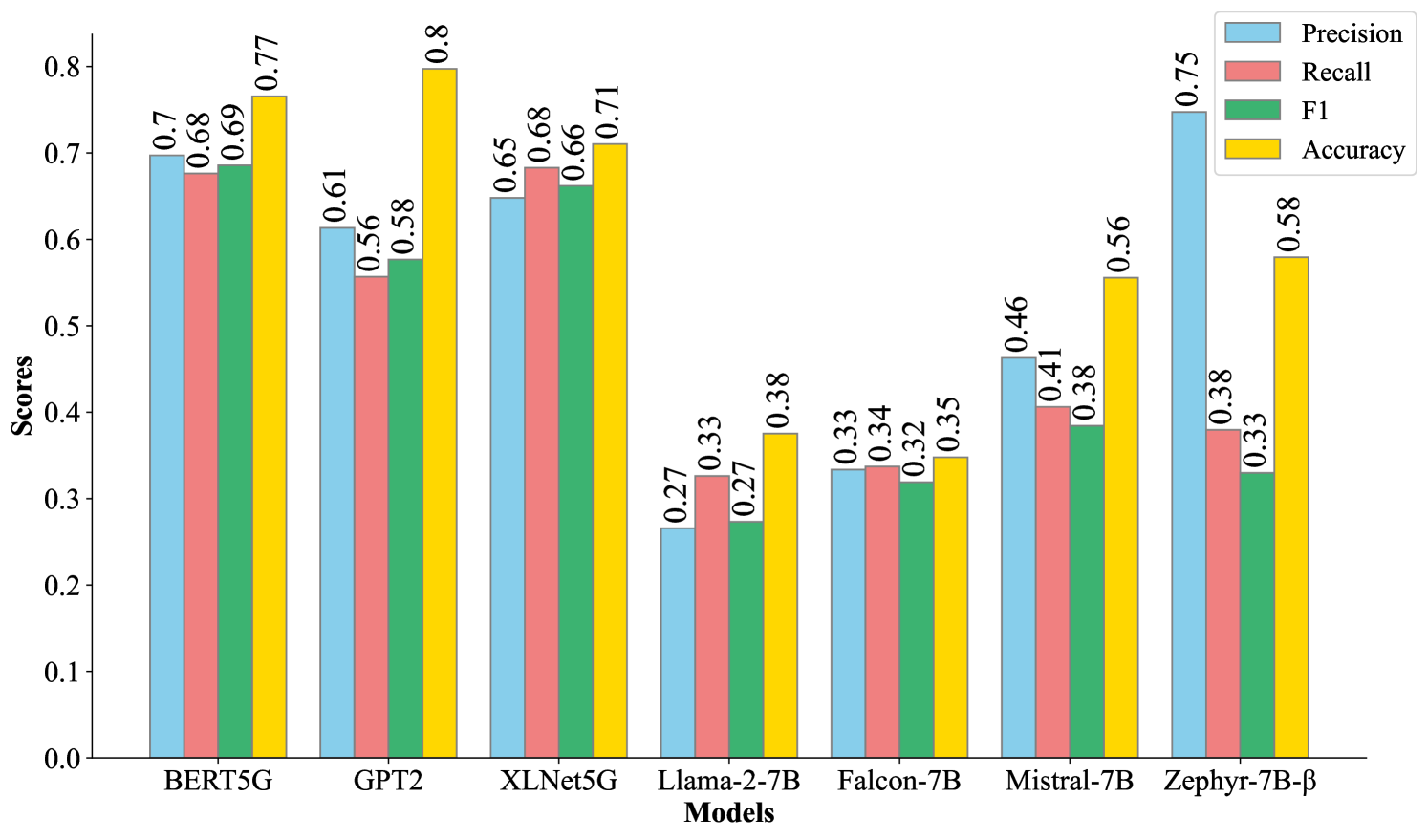
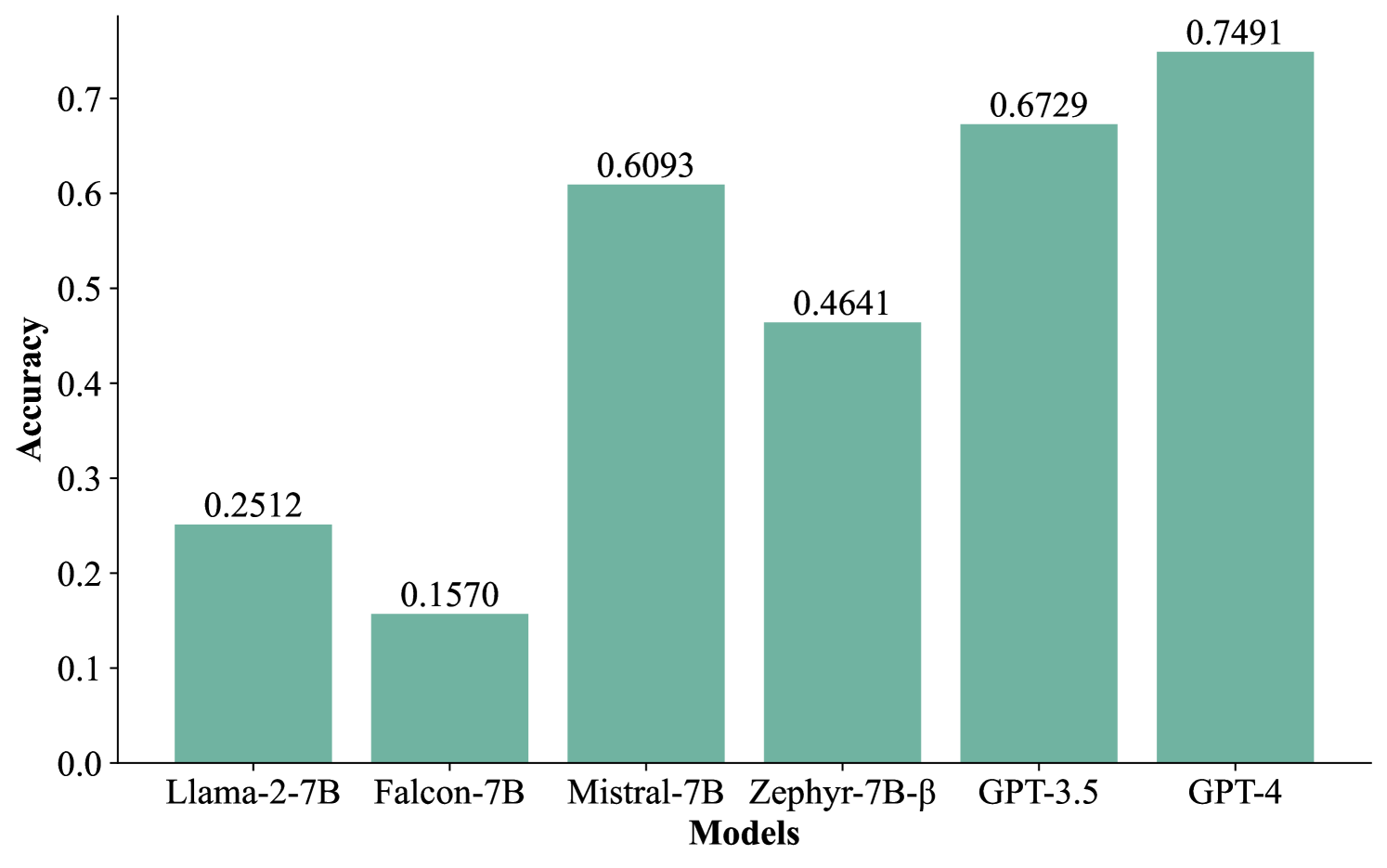
- 实验结果显示,零-shot LLMs的表现与当前最先进的微调模型相当,表明其在特定领域的潜力。
📝 摘要(中文)
大型语言模型(LLMs)在自然语言处理(NLP)领域取得了显著进展,展现了在语言生成及其他语言相关任务中的卓越能力。然而,针对电信领域的自然语言任务,LLMs的知识和理解能力尚未得到全面探索。本研究旨在评估LLMs在电信领域的知识和理解能力,通过对Llama-2、Falcon、Mistral和Zephyr四个主要LLMs进行详尽的零-shot评估。这些模型在资源受限的环境中表现出色,且其性能与当前最先进的微调模型相当。研究表明,尽管LLMs的表现不及微调模型,但它们在缺乏大量标注数据的情况下,仍然是理解该领域各个方面的宝贵资源。
🔬 方法详解
问题定义:本研究旨在解决大型语言模型在电信领域自然语言任务中的知识和理解能力评估不足的问题。现有方法主要集中在通用领域,缺乏针对特定领域的深入分析。
核心思路:通过对Llama-2、Falcon、Mistral和Zephyr四个LLMs进行零-shot评估,比较其在电信领域的表现,探索其在资源受限环境中的应用潜力。
技术框架:研究采用零-shot评估方法,首先选择四个LLMs,然后设计一系列电信领域的语言任务进行测试,最后将其性能与微调模型进行比较。
关键创新:本研究首次系统性地评估和比较了多个LLMs在电信领域的语言理解能力,填补了该领域的研究空白。
关键设计:在评估过程中,模型的选择基于其资源效率,且评估任务涵盖了多种语言相关任务,以确保全面性和代表性。
🖼️ 关键图片

📊 实验亮点
实验结果表明,零-shot LLMs在电信领域的表现与当前最先进的微调模型相当,显示出其在特定任务中的有效性。尽管LLMs的整体表现略逊于微调模型,但在资源受限的环境中,它们展现了良好的应用潜力。
🎯 应用场景
该研究的结果对电信行业具有重要的应用价值,LLMs可以作为理解和处理电信领域语言任务的工具,尤其是在缺乏大量标注数据的情况下。未来,LLMs有望在电信领域的自动化客服、故障诊断和用户交互等方面发挥更大作用。
📄 摘要(原文)
Large Language Models (LLMs) have emerged as a significant advancement in the field of Natural Language Processing (NLP), demonstrating remarkable capabilities in language generation and other language-centric tasks. Despite their evaluation across a multitude of analytical and reasoning tasks in various scientific domains, a comprehensive exploration of their knowledge and understanding within the realm of natural language tasks in the telecommunications domain is still needed. This study, therefore, seeks to evaluate the knowledge and understanding capabilities of LLMs within this domain. To achieve this, we conduct an exhaustive zero-shot evaluation of four prominent LLMs-Llama-2, Falcon, Mistral, and Zephyr. These models require fewer resources than ChatGPT, making them suitable for resource-constrained environments. Their performance is compared with state-of-the-art, fine-tuned models. To the best of our knowledge, this is the first work to extensively evaluate and compare the understanding of LLMs across multiple language-centric tasks in this domain. Our evaluation reveals that zero-shot LLMs can achieve performance levels comparable to the current state-of-the-art fine-tuned models. This indicates that pretraining on extensive text corpora equips LLMs with a degree of specialization, even within the telecommunications domain. We also observe that no single LLM consistently outperforms others, and the performance of different LLMs can fluctuate. Although their performance lags behind fine-tuned models, our findings underscore the potential of LLMs as a valuable resource for understanding various aspects of this field that lack large annotated data.