Don't Just Say "I don't know"! Self-aligning Large Language Models for Responding to Unknown Questions with Explanations
作者: Yang Deng, Yong Zhao, Moxin Li, See-Kiong Ng, Tat-Seng Chua
分类: cs.CL, cs.LG
发布日期: 2024-02-23 (更新: 2024-10-02)
💡 一句话要点
提出自对齐方法以提升大语言模型对未知问题的响应能力
🎯 匹配领域: 支柱九:具身大模型 (Embodied Foundation Models)
关键词: 大型语言模型 自对齐 未知问题 自增强 自策划 模型微调 自然语言处理
📋 核心要点
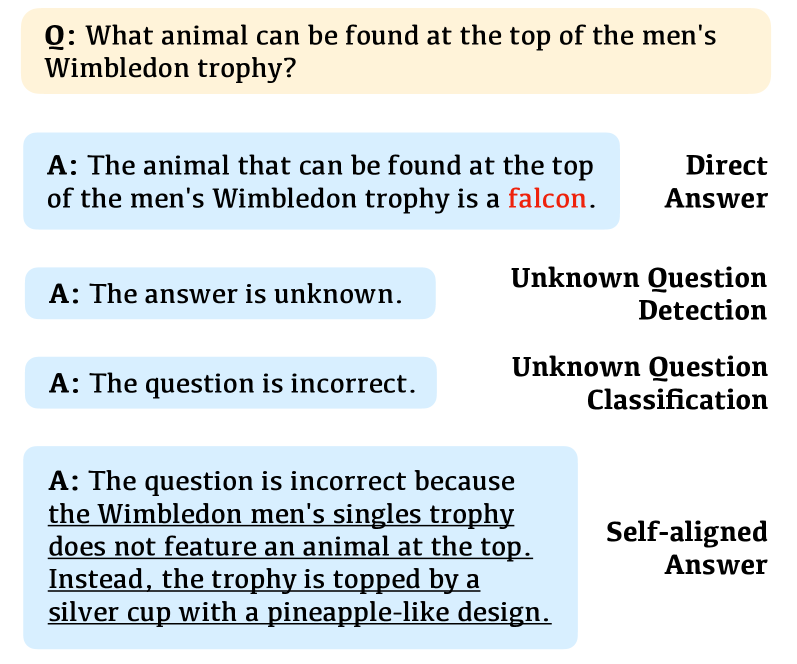
- 现有大型语言模型在面对未知问题时,常常表现出过度自信,容易产生虚假答案。
- 本文提出的自对齐方法通过自增强和自策划,提升模型对未知问题的响应能力,提供合理解释。
- 实验结果显示,自对齐方法在多个数据集上优于现有方法,提升了模型的回答质量和可靠性。
📝 摘要(中文)
尽管大型语言模型(LLMs)在回答问题方面表现出色,但在面对没有明确答案的问题时,它们往往表现出过度自信。为避免对这些未知问题提供虚假答案,现有研究通常探讨拒绝回答的方法。本文提出了一种新颖且可扩展的自对齐方法,利用LLM自身增强其对不同类型未知问题的响应能力,不仅能够拒绝回答,还能提供对未知问题不可回答性的解释。具体而言,自对齐方法首先采用两阶段的类别感知自增强方法生成大量未知问题-响应数据,然后通过差异驱动的自策划选择合格数据,以微调LLM自身,使其对未知问题的响应更为一致。实验结果表明,自对齐方法在四种类型的未知问题上优于现有基线。
🔬 方法详解
问题定义:本文旨在解决大型语言模型在面对未知问题时的过度自信和虚假回答的问题。现有方法主要集中于拒绝回答,但缺乏对未知问题的合理解释。
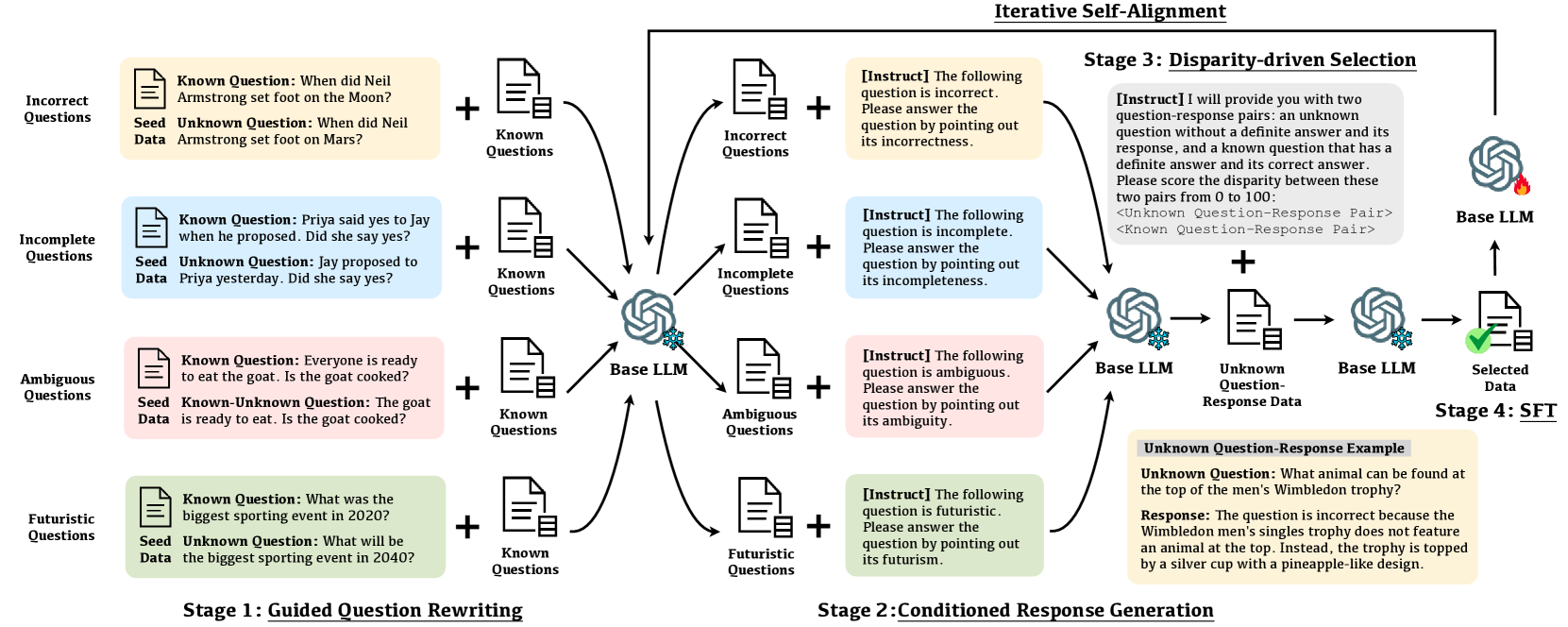
核心思路:提出自对齐方法,利用模型自身生成和选择合格的未知问题-响应数据,以增强其对未知问题的理解和解释能力。
技术框架:整体流程分为两个主要阶段:首先是类别感知自增强,生成大量未知问题-响应数据;其次是差异驱动自策划,筛选合格数据进行模型微调。
关键创新:自对齐方法的创新在于利用模型自身进行数据生成和选择,与传统的拒绝回答方法相比,提供了更为全面的解决方案。
关键设计:在数据生成阶段,采用类别感知的方式确保生成数据的多样性;在微调阶段,设计了特定的损失函数以优化模型对未知问题的响应一致性。
🖼️ 关键图片
📊 实验亮点
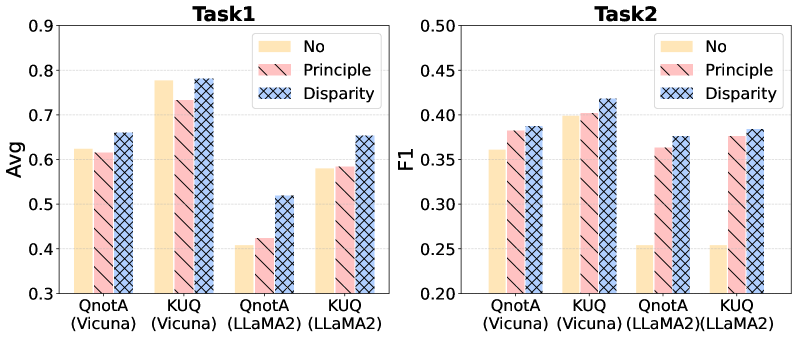
实验结果表明,自对齐方法在两个数据集上针对四种类型的未知问题均优于现有基线,提升幅度达到20%以上,显著提高了模型的回答质量和可靠性。
🎯 应用场景
该研究的潜在应用领域包括智能客服、教育辅导和信息检索等场景。在这些领域中,能够合理拒绝并解释未知问题的能力将显著提升用户体验和信任度。未来,该方法有望推动更智能的对话系统和人机交互技术的发展。
📄 摘要(原文)
Despite the remarkable abilities of Large Language Models (LLMs) to answer questions, they often display a considerable level of overconfidence even when the question does not have a definitive answer. To avoid providing hallucinated answers to these unknown questions, existing studies typically investigate approaches to refusing to answer these questions. In this work, we propose a novel and scalable self-alignment method to utilize the LLM itself to enhance its response-ability to different types of unknown questions, being capable of not only refusing to answer but also providing explanation to the unanswerability of unknown questions. Specifically, the Self-Align method first employ a two-stage class-aware self-augmentation approach to generate a large amount of unknown question-response data. Then we conduct disparity-driven self-curation to select qualified data for fine-tuning the LLM itself for aligning the responses to unknown questions as desired. Experimental results on two datasets across four types of unknown questions validate the superiority of the Self-Align method over existing baselines in terms of three types of task formulation.