Fine-Tuning Enhances Existing Mechanisms: A Case Study on Entity Tracking
作者: Nikhil Prakash, Tamar Rott Shaham, Tal Haklay, Yonatan Belinkov, David Bau
分类: cs.CL, cs.LG
发布日期: 2024-02-22
备注: ICLR 2024. 26 pages, 13 figures. Code and data at https://finetuning.baulab.info/
💡 一句话要点
研究细调如何增强语言模型的实体追踪能力
🎯 匹配领域: 支柱九:具身大模型 (Embodied Foundation Models)
关键词: 语言模型 细调 实体追踪 自然语言处理 模型机制 性能提升
📋 核心要点
- 现有语言模型在细调后性能提升的机制尚不明确,尤其在实体追踪等语言理解任务中。
- 本文通过细调语言模型,探索其对实体追踪机制的影响,提出了一系列新的分析方法。
- 研究发现,细调后的模型在处理位置信息方面表现更佳,实体追踪电路的性能优于原始模型。
📝 摘要(中文)
细调在指令跟随、代码生成和数学等广泛任务上已被证明能提升语言模型的性能。然而,细调如何影响模型内部计算的机制仍不明确。本文研究细调对语言模型内部机制的影响,以实体追踪为案例,发现细调后的模型在数学任务上表现显著提升。研究表明,原始模型和细调版本的实体追踪电路基本相同,细调模型的性能提升主要源于其增强的位置信息处理能力。为揭示这些发现,采用了Patch Patching、DCM和CMAP等方法。
🔬 方法详解
问题定义:本文旨在探讨细调如何影响语言模型的内部机制,尤其是在实体追踪任务中的表现。现有方法未能清晰解释细调对模型内部计算的具体影响。
核心思路:通过细调语言模型,特别是针对数学任务,研究其对实体追踪能力的提升,揭示细调如何增强而非根本改变模型的机制。
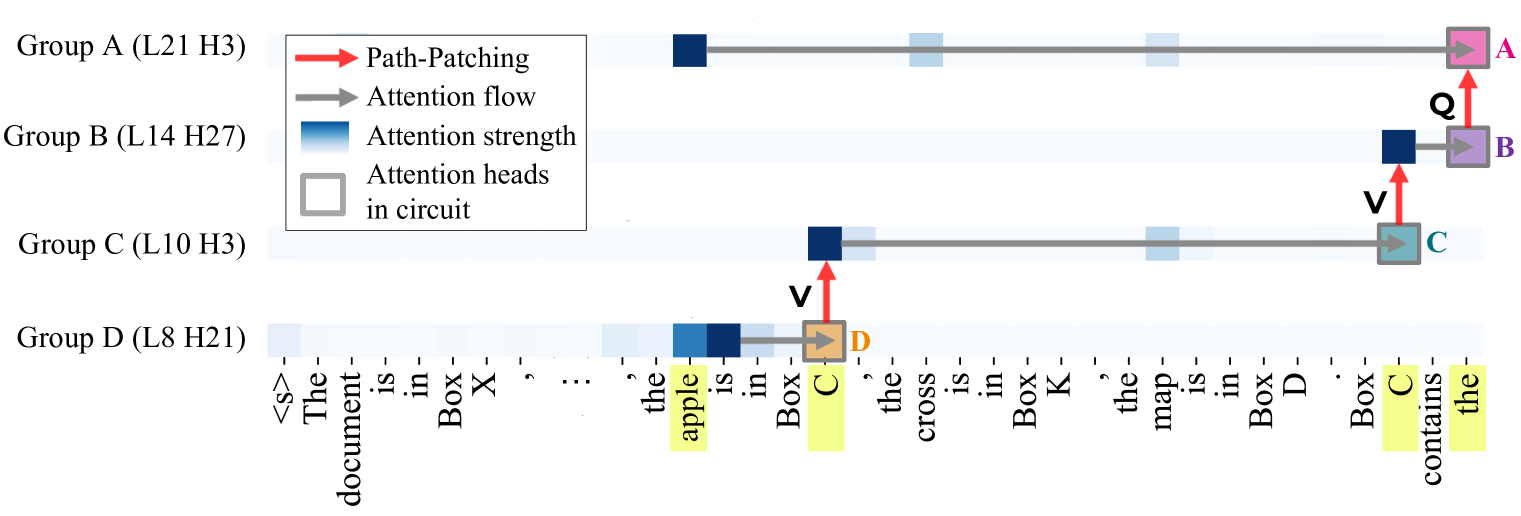
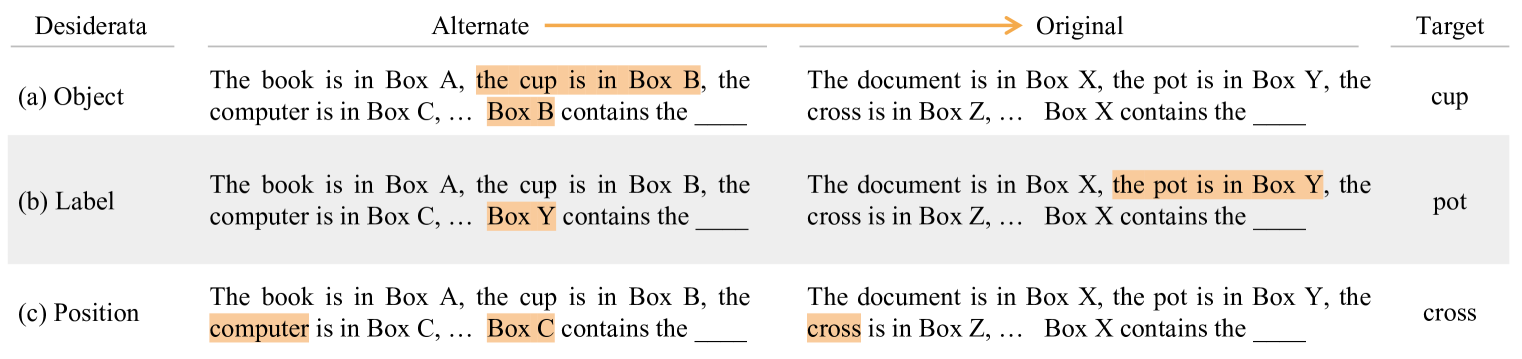
技术框架:研究采用Patch Patching、DCM和CMAP等方法,分析模型组件与语义之间的关系,探讨细调后的模型在实体追踪中的表现。
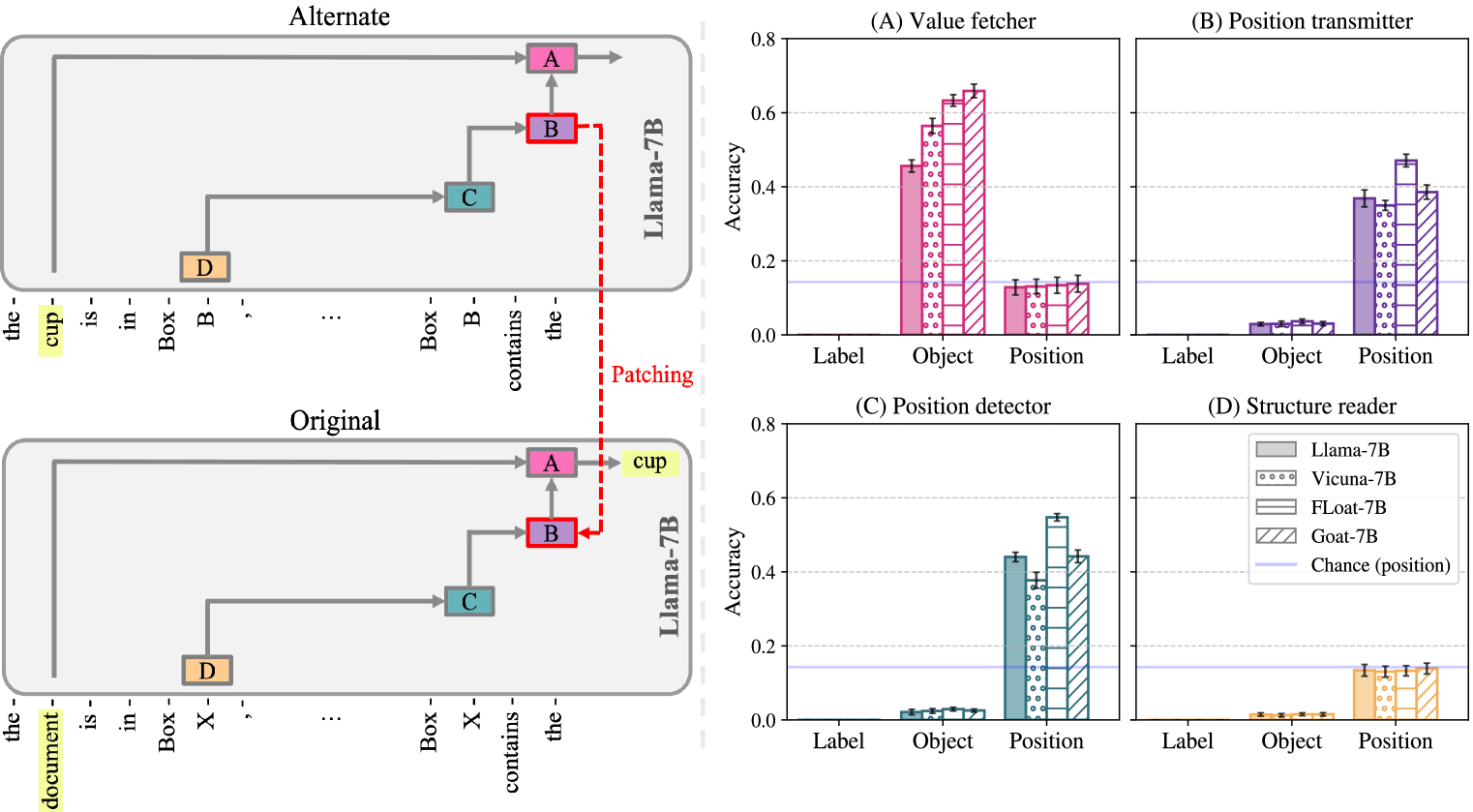
关键创新:本文的主要创新在于揭示细调后模型的实体追踪电路与原始模型基本相同,且细调版本在处理位置信息方面表现更优,强调了细调的增强作用。
关键设计:研究中使用了自动检测模型组件的DCM方法,CMAP用于跨模型激活的补丁处理,确保细调后的模型能够更好地处理增强的位置信息。
🖼️ 关键图片
📊 实验亮点
实验结果表明,细调后的模型在实体追踪任务上表现显著优于原始模型,尤其是在数学任务中,细调模型的性能提升幅度超过了原始模型的整体表现,显示出细调在增强模型能力方面的重要性。
🎯 应用场景
该研究的潜在应用领域包括自然语言处理、对话系统和智能助手等,能够提升模型在复杂语言理解任务中的表现。未来,细调技术可能在多种语言模型中得到广泛应用,推动智能系统的进一步发展。
📄 摘要(原文)
Fine-tuning on generalized tasks such as instruction following, code generation, and mathematics has been shown to enhance language models' performance on a range of tasks. Nevertheless, explanations of how such fine-tuning influences the internal computations in these models remain elusive. We study how fine-tuning affects the internal mechanisms implemented in language models. As a case study, we explore the property of entity tracking, a crucial facet of language comprehension, where models fine-tuned on mathematics have substantial performance gains. We identify the mechanism that enables entity tracking and show that (i) in both the original model and its fine-tuned versions primarily the same circuit implements entity tracking. In fact, the entity tracking circuit of the original model on the fine-tuned versions performs better than the full original model. (ii) The circuits of all the models implement roughly the same functionality: Entity tracking is performed by tracking the position of the correct entity in both the original model and its fine-tuned versions. (iii) Performance boost in the fine-tuned models is primarily attributed to its improved ability to handle the augmented positional information. To uncover these findings, we employ: Patch Patching, DCM, which automatically detects model components responsible for specific semantics, and CMAP, a new approach for patching activations across models to reveal improved mechanisms. Our findings suggest that fine-tuning enhances, rather than fundamentally alters, the mechanistic operation of the model.