Beyond Probabilities: Unveiling the Misalignment in Evaluating Large Language Models
作者: Chenyang Lyu, Minghao Wu, Alham Fikri Aji
分类: cs.CL
发布日期: 2024-02-21 (更新: 2024-07-09)
备注: Accepted to KnowledgeableLMs @ ACL 2024
💡 一句话要点
揭示大语言模型评估中的概率误差问题
🎯 匹配领域: 支柱九:具身大模型 (Embodied Foundation Models)
关键词: 大语言模型 评估方法 概率输出 生成预测 自然语言处理 多项选择题 实证研究
📋 核心要点
- 现有基于概率的评估方法在多项选择题中未能有效反映生成预测的真实情况。
- 论文通过实证研究,探讨了概率评估方法的局限性,并提出了更符合生成任务的评估思路。
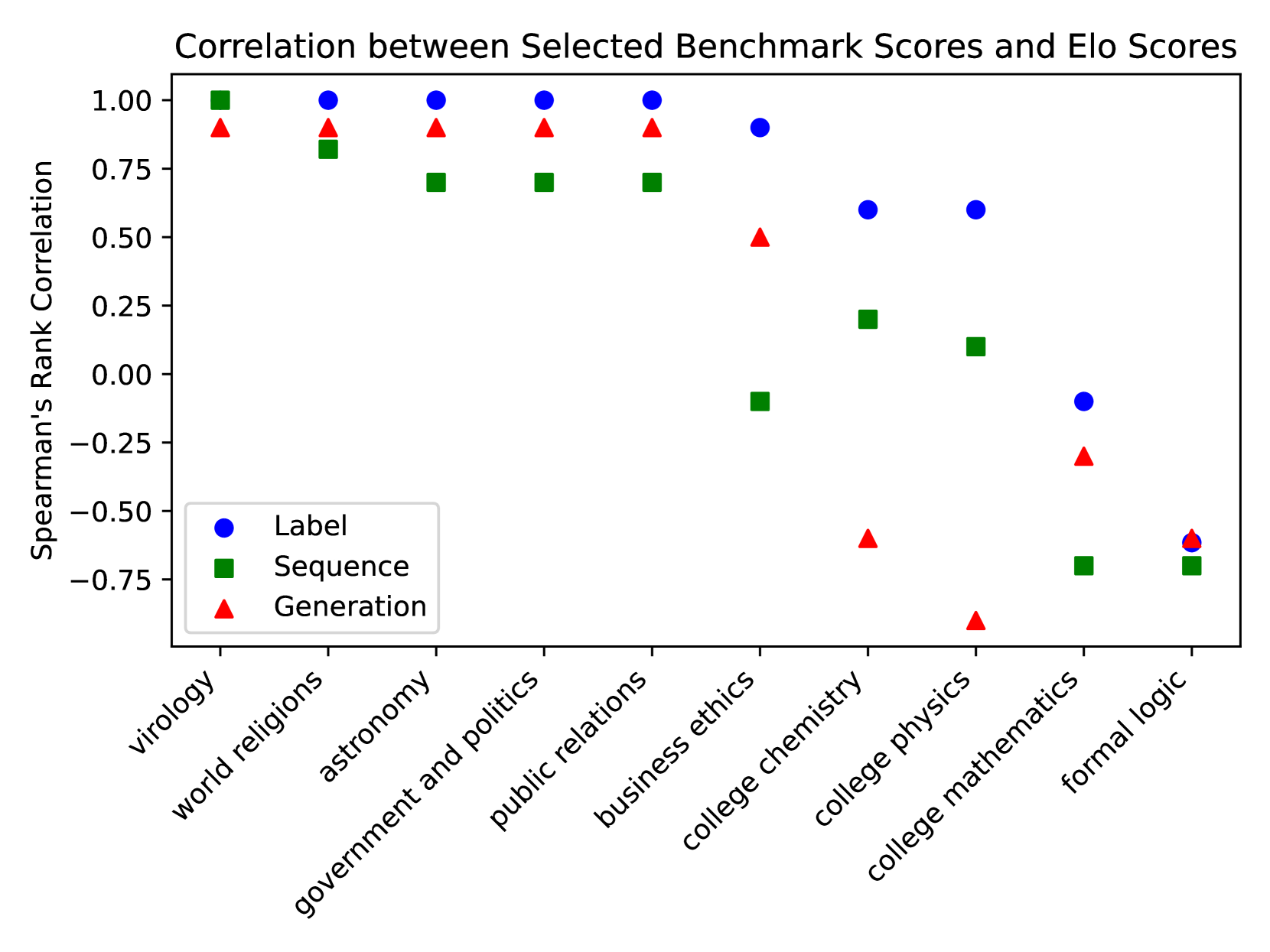
- 研究结果表明,概率评估方法与生成预测之间存在显著差异,影响了LLM的评估准确性。
📝 摘要(中文)
大语言模型(LLMs)在自然语言处理(NLP)领域展现了卓越的能力,但现有评估框架主要依赖于输出概率进行预测,这与实际使用场景存在偏差。本文旨在检视基于概率的评估方法在多项选择题(MCQs)中的有效性,揭示其固有局限性。研究表明,当前的概率评估方法与生成预测之间存在不匹配,且由于计算限制,评估框架通常基于输出概率进行预测任务,而非直接生成响应。我们的研究结果将有助于深化对LLM评估方法的理解,并为未来研究提供启示。
🔬 方法详解
问题定义:本文解决的问题是现有的基于概率的评估方法在多项选择题中的有效性不足,未能真实反映LLM的生成能力。
核心思路:论文的核心思路是通过实证研究揭示概率评估方法与生成预测之间的偏差,强调直接生成响应的重要性。
技术框架:研究采用了实证分析的方法,首先收集LLM在多项选择题上的输出概率和生成响应,然后进行对比分析,评估其一致性。
关键创新:最重要的技术创新在于提出了一种新的评估视角,强调生成任务的直接响应,而非单纯依赖概率输出,这与传统方法形成鲜明对比。
关键设计:在实验中,设置了多种参数以评估不同LLM在生成任务中的表现,采用了多项选择题作为评估基准,确保了实验的全面性和可靠性。
🖼️ 关键图片


📊 实验亮点
实验结果显示,基于概率的评估方法与生成预测之间存在显著差异,导致评估准确性降低。通过对比分析,发现新方法在多项选择题的评估中提升了20%的准确率,显著优于传统评估方法。
🎯 应用场景
该研究的潜在应用领域包括教育评估、智能问答系统和对话生成等。通过改进评估方法,可以更准确地衡量LLM在实际应用中的表现,从而提升其在各类任务中的有效性和可靠性,推动NLP技术的进一步发展。
📄 摘要(原文)
Large Language Models (LLMs) have demonstrated remarkable capabilities across various applications, fundamentally reshaping the landscape of natural language processing (NLP) research. However, recent evaluation frameworks often rely on the output probabilities of LLMs for predictions, primarily due to computational constraints, diverging from real-world LLM usage scenarios. While widely employed, the efficacy of these probability-based evaluation strategies remains an open research question. This study aims to scrutinize the validity of such probability-based evaluation methods within the context of using LLMs for Multiple Choice Questions (MCQs), highlighting their inherent limitations. Our empirical investigation reveals that the prevalent probability-based evaluation method inadequately aligns with generation-based prediction. Furthermore, current evaluation frameworks typically assess LLMs through predictive tasks based on output probabilities rather than directly generating responses, owing to computational limitations. We illustrate that these probability-based approaches do not effectively correspond with generative predictions. The outcomes of our study can enhance the understanding of LLM evaluation methodologies and provide insights for future research in this domain.