WinoViz: Probing Visual Properties of Objects Under Different States
作者: Woojeong Jin, Tejas Srinivasan, Jesse Thomason, Xiang Ren
分类: cs.CL
发布日期: 2024-02-21
备注: Preprint
💡 一句话要点
提出WinoViz以探究对象在不同状态下的视觉属性
🎯 匹配领域: 支柱九:具身大模型 (Embodied Foundation Models)
关键词: 视觉推理 语言模型 多模态学习 数据集构建 实用推理 视觉知识
📋 核心要点
- 现有研究主要关注语言模型对物体典型属性的理解,缺乏对不同状态下视觉属性的深入探讨。
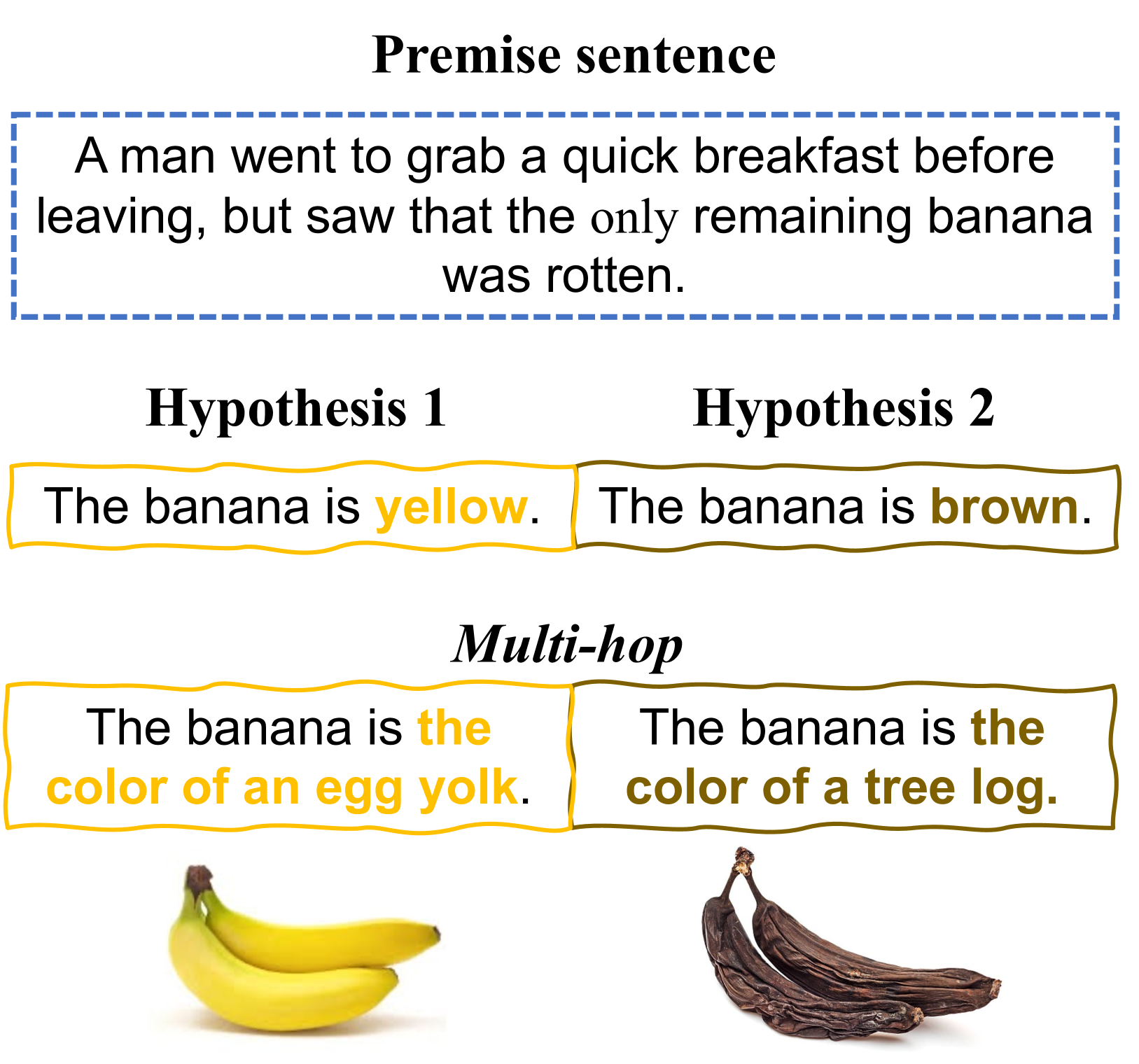
- WinoViz数据集通过1380个示例,考察语言模型在不同上下文下的视觉属性推理能力,尤其是多步推理。
- 实验结果显示大型语言模型在实用推理上表现良好,但在视觉知识推理方面存在明显不足,视觉-语言模型表现优于单一语言模型。
📝 摘要(中文)
人类在特定上下文中感知和理解物体的不同视觉属性。以香蕉为例,它在腐烂时呈棕色,而未成熟时则为绿色。以往关于视觉常识知识的研究主要集中在语言模型对物体典型属性(如颜色和形状)的理解。本文提出了WinoViz,一个包含1380个示例的文本评估数据集,旨在探测语言模型在不同上下文或状态下对物体变异视觉属性的推理能力。我们的任务具有挑战性,因为它需要实用推理和视觉知识推理。实验结果表明,大型语言模型如GPT-4表现良好,但在多步推理任务中性能显著下降,视觉知识推理成为瓶颈。
🔬 方法详解
问题定义:本文旨在解决语言模型在不同上下文下对物体视觉属性推理的不足,尤其是在多步推理任务中的表现不佳。现有方法未能充分探讨视觉知识推理的复杂性。
核心思路:WinoViz通过构建一个包含多样化上下文的文本数据集,促使语言模型进行更深层次的推理,特别是针对视觉属性的理解。设计上强调了实用推理与视觉知识推理的结合。
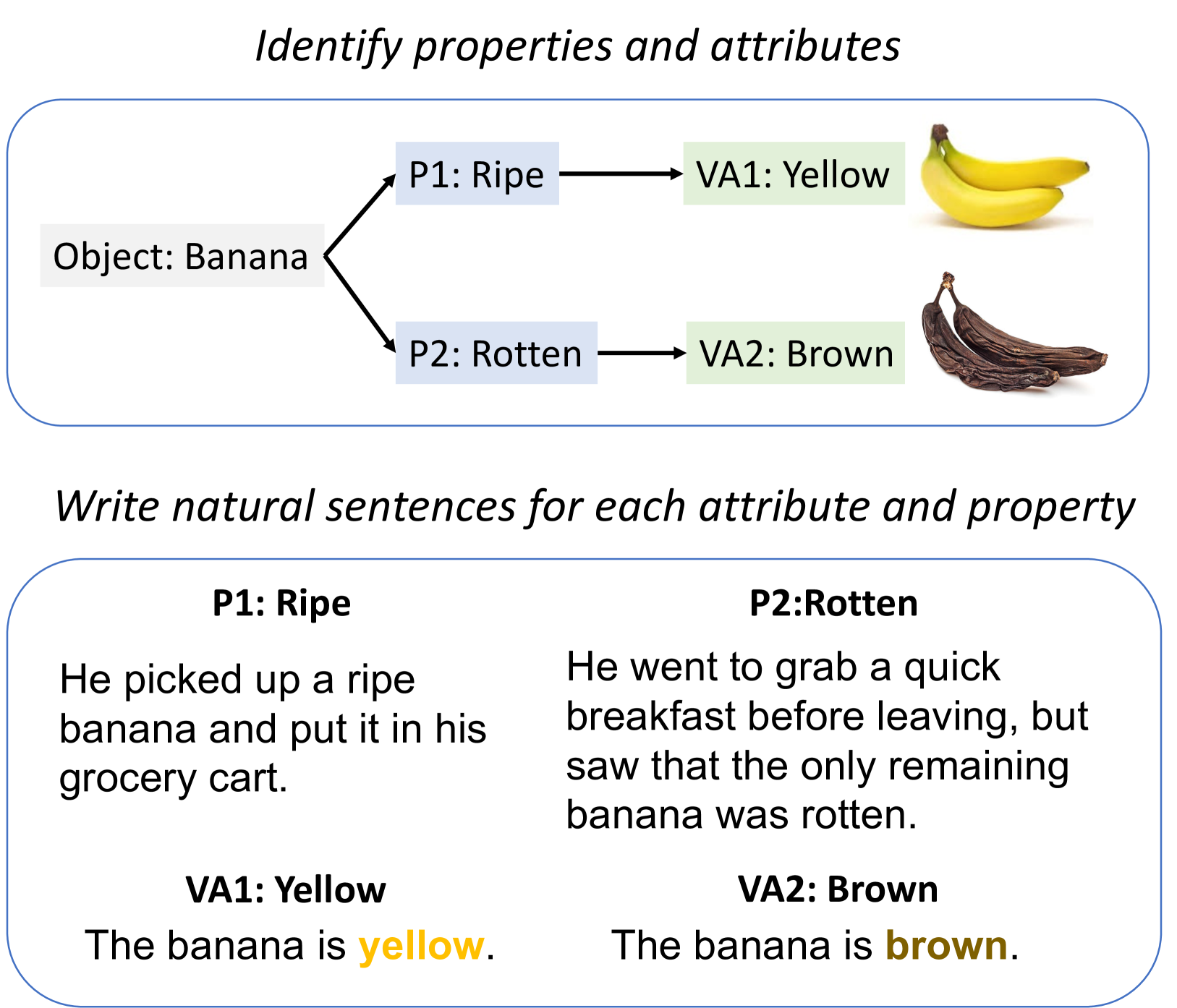
技术框架:整体架构包括数据集构建、模型训练与评估三个主要阶段。数据集由1380个示例组成,涵盖多种物体及其在不同状态下的视觉属性。模型训练则侧重于提升推理能力,评估阶段则通过多种任务验证模型性能。
关键创新:WinoViz的创新在于其多步推理任务的设计,要求模型在推理过程中进行链式思考,显著提升了对视觉属性的理解能力。这与以往单一属性推理的研究有本质区别。
关键设计:在数据集构建中,采用了多样化的上下文和状态设置,确保模型能够接触到丰富的视觉属性信息。损失函数设计上,强调了对多步推理的适应性,以提升模型在复杂任务中的表现。
🖼️ 关键图片

📊 实验亮点
实验结果显示,GPT-4在标准任务上表现良好,但在多步推理任务中性能显著下降,表明视觉知识推理是当前模型的瓶颈。此外,视觉-语言模型的表现优于单一语言模型,强调了多模态学习的重要性。
🎯 应用场景
该研究的潜在应用领域包括智能助手、自动驾驶、机器人视觉等,能够帮助机器更好地理解和处理视觉信息。未来,WinoViz可作为评估和提升视觉推理能力的重要工具,推动多模态学习的发展。
📄 摘要(原文)
Humans perceive and comprehend different visual properties of an object based on specific contexts. For instance, we know that a banana turns brown
when it becomes rotten,'' whereas it appears greenwhen it is unripe.'' Previous studies on probing visual commonsense knowledge have primarily focused on examining language models' understanding of typical properties (e.g., colors and shapes) of objects. We present WinoViz, a text-only evaluation dataset, consisting of 1,380 examples that probe the reasoning abilities of language models regarding variant visual properties of objects under different contexts or states. Our task is challenging since it requires pragmatic reasoning (finding intended meanings) and visual knowledge reasoning. We also present multi-hop data, a more challenging version of our data, which requires multi-step reasoning chains to solve our task. In our experimental analysis, our findings are: a) Large language models such as GPT-4 demonstrate effective performance, but when it comes to multi-hop data, their performance is significantly degraded. b) Large models perform well on pragmatic reasoning, but visual knowledge reasoning is a bottleneck in our task. c) Vision-language models outperform their language-model counterparts. d) A model with machine-generated images performs poorly in our task. This is due to the poor quality of the generated images.