PANDA: Preference Adaptation for Enhancing Domain-Specific Abilities of LLMs
作者: An Liu, Zonghan Yang, Zhenhe Zhang, Qingyuan Hu, Peng Li, Ming Yan, Ji Zhang, Fei Huang, Yang Liu
分类: cs.CL, cs.AI
发布日期: 2024-02-20 (更新: 2024-06-18)
备注: Accepted as Findings of ACL 2024
💡 一句话要点
提出PANDA以增强大语言模型的领域特定能力
🎯 匹配领域: 支柱九:具身大模型 (Embodied Foundation Models)
关键词: 大语言模型 领域特定能力 无调优方法 响应偏好 文本分类 交互决策 专家模型
📋 核心要点
- 现有方法在提升大语言模型的领域特定能力时,往往依赖于耗时的微调过程,且不适用于闭源模型。
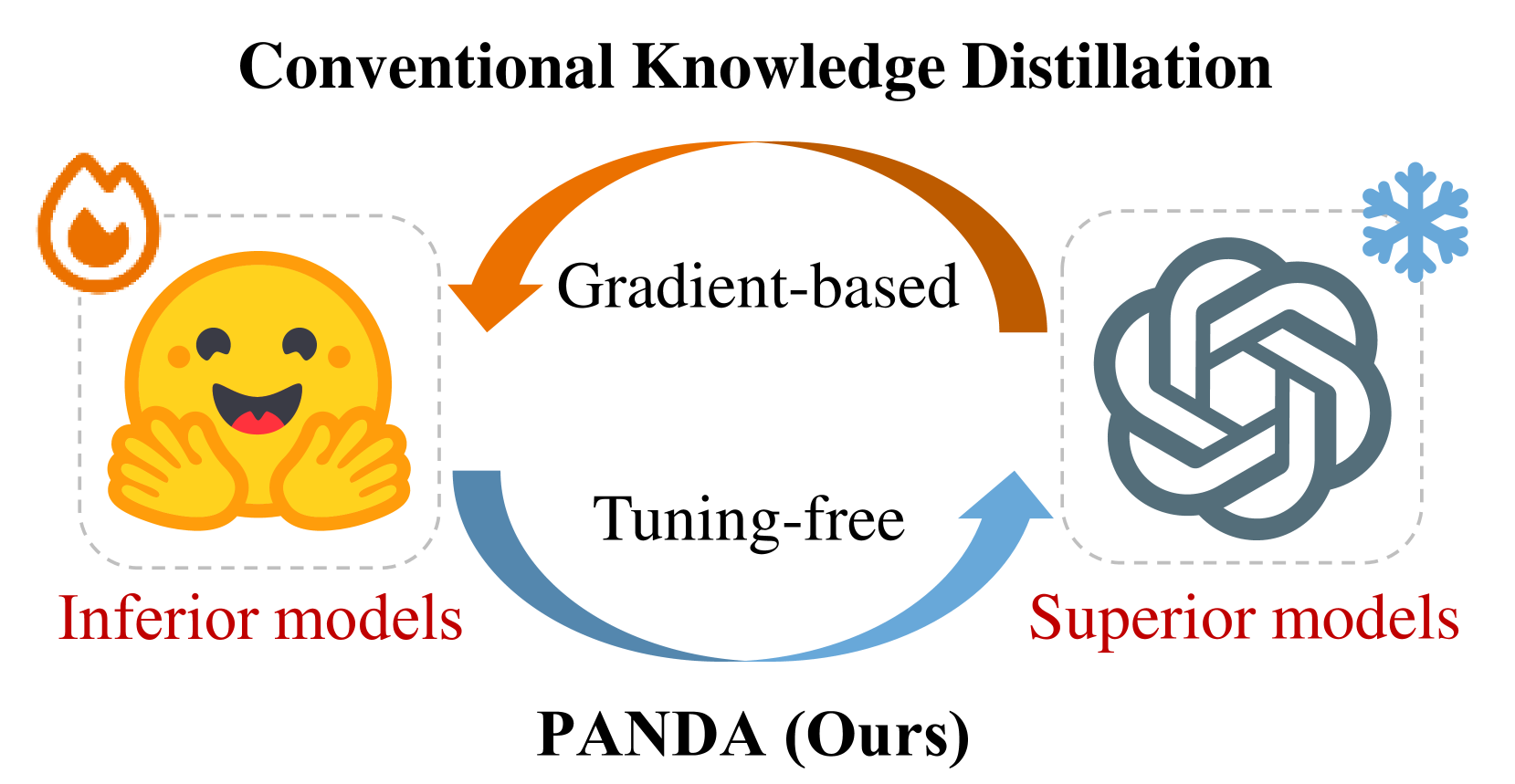
- PANDA方法通过利用专家模型的响应偏好,增强LLMs的领域特定能力,避免了传统微调的资源消耗。
- 实验结果显示,PANDA在文本分类和交互决策任务上显著提升了LLMs的表现,超越了多个专家模型。
📝 摘要(中文)
尽管大语言模型(LLMs)在多种自然语言任务中展现了显著能力,但其在领域特定任务上的表现往往不及专用模型。传统的通过相应数据集进行微调的方法既耗时又耗资源,且不适用于闭源商业LLMs。本文提出了PANDA(Preference Adaptation for Enhancing Domain-specific Abilities of LLMs),一种通过利用专家模型的响应偏好来增强LLMs领域特定能力的方法,无需微调。实验结果表明,PANDA显著提升了LLMs在文本分类和交互决策任务上的领域特定能力,甚至在ScienceWorld的四个任务上超越了专家模型。这一发现突显了探索无调优方法实现弱到强泛化的潜力。
🔬 方法详解
问题定义:本文旨在解决大语言模型在领域特定任务中的表现不足,现有的微调方法不仅耗时且不适用于闭源模型,限制了其应用。
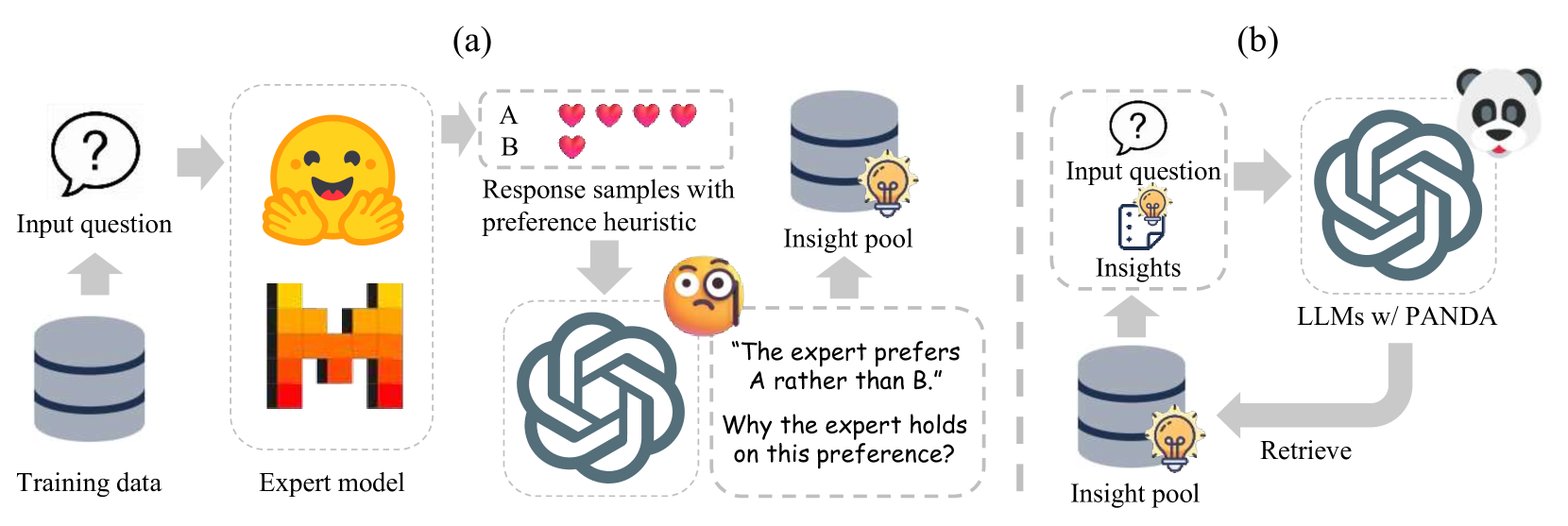
核心思路:PANDA通过分析和利用专家模型的响应偏好,增强LLMs的领域特定能力,避免了传统的微调过程,从而实现了更高效的能力提升。
技术框架:PANDA的整体架构包括数据收集、偏好分析和能力增强三个主要模块。首先收集专家模型的响应数据,然后分析其偏好,最后将这些偏好应用于LLMs以增强其能力。
关键创新:PANDA的核心创新在于其无调优的能力增强方法,通过利用专家模型的响应偏好,显著提升了LLMs的领域特定能力,这与传统的依赖微调的方法本质上有所不同。
关键设计:在实现过程中,PANDA采用了特定的损失函数来优化模型的响应偏好匹配,同时设计了适应性参数设置,以确保在不同任务中的有效性。具体的网络结构和参数设置在实验中经过多次验证,以达到最佳效果。
🖼️ 关键图片
📊 实验亮点
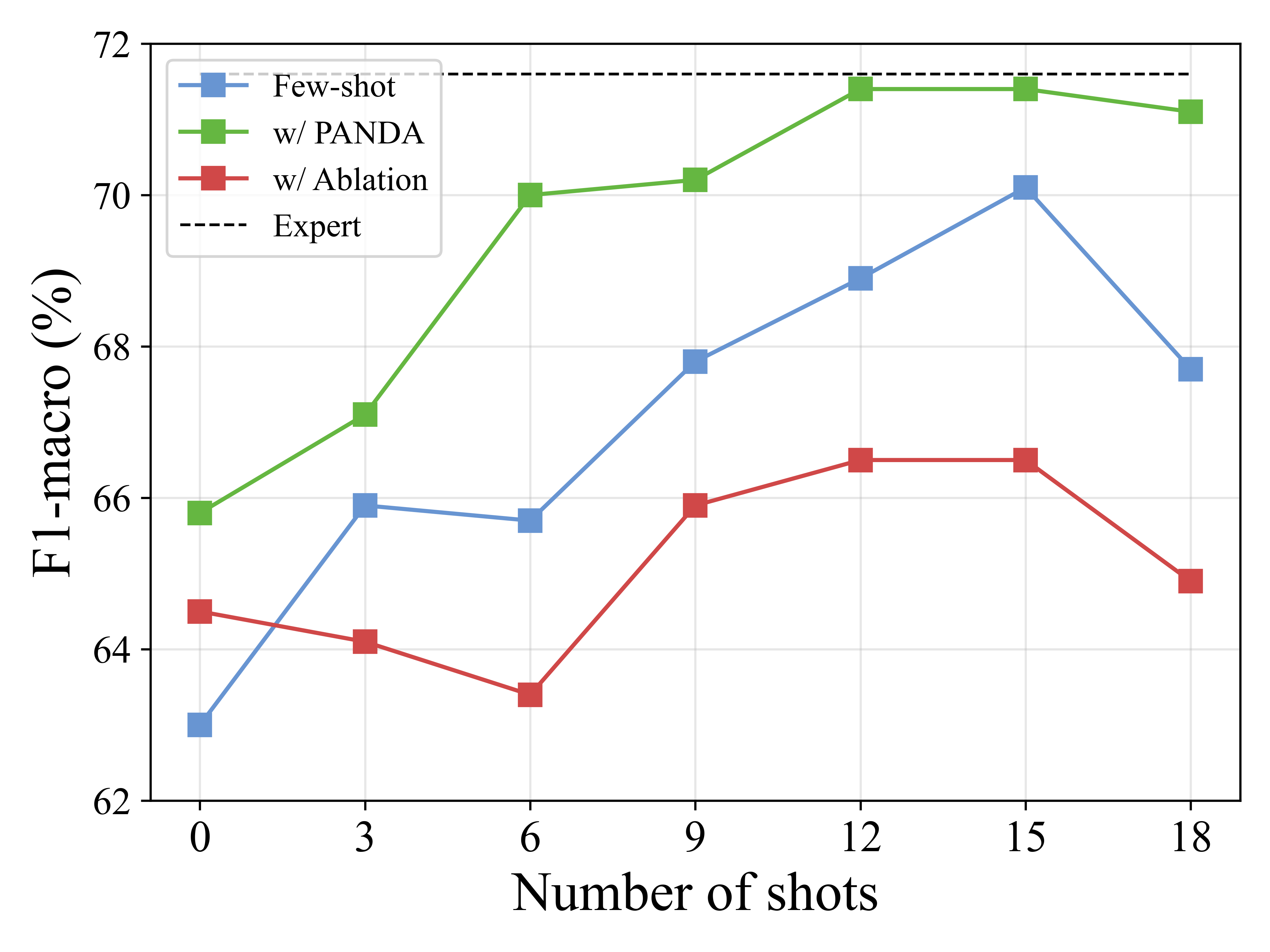
实验结果表明,PANDA显著提升了LLMs在文本分类和交互决策任务上的表现,具体而言,在ScienceWorld的四个任务中,使用PANDA的LLMs甚至超越了多个专家模型,展示了提升幅度的显著性。
🎯 应用场景
PANDA方法具有广泛的应用潜力,尤其适用于需要领域特定知识的自然语言处理任务,如医学文本分析、法律文书处理和技术文档生成等。其无调优的特性使得在资源有限的情况下,仍能有效提升模型性能,具有重要的实际价值和未来影响。
📄 摘要(原文)
While Large language models (LLMs) have demonstrated considerable capabilities across various natural language tasks, they often fall short of the performance achieved by domain-specific state-of-the-art models. One potential approach to enhance domain-specific capabilities of LLMs involves fine-tuning them using corresponding datasets. However, this method can be both resource and time-intensive, and not applicable to closed-source commercial LLMs. In this paper, we propose Preference Adaptation for Enhancing Domain-specific Abilities of LLMs (PANDA), a method designed to augment the domain-specific capabilities of LLMs by leveraging insights from the response preference of expert models without requiring fine-tuning. Our experimental results reveal that PANDA significantly enhances the domain-specific ability of LLMs on text classification and interactive decision tasks. Moreover, LLM with PANDA even outperforms the expert model that being learned on 4 tasks of ScienceWorld. This finding highlights the potential of exploring tuning-free approaches to achieve weak-to-strong generalization.