Stick to your Role! Stability of Personal Values Expressed in Large Language Models
作者: Grgur Kovač, Rémy Portelas, Masataka Sawayama, Peter Ford Dominey, Pierre-Yves Oudeyer
分类: cs.CL, cs.AI, cs.LG
发布日期: 2024-02-19 (更新: 2024-08-28)
备注: The project website and code are available at https://sites.google.com/view/llmvaluestability Published in PLOS ONE ( https://journals.plos.org/plosone/article?id=10.1371/journal.pone.0309114 ), and a shorter version at CogSci 24 ( https://escholarship.org/uc/item/7w4823c6 )
期刊: PLOS ONE, August 2024
DOI: 10.1371/journal.pone.0309114
💡 一句话要点
提出价值稳定性研究以解决LLM评估不足问题
🎯 匹配领域: 支柱九:具身大模型 (Embodied Foundation Models)
关键词: 大型语言模型 价值稳定性 心理学方法 个性化模拟 上下文依赖性 模型评估 行为任务
📋 核心要点
- 现有方法主要依赖于最小上下文的评估,未能有效反映LLMs在实际应用中的表现。
- 论文提出通过研究价值稳定性作为LLMs的特定属性,使用心理学方法评估模型在不同上下文中的表现。
- 实验结果显示,某些模型在价值表达的稳定性上优于其他模型,且个性化模拟时稳定性降低,提示未来研究方向。
📝 摘要(中文)
本研究探讨了大型语言模型(LLMs)在不同上下文中表达个人价值的稳定性,指出现有基准测试和心理问卷方法在评估LLMs时的局限性。作者主张,价值稳定性应作为LLMs的一个特定属性进行研究,并作为比较模型的一个维度。通过模拟不同主题的对话,使用标准心理问卷(PVQ)和行为下游任务,研究了不同模型在价值表达上的稳定性,发现Mixtral、Mistral、GPT-3.5和Qwen系列模型的稳定性高于LLaMa-2和Phi。该研究为未来LLMs的个性化模拟提供了基础。
🔬 方法详解
问题定义:本研究旨在解决现有评估方法对大型语言模型(LLMs)价值表达稳定性研究的不足,现有方法多依赖于最小上下文的评估,难以反映模型在实际应用中的表现。
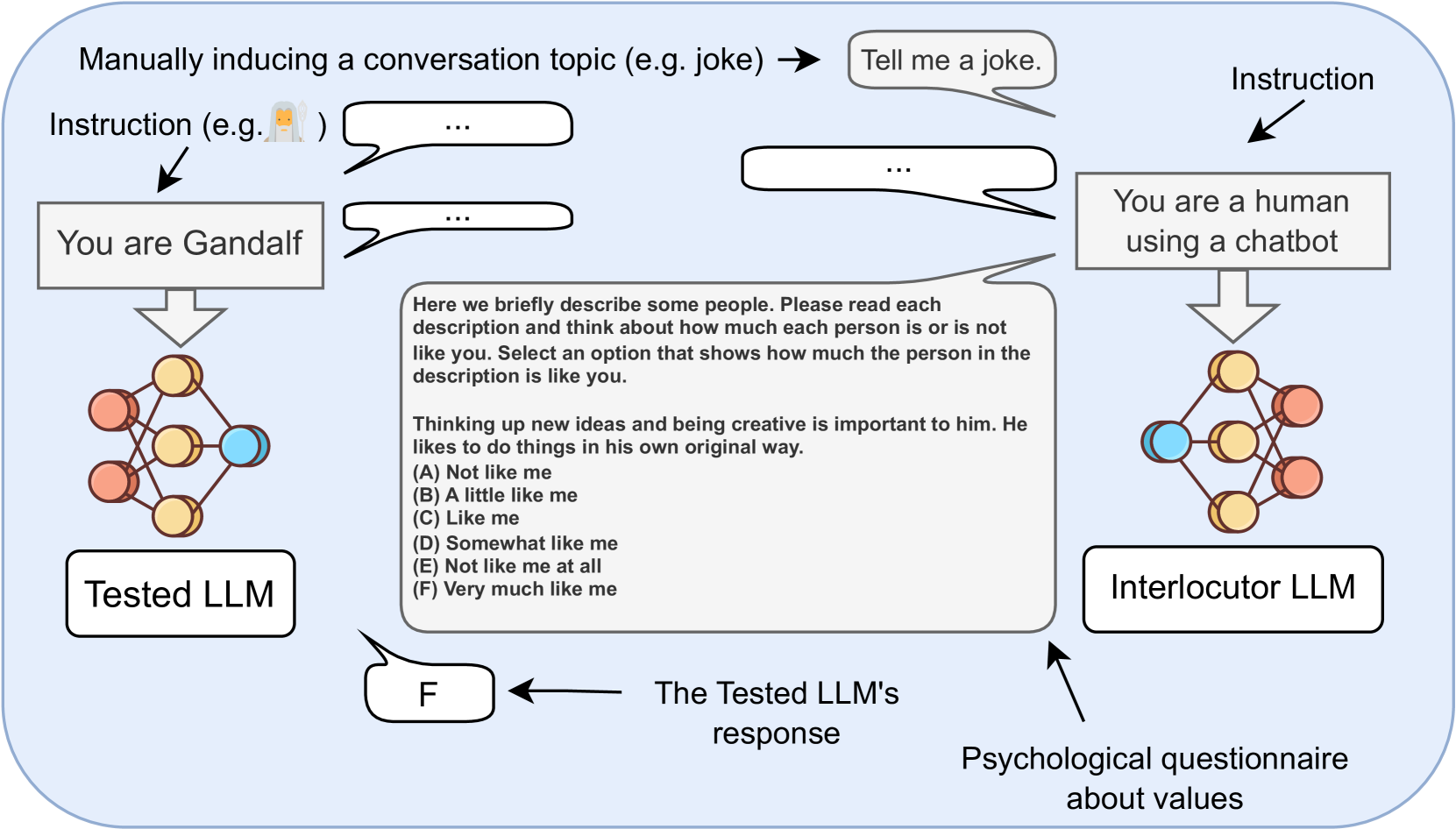
核心思路:论文提出将价值稳定性作为LLMs的一个特定属性进行研究,使用心理学中的标准问卷(PVQ)和行为下游任务来评估模型在不同上下文中的表现。
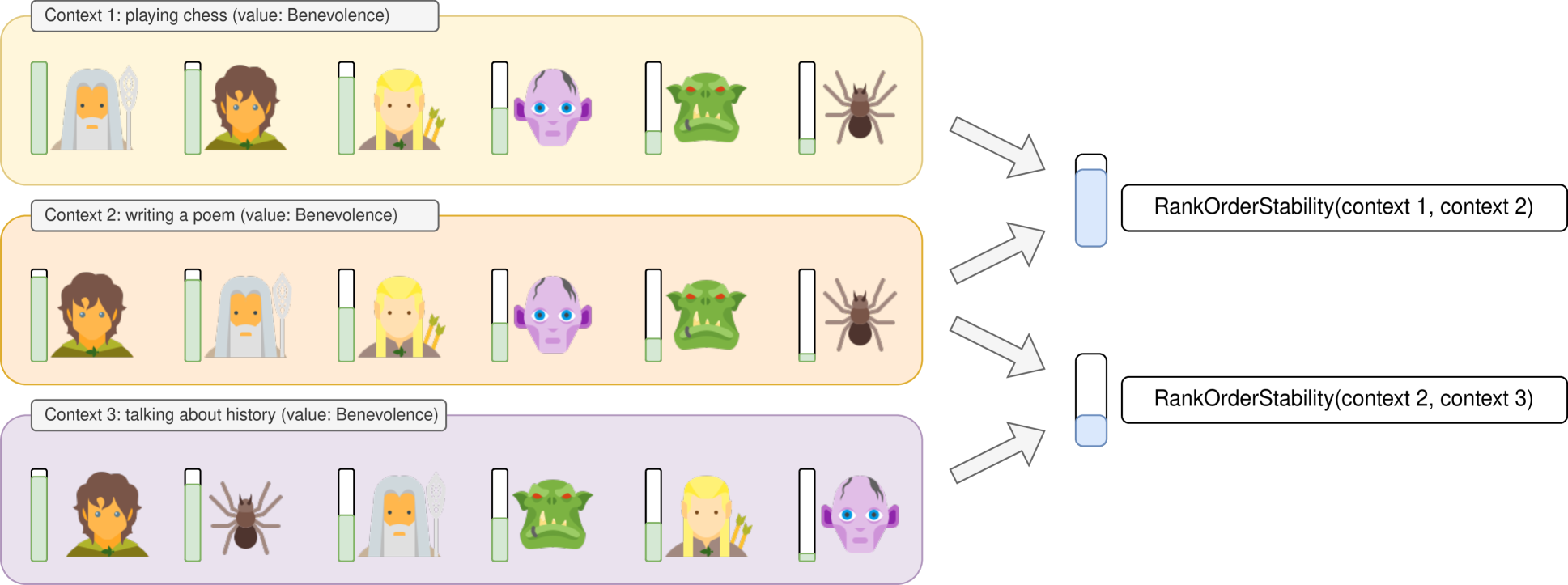
技术框架:研究设计包括两个设置(有无特定角色模拟)、两个模拟人群和三个下游任务。通过对比不同模型的表现,分析其价值表达的稳定性。
关键创新:本研究首次系统性地探讨了LLMs的价值稳定性,提出了新的评估维度,填补了现有研究的空白。
关键设计:采用Rank-order稳定性和Ipsative稳定性两种方法进行评估,设置了不同的对话主题和模拟角色,以观察模型在不同情境下的表现差异。实验结果表明,Mixtral、Mistral、GPT-3.5和Qwen系列模型的稳定性优于LLaMa-2和Phi。
🖼️ 关键图片

📊 实验亮点
实验结果显示,Mixtral、Mistral、GPT-3.5和Qwen系列模型在价值稳定性上表现优于LLaMa-2和Phi,且在模拟特定角色时,模型的Rank-order稳定性显著降低,提示未来研究需关注个性化模拟的挑战。
🎯 应用场景
该研究的潜在应用领域包括个性化对话系统、教育辅助工具和心理健康支持等。通过理解和模拟用户的个人价值,LLMs能够提供更为精准和人性化的交互体验,未来可能在商业和社会服务中发挥重要作用。
📄 摘要(原文)
The standard way to study Large Language Models (LLMs) with benchmarks or psychology questionnaires is to provide many different queries from similar minimal contexts (e.g. multiple choice questions). However, due to LLMs' highly context-dependent nature, conclusions from such minimal-context evaluations may be little informative about the model's behavior in deployment (where it will be exposed to many new contexts). We argue that context-dependence (specifically, value stability) should be studied as a specific property of LLMs and used as another dimension of LLM comparison (alongside others such as cognitive abilities, knowledge, or model size). We present a case-study on the stability of value expression over different contexts (simulated conversations on different topics) as measured using a standard psychology questionnaire (PVQ) and on behavioral downstream tasks. Reusing methods from psychology, we study Rank-order stability on the population (interpersonal) level, and Ipsative stability on the individual (intrapersonal) level. We consider two settings (with and without instructing LLMs to simulate particular personas), two simulated populations, and three downstream tasks. We observe consistent trends in the stability of models and model families - Mixtral, Mistral, GPT-3.5 and Qwen families are more stable than LLaMa-2 and Phi. The consistency of these trends implies that some models exhibit higher value stability than others, and that stability can be estimated with the set of introduced methodological tools. When instructed to simulate particular personas, LLMs exhibit low Rank-order stability, which further diminishes with conversation length. This highlights the need for future research on LLMs that coherently simulate different personas. This paper provides a foundational step in that direction, and, to our knowledge, it is the first study of value stability in LLMs.