Do Large Language Models Understand Logic or Just Mimick Context?
作者: Junbing Yan, Chengyu Wang, Jun Huang, Wei Zhang
分类: cs.CL, cs.AI
发布日期: 2024-02-19
💡 一句话要点
探讨大型语言模型的逻辑理解能力与上下文模仿
🎯 匹配领域: 支柱九:具身大模型 (Embodied Foundation Models)
关键词: 大型语言模型 逻辑推理 上下文学习 反事实方法 模型评估
📋 核心要点
- 现有的大型语言模型在逻辑推理方面表现良好,但其背后的理解能力仍不明确。
- 论文通过反事实方法探讨LLMs的推理能力,分析其是否真正理解逻辑规则。
- 研究发现,LLMs的输出对上下文的微小变化极为敏感,表明其逻辑理解存在局限性。
📝 摘要(中文)
近年来,大型语言模型(LLMs)的能力引起了广泛关注,尤其是在逻辑推理和符号推理等复杂场景中的表现。尽管这些模型在上下文学习和少量提示方面取得了显著进展,但其成功背后的原因尚未得到充分探讨。本文通过反事实方法研究LLMs在两个逻辑推理数据集上的推理能力,发现LLMs并不真正理解逻辑规则,而是通过上下文学习增强了正确答案的概率。如果改变上下文文本中的某些词或逻辑术语的概念,LLMs的输出可能会显著受到干扰,导致反直觉的响应。这项工作为LLMs的局限性提供了重要见解,强调了确保LLMs可靠逻辑推理的更强机制的必要性。
🔬 方法详解
问题定义:本文旨在探讨大型语言模型在逻辑推理中的真实能力,现有方法未能明确区分模型的理解与模仿能力。
核心思路:通过反事实方法替换上下文文本和修改逻辑概念,分析LLMs在逻辑推理任务中的表现,以揭示其潜在的理解局限性。
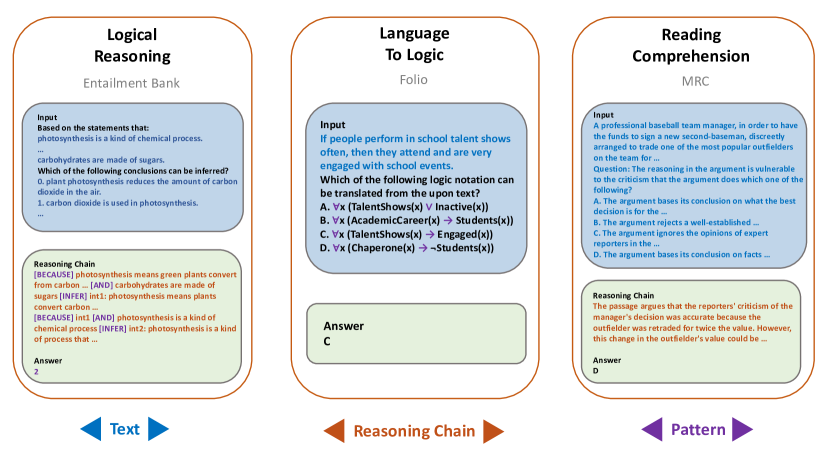
技术框架:研究采用两个逻辑推理数据集,设计实验流程包括数据预处理、上下文替换、模型推理和结果分析等主要模块。
关键创新:论文的创新在于通过反事实方法系统性地评估LLMs的逻辑推理能力,揭示其在上下文学习中的局限性,与传统评估方法相比,提供了更深入的洞察。
关键设计:实验中对上下文文本的特定词汇进行替换,观察模型输出的变化,采用标准的逻辑推理任务作为评估基准,确保实验的严谨性和可重复性。
🖼️ 关键图片
📊 实验亮点
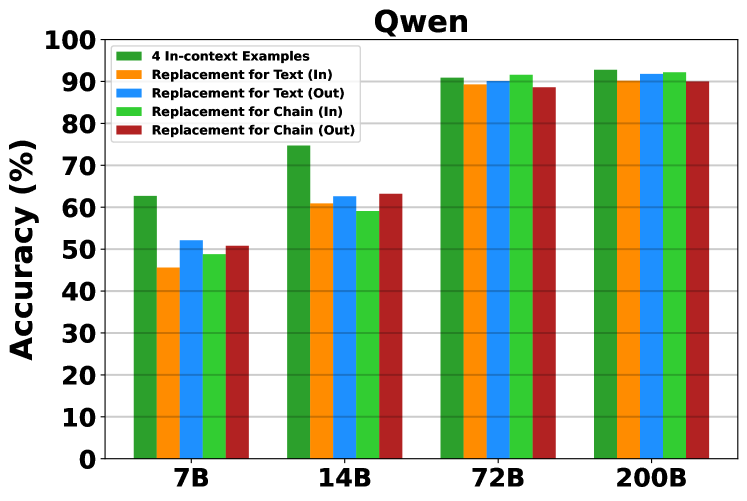
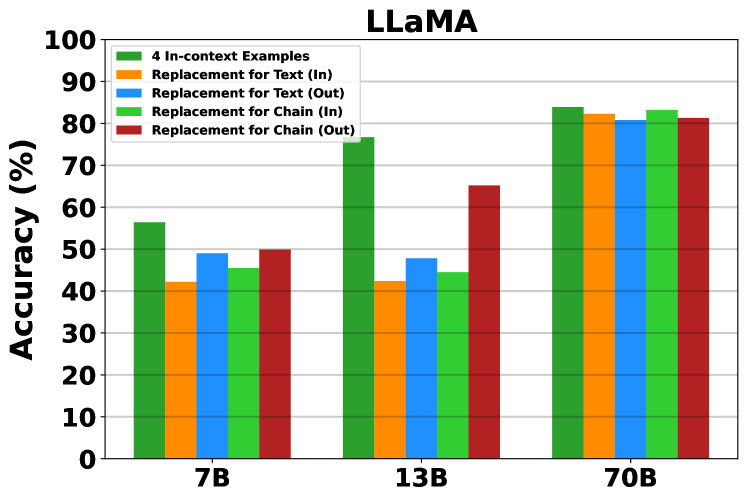
实验结果表明,当上下文文本中的特定词汇被替换时,LLMs的输出发生了显著变化,导致反直觉的结果。这一发现强调了LLMs在逻辑推理中的脆弱性,推动了对更强大推理机制的需求。
🎯 应用场景
该研究为理解大型语言模型在逻辑推理中的局限性提供了重要视角,未来可应用于改进模型设计,增强其在复杂推理任务中的可靠性,尤其是在法律、医学和科学研究等领域的应用价值显著。
📄 摘要(原文)
Over the past few years, the abilities of large language models (LLMs) have received extensive attention, which have performed exceptionally well in complicated scenarios such as logical reasoning and symbolic inference. A significant factor contributing to this progress is the benefit of in-context learning and few-shot prompting. However, the reasons behind the success of such models using contextual reasoning have not been fully explored. Do LLMs have understand logical rules to draw inferences, or do they ``guess'' the answers by learning a type of probabilistic mapping through context? This paper investigates the reasoning capabilities of LLMs on two logical reasoning datasets by using counterfactual methods to replace context text and modify logical concepts. Based on our analysis, it is found that LLMs do not truly understand logical rules; rather, in-context learning has simply enhanced the likelihood of these models arriving at the correct answers. If one alters certain words in the context text or changes the concepts of logical terms, the outputs of LLMs can be significantly disrupted, leading to counter-intuitive responses. This work provides critical insights into the limitations of LLMs, underscoring the need for more robust mechanisms to ensure reliable logical reasoning in LLMs.