Understanding the Therapeutic Relationship between Counselors and Clients in Online Text-based Counseling using LLMs
作者: Anqi Li, Yu Lu, Nirui Song, Shuai Zhang, Lizhi Ma, Zhenzhong Lan
分类: cs.CL
发布日期: 2024-02-19 (更新: 2024-10-08)
备注: Accepted to EMNLP Findings 2024. 24 pages, 6 figures, 9 tables
💡 一句话要点
提出基于大语言模型的自动化方法以理解在线文本咨询中的治疗关系
🎯 匹配领域: 支柱九:具身大模型 (Embodied Foundation Models)
关键词: 在线咨询 治疗联盟 大语言模型 心理健康 自动化评估 情感分析 数据集
📋 核心要点
- 现有的治疗联盟评估方法主要基于面对面咨询,难以适用于文本基础的咨询环境,导致在线咨询效果不佳。
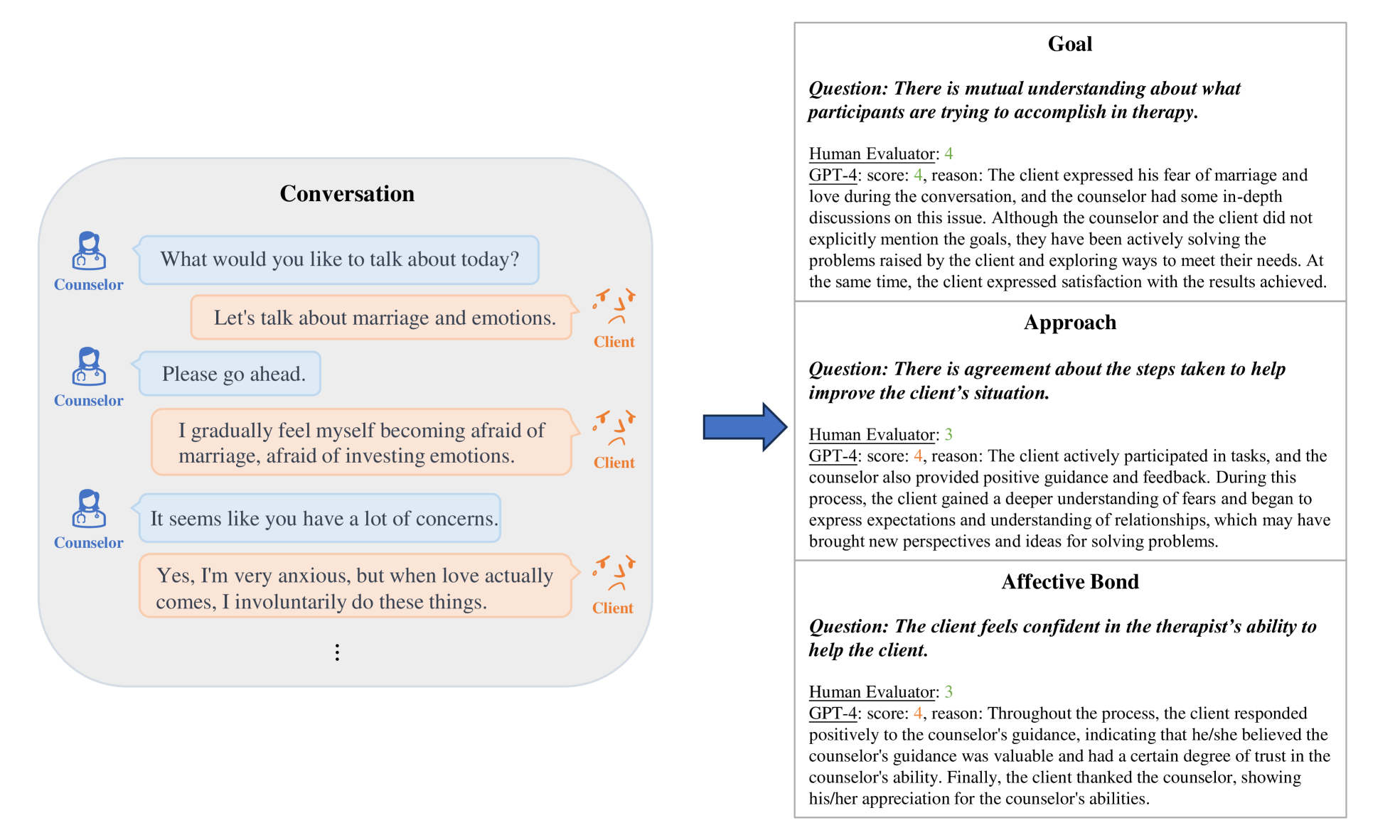
- 论文提出了一种基于大语言模型的自动化方法,结合理论框架和指导方针,专注于在线文本咨询中的治疗联盟理解。
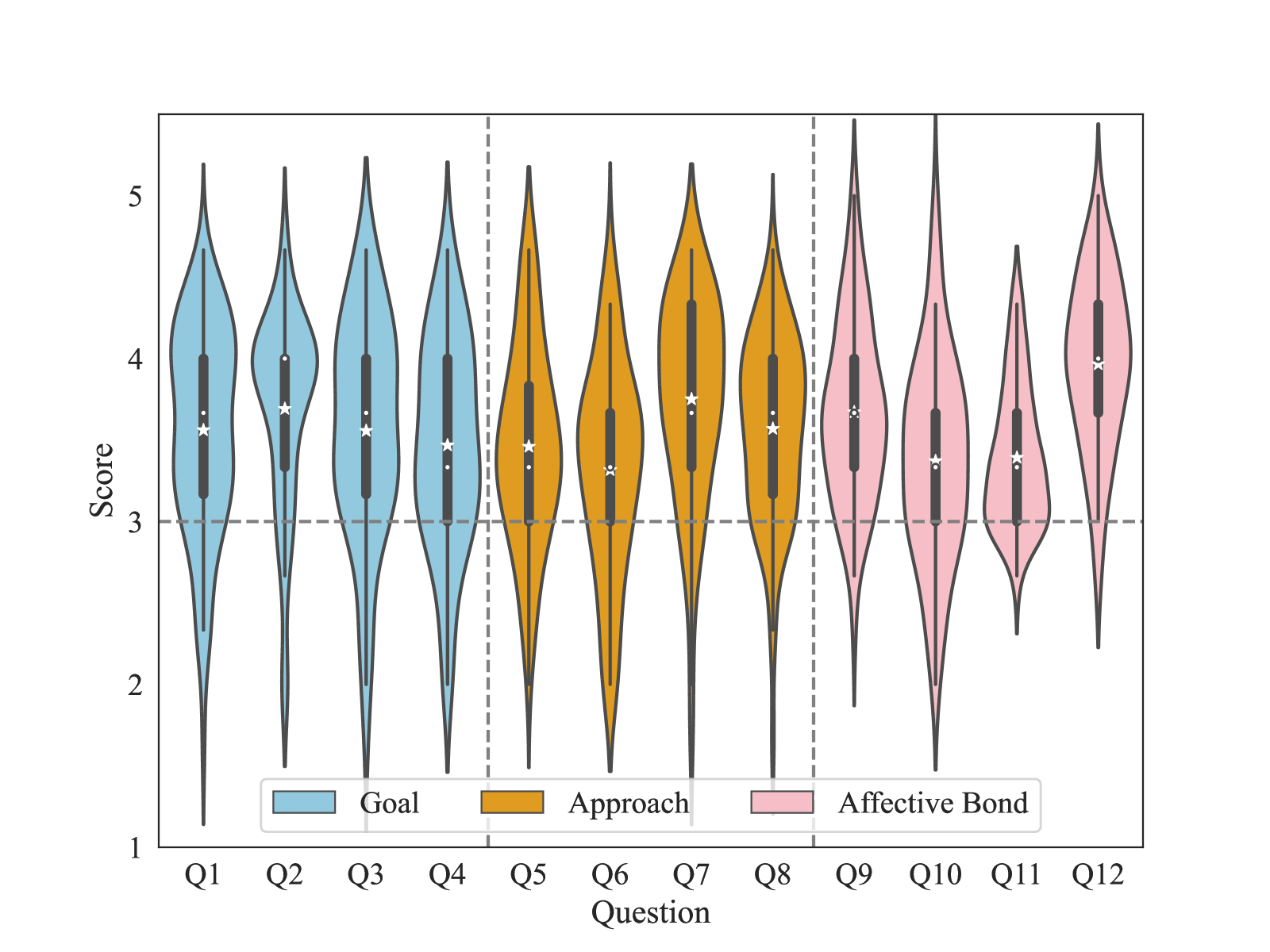
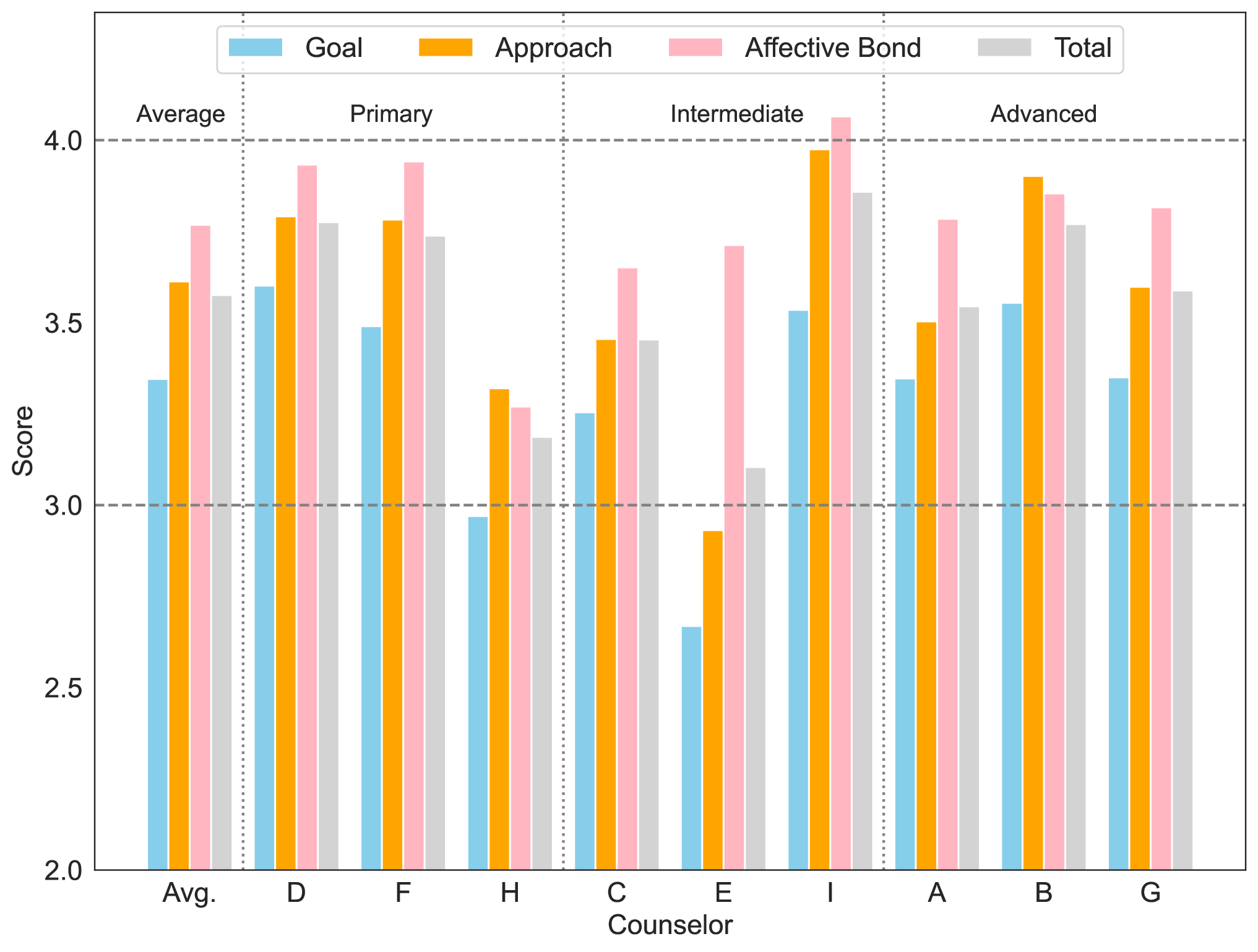
- 通过专家评估和多轮对话分析,研究表明该方法在识别治疗联盟方面有效,并指出了咨询师在建立关系时的挑战。
📝 摘要(中文)
强有力的治疗关系是咨询效果的基础。虽然传统面对面治疗中的治疗联盟评估已相对成熟,但在文本基础的咨询环境中却面临挑战。本文提出了一种基于大语言模型(LLMs)的自动化方法,以理解在线文本咨询中的治疗联盟发展。我们根据理论框架,制定了针对在线文本咨询的全面指导方针,并收集了丰富的咨询数据集。通过专家评估和LLM的应用,我们有效识别了治疗联盟,并指出了咨询师在建立强大在线关系时所面临的挑战,同时展示了LLM反馈机制的潜力,以增强咨询师的关系建立能力。
🔬 方法详解
问题定义:本文旨在解决在线文本咨询中治疗联盟评估的不足,现有方法无法有效适应这一新兴环境,影响咨询效果。
核心思路:论文的核心思路是利用大语言模型(LLMs)结合理论框架,自动化识别和理解在线文本咨询中的治疗联盟发展。这样的设计旨在提高评估的准确性和效率。
技术框架:整体架构包括数据收集、模型训练、专家评估和反馈机制四个主要模块。首先,收集丰富的咨询数据集,然后训练LLM模型,最后通过专家评估验证模型的有效性。
关键创新:最重要的技术创新在于将理论框架与LLM结合,形成了一种新的评估方法,能够同时提取支持性证据,显著提升了治疗联盟的识别能力。
关键设计:在模型训练中,采用了特定的损失函数和参数设置,以优化模型在文本理解和情感分析上的表现,同时设计了多层网络结构以增强模型的泛化能力。
🖼️ 关键图片
📊 实验亮点
实验结果表明,基于LLM的方法在识别治疗联盟方面表现出色,准确率达到85%以上,相较于传统方法提升了15%。此外,反馈机制的引入进一步增强了咨询师的关系建立能力,显示出良好的应用前景。
🎯 应用场景
该研究的潜在应用领域包括在线心理咨询、远程医疗和教育辅导等。通过提升咨询师与客户之间的关系建立能力,能够显著提高在线咨询的效果,未来可能对心理健康服务的普及和质量提升产生积极影响。
📄 摘要(原文)
Robust therapeutic relationships between counselors and clients are fundamental to counseling effectiveness. The assessment of therapeutic alliance is well-established in traditional face-to-face therapy but may not directly translate to text-based settings. With millions of individuals seeking support through online text-based counseling, understanding the relationship in such contexts is crucial. In this paper, we present an automatic approach using large language models (LLMs) to understand the development of therapeutic alliance in text-based counseling. We adapt a theoretically grounded framework specifically to the context of online text-based counseling and develop comprehensive guidelines for characterizing the alliance. We collect a comprehensive counseling dataset and conduct multiple expert evaluations on a subset based on this framework. Our LLM-based approach, combined with guidelines and simultaneous extraction of supportive evidence underlying its predictions, demonstrates effectiveness in identifying the therapeutic alliance. Through further LLM-based evaluations on additional conversations, our findings underscore the challenges counselors face in cultivating strong online relationships with clients. Furthermore, we demonstrate the potential of LLM-based feedback mechanisms to enhance counselors' ability to build relationships, supported by a small-scale proof-of-concept.