Automating Dataset Updates Towards Reliable and Timely Evaluation of Large Language Models
作者: Jiahao Ying, Yixin Cao, Yushi Bai, Qianru Sun, Bo Wang, Wei Tang, Zhaojun Ding, Yizhe Yang, Xuanjing Huang, Shuicheng Yan
分类: cs.CL
发布日期: 2024-02-19 (更新: 2024-06-06)
🔗 代码/项目: PROJECT_PAGE
💡 一句话要点
提出自动化数据集更新以解决大型语言模型评估问题
🎯 匹配领域: 支柱九:具身大模型 (Embodied Foundation Models)
关键词: 大型语言模型 数据集更新 基准评估 模仿策略 扩展策略 自然语言处理 教育评估
📋 核心要点
- 现有方法在面对基准泄漏和难度控制时,难以保证评估的可靠性和及时性。
- 论文提出自动化数据集更新的两种策略:模仿策略和扩展策略,以应对基准更新的挑战。
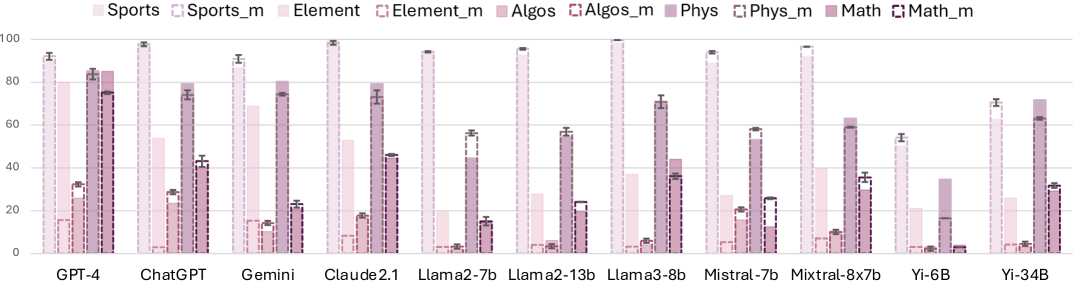
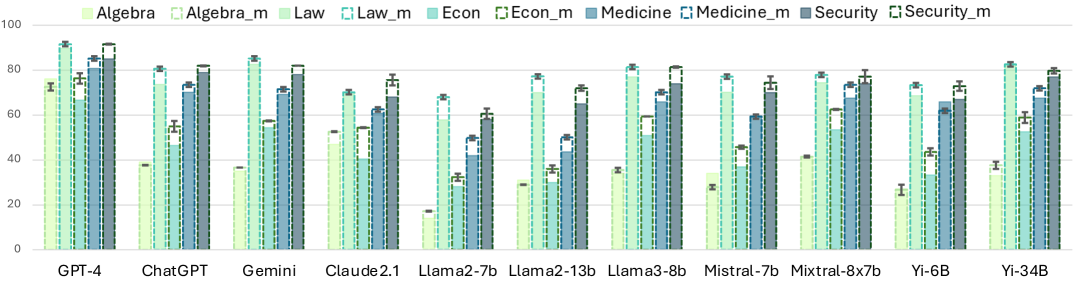
- 实验表明,模仿策略有效降低了基准泄漏的影响,而扩展策略在模仿策略失效时仍能取得良好效果。
📝 摘要(中文)
大型语言模型(LLMs)在各种自然语言基准测试中表现出色,但对更具挑战性的数据集的持续需求使得数据集的策划变得成本高昂且耗时。本文提出了一种自动化数据集更新的方法,并系统分析其在处理基准泄漏、难度控制和稳定性方面的有效性。通过模仿策略生成与原始数据相似的样本,以及扩展策略根据布鲁姆教育目标分类法扩展现有样本,实验结果表明,模仿策略有效缓解了基准泄漏带来的过高估计问题,而扩展策略在模仿策略失效时仍表现出良好效果。我们首次实现了基准的自动更新,以确保评估的可靠性和及时性。
🔬 方法详解
问题定义:本文旨在解决大型语言模型评估中的基准泄漏和难度控制问题。现有方法在数据集更新上存在高成本和低效率的痛点,导致评估结果不可靠。
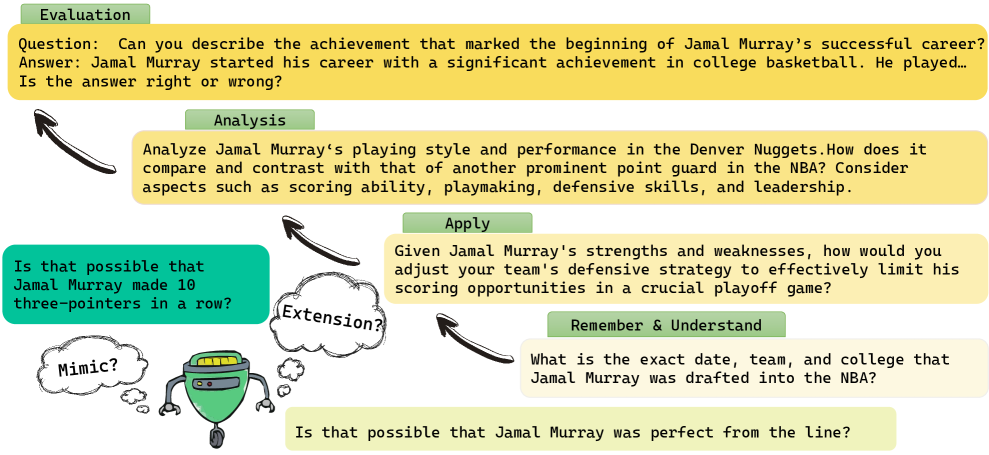
核心思路:通过自动化数据集更新,采用模仿策略和扩展策略,及时更新基准以应对模型的学习进展和基准泄漏问题。模仿策略生成相似样本,扩展策略则根据认知水平扩展样本。
技术框架:整体框架包括两个主要模块:模仿策略模块和扩展策略模块。模仿策略通过分析原始数据生成新样本,扩展策略则依据布鲁姆分类法对现有样本进行认知水平的扩展。
关键创新:本文首次实现了基准的自动更新,提供了一种系统化的方法来应对基准泄漏和难度控制问题,与现有手动更新方法相比,显著提高了效率和可靠性。
关键设计:在模仿策略中,保持样本的风格和上下文特征;在扩展策略中,依据布鲁姆分类法设计样本的认知难度,确保样本的多样性和适应性。
🖼️ 关键图片
📊 实验亮点
实验结果显示,模仿策略有效缓解了基准泄漏带来的过高估计问题,且在更新后的MMLU和BIG-Bench上表现出良好的稳定性。扩展策略在模仿策略失效时仍能保持较高的性能,确保评估的有效性。
🎯 应用场景
该研究的潜在应用领域包括教育评估、机器学习模型的性能评估以及自然语言处理任务的基准测试。通过自动化更新数据集,可以提高评估的效率和准确性,促进模型的持续改进和优化,未来可能对教育和AI领域产生深远影响。
📄 摘要(原文)
Large language models (LLMs) have achieved impressive performance across various natural language benchmarks, prompting a continual need to curate more difficult datasets for larger LLMs, which is costly and time-consuming. In this paper, we propose to automate dataset updating and provide systematic analysis regarding its effectiveness in dealing with benchmark leakage issue, difficulty control, and stability. Thus, once the current benchmark has been mastered or leaked, we can update it for timely and reliable evaluation. There are two updating strategies: 1) mimicking strategy to generate similar samples based on original data, preserving stylistic and contextual essence, and 2) extending strategy that further expands existing samples at varying cognitive levels by adapting Bloom's taxonomy of educational objectives. Extensive experiments on updated MMLU and BIG-Bench demonstrate the stability of the proposed strategies and find that the mimicking strategy can effectively alleviate issues of overestimation from benchmark leakage. In cases where the efficient mimicking strategy fails, our extending strategy still shows promising results. Additionally, by controlling the difficulty, we can better discern the models' performance and enable fine-grained analysis neither too difficult nor too easy an exam can fairly judge students' learning status. To the best of our knowledge, we are the first to automate updating benchmarks for reliable and timely evaluation. Our demo leaderboard can be found at https://yingjiahao14.github.io/Automating-DatasetUpdates/.