When LLMs Meet Cunning Texts: A Fallacy Understanding Benchmark for Large Language Models
作者: Yinghui Li, Qingyu Zhou, Yuanzhen Luo, Shirong Ma, Yangning Li, Hai-Tao Zheng, Xuming Hu, Philip S. Yu
分类: cs.CL
发布日期: 2024-02-16 (更新: 2024-06-09)
🔗 代码/项目: GITHUB
💡 一句话要点
提出FaLlacy理解基准以挑战大型语言模型的推理能力
🎯 匹配领域: 支柱六:视频提取与匹配 (Video Extraction) 支柱九:具身大模型 (Embodied Foundation Models)
关键词: 大型语言模型 谬误理解 基准测试 文本处理 推理能力
📋 核心要点
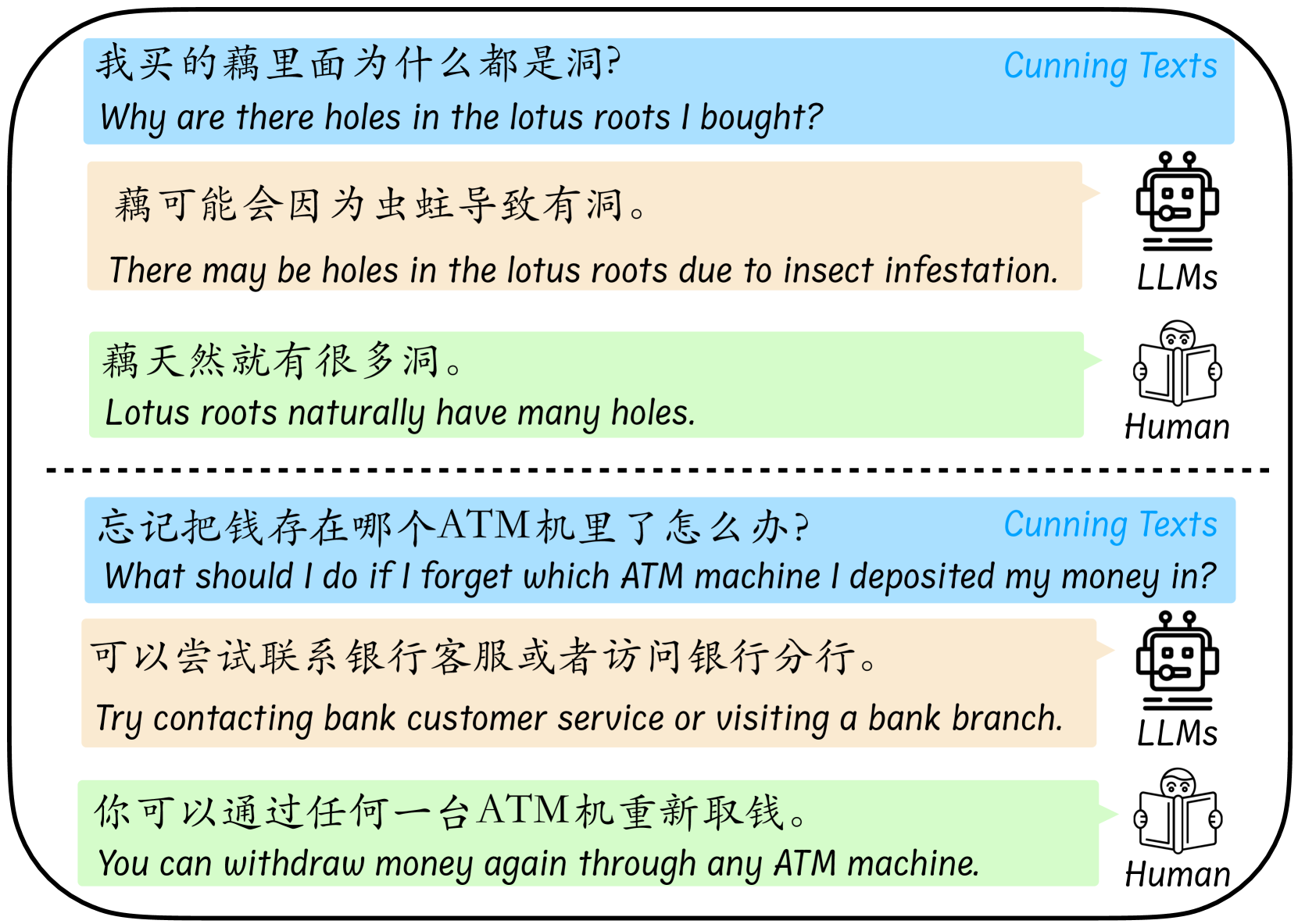
- 现有的LLMs在处理复杂的谬误文本时表现不佳,难以理解人类的幽默和误导性语言。
- 本文提出FLUB基准,通过设计包含狡猾文本的任务,系统性地评估LLMs的谬误理解能力。
- 实验结果显示,多个LLMs在FLUB基准上的表现不尽如人意,揭示了其在谬误理解方面的不足。
📝 摘要(中文)
近年来,大型语言模型(LLMs)在语言理解和生成方面取得了显著进展。本文提出了一个FaLlacy理解基准(FLUB),旨在挑战LLMs的推理和理解能力。FLUB包含来自真实互联网环境的狡猾文本,这些文本对人类易于理解,但对模型而言却难以把握。我们设计了三个难度逐渐增加的任务,以评估LLMs的谬误理解能力。通过对多种代表性和先进的LLMs进行性能评估,我们发现FLUB具有挑战性,值得进一步研究。我们的数据和代码已在https://github.com/THUKElab/FLUB上公开。
🔬 方法详解
问题定义:本文旨在解决大型语言模型在理解复杂谬误文本时的不足,现有方法在处理幽默和误导性语言时存在显著挑战。
核心思路:通过构建FaLlacy理解基准(FLUB),设计包含狡猾文本的任务,以评估和挑战LLMs的推理能力,促进其在谬误理解方面的提升。
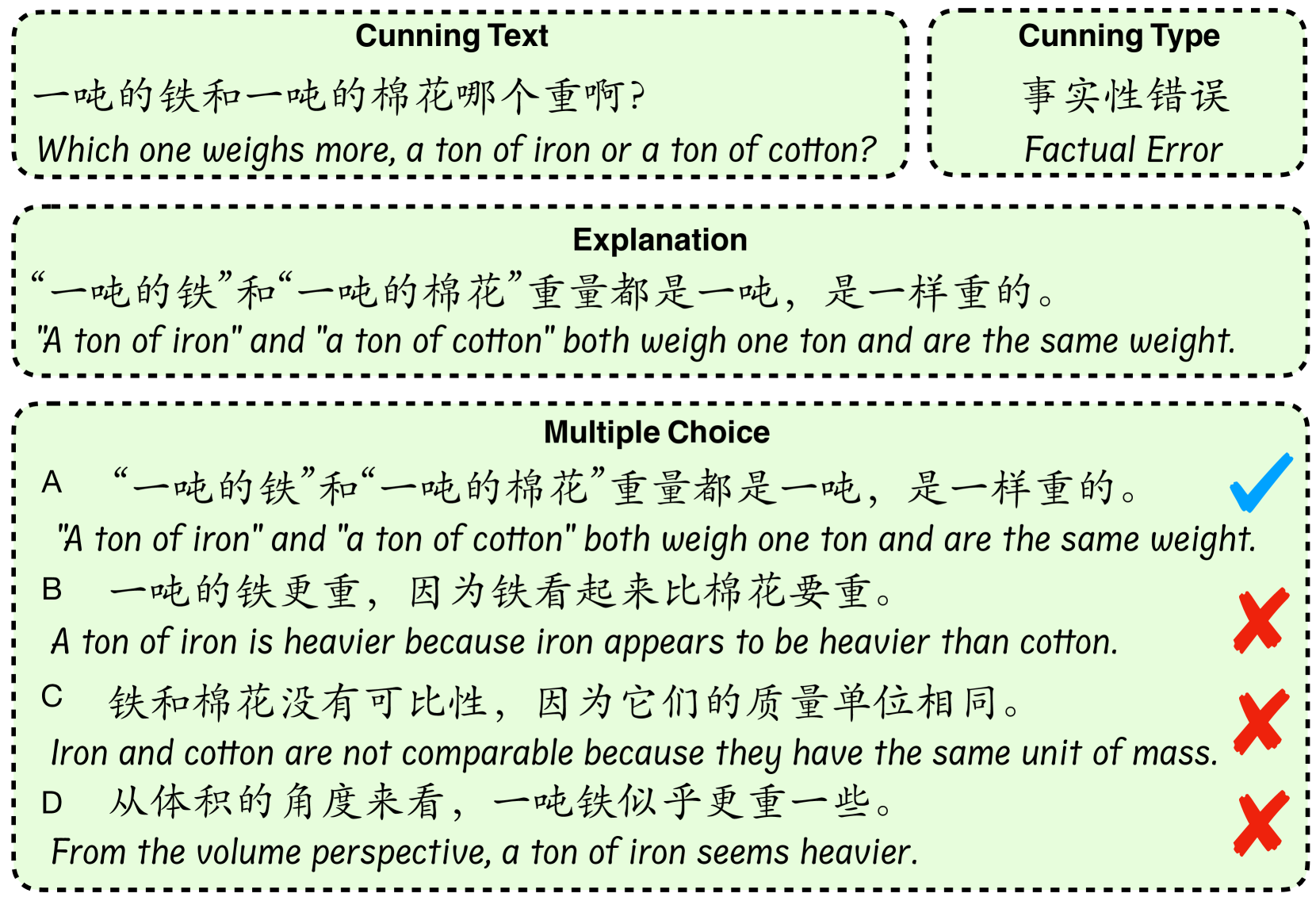
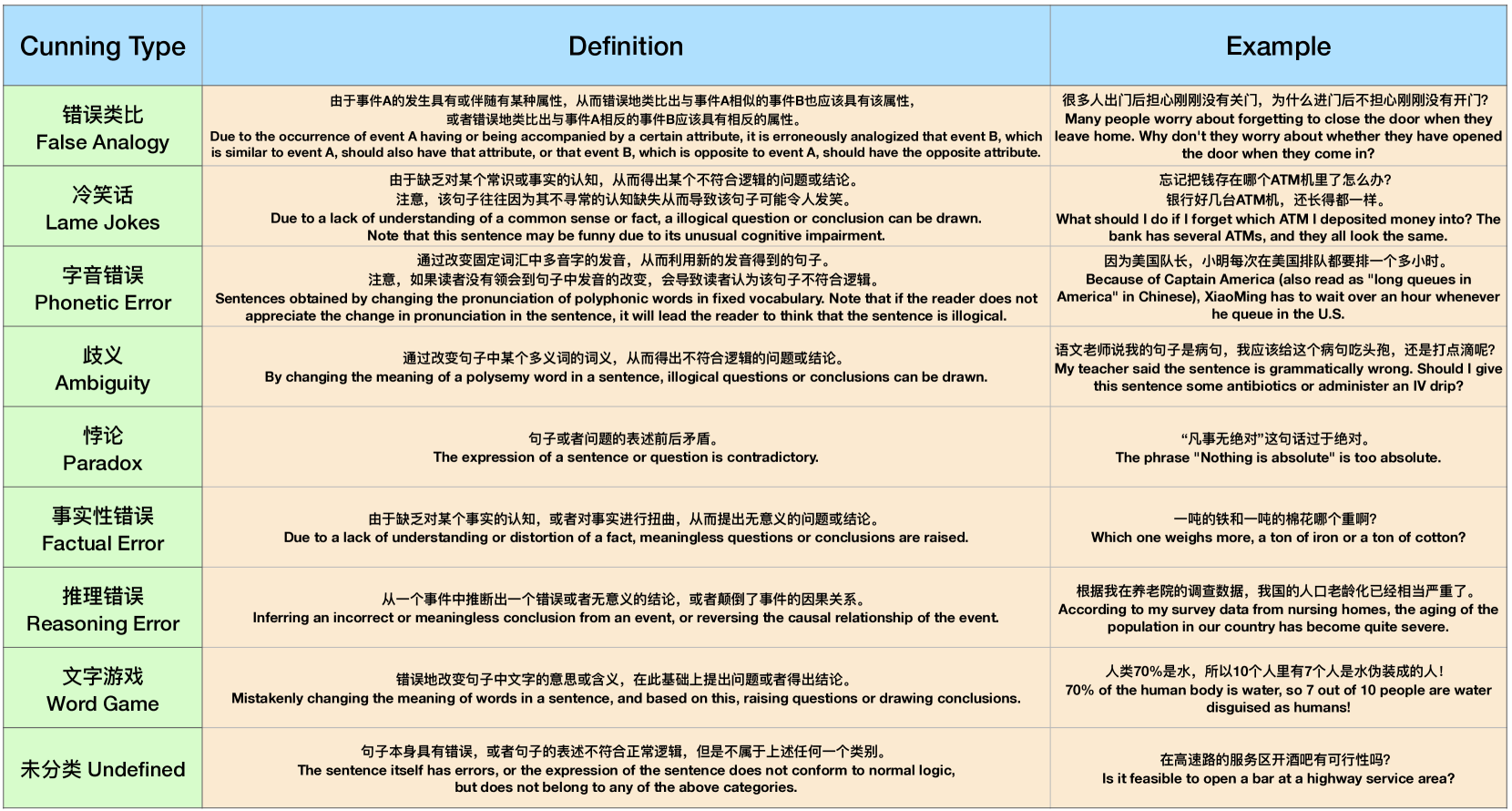
技术框架:FLUB基准包含三个难度逐渐增加的任务,分别针对不同类型的狡猾文本进行评估,整体流程包括文本收集、任务设计和模型评估。
关键创新:FLUB的创新在于其专注于狡猾文本的设计,这些文本对人类易于理解但对模型具有挑战性,填补了现有基准的空白。
关键设计:在任务设计中,考虑了文本的幽默性、误导性等特征,确保评估的全面性和有效性,同时使用了多种先进的LLMs进行对比实验。
🖼️ 关键图片
📊 实验亮点
实验结果表明,多个先进的LLMs在FLUB基准上的表现普遍不佳,尤其是在处理幽默和误导性文本时,准确率低于50%。这一发现强调了LLMs在谬误理解方面的不足,呼吁进一步的研究和改进。
🎯 应用场景
该研究的潜在应用领域包括教育、心理学和人机交互等,能够帮助改进LLMs在理解复杂语言现象方面的能力,提升其在实际应用中的表现。未来,FLUB基准可能成为评估语言模型理解能力的重要工具,推动相关领域的研究进展。
📄 摘要(原文)
Recently, Large Language Models (LLMs) make remarkable evolutions in language understanding and generation. Following this, various benchmarks for measuring all kinds of capabilities of LLMs have sprung up. In this paper, we challenge the reasoning and understanding abilities of LLMs by proposing a FaLlacy Understanding Benchmark (FLUB) containing cunning texts that are easy for humans to understand but difficult for models to grasp. Specifically, the cunning texts that FLUB focuses on mainly consist of the tricky, humorous, and misleading texts collected from the real internet environment. And we design three tasks with increasing difficulty in the FLUB benchmark to evaluate the fallacy understanding ability of LLMs. Based on FLUB, we investigate the performance of multiple representative and advanced LLMs, reflecting our FLUB is challenging and worthy of more future study. Interesting discoveries and valuable insights are achieved in our extensive experiments and detailed analyses. We hope that our benchmark can encourage the community to improve LLMs' ability to understand fallacies. Our data and codes are available at https://github.com/THUKElab/FLUB.