Persona-DB: Efficient Large Language Model Personalization for Response Prediction with Collaborative Data Refinement
作者: Chenkai Sun, Ke Yang, Revanth Gangi Reddy, Yi R. Fung, Hou Pong Chan, Kevin Small, ChengXiang Zhai, Heng Ji
分类: cs.CL, cs.AI, cs.IR
发布日期: 2024-02-16 (更新: 2025-02-03)
💡 一句话要点
提出Persona-DB以解决大语言模型个性化响应预测问题
🎯 匹配领域: 支柱九:具身大模型 (Embodied Foundation Models)
关键词: 个性化响应 大语言模型 数据表示 检索优化 协作精炼 冷启动场景 用户偏好 层次化构建
📋 核心要点
- 现有方法在个性化响应预测中对数据库表示的优化探索不足,限制了检索效率。
- 本文提出Persona-DB框架,通过层次化构建和协作精炼,提升数据表示的有效性。
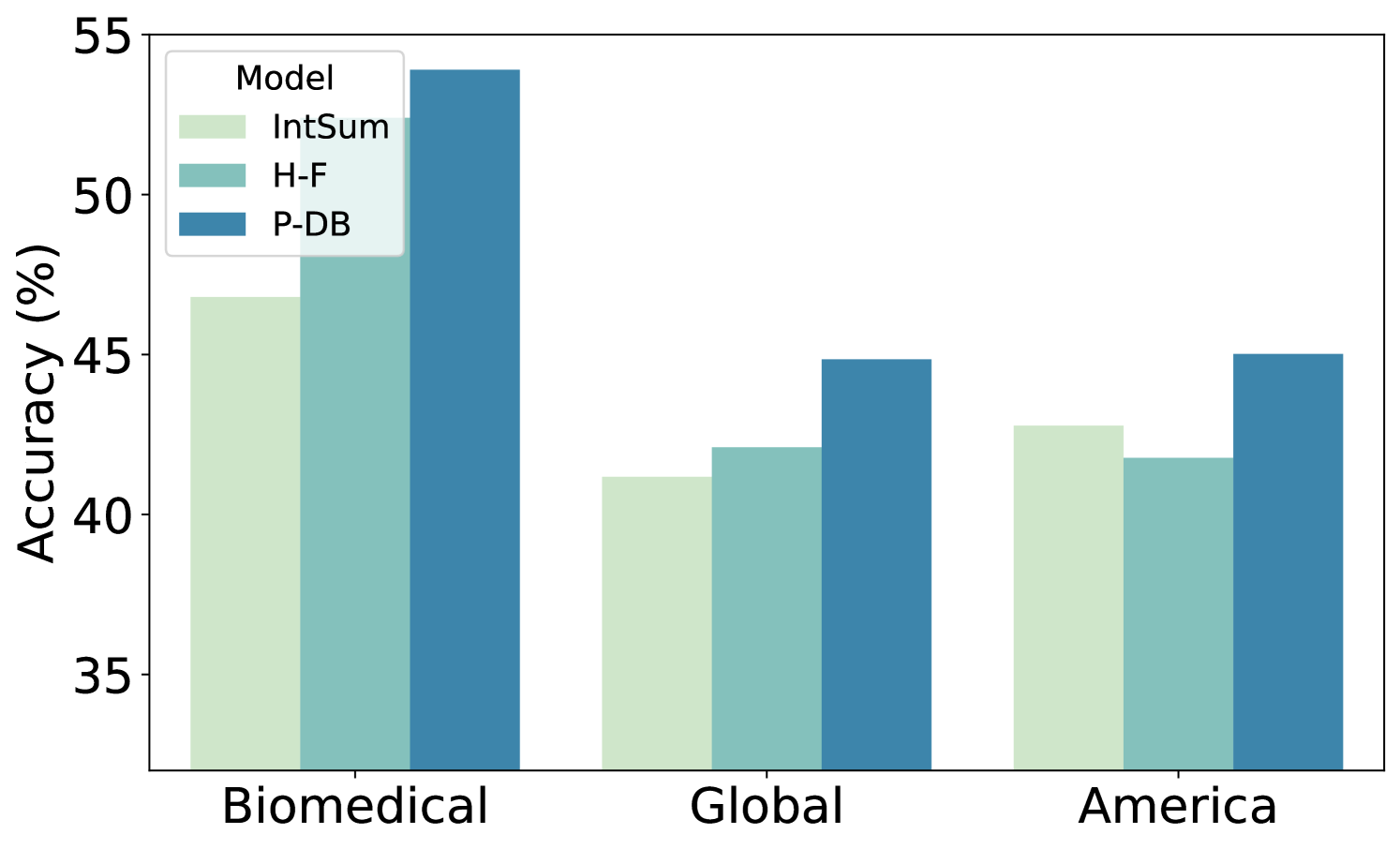
- 实验结果显示,Persona-DB在保持准确性的同时,显著减少了检索规模,尤其在冷启动场景中表现优异。
📝 摘要(中文)
随着对个性化交互的需求增加,如何高效准确地识别用户意见和偏好成为关键。现有研究主要集中在检索阶段的提升,而对数据库表示的优化探索有限。本文提出Persona-DB框架,通过层次化构建和协作精炼,改善数据表示以实现更高效的检索。实验表明,Persona-DB在响应预测中展现出显著的上下文效率,尤其在冷启动场景下,用户数据稀疏时提升超过10%。
🔬 方法详解
问题定义:本文旨在解决大语言模型个性化响应预测中的数据库表示不足问题。现有方法多集中于检索阶段,未能有效优化数据表示,导致个性化效果不佳。
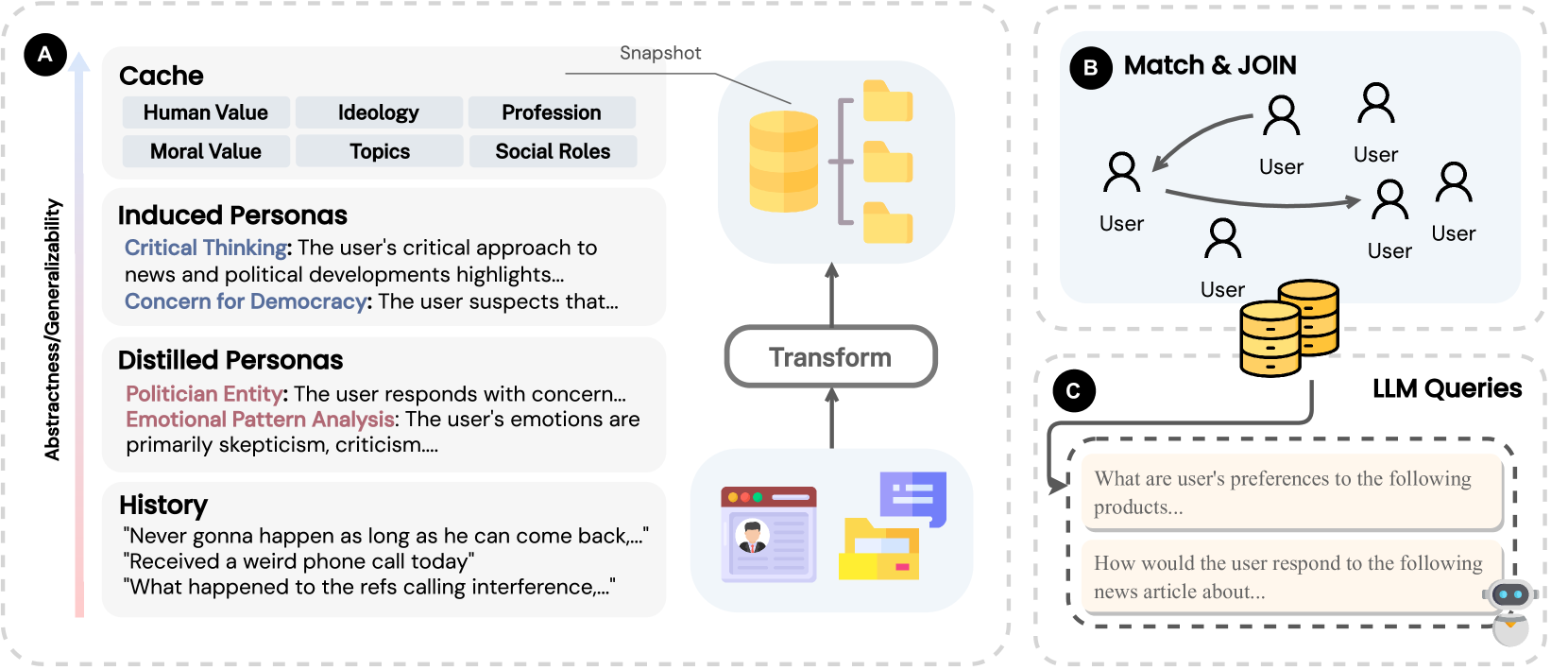
核心思路:提出Persona-DB框架,强调通过层次化构建和协作精炼来改善数据表示,以实现更高效的检索和个性化响应。这样的设计旨在提高模型的泛化能力和用户间的知识共享。
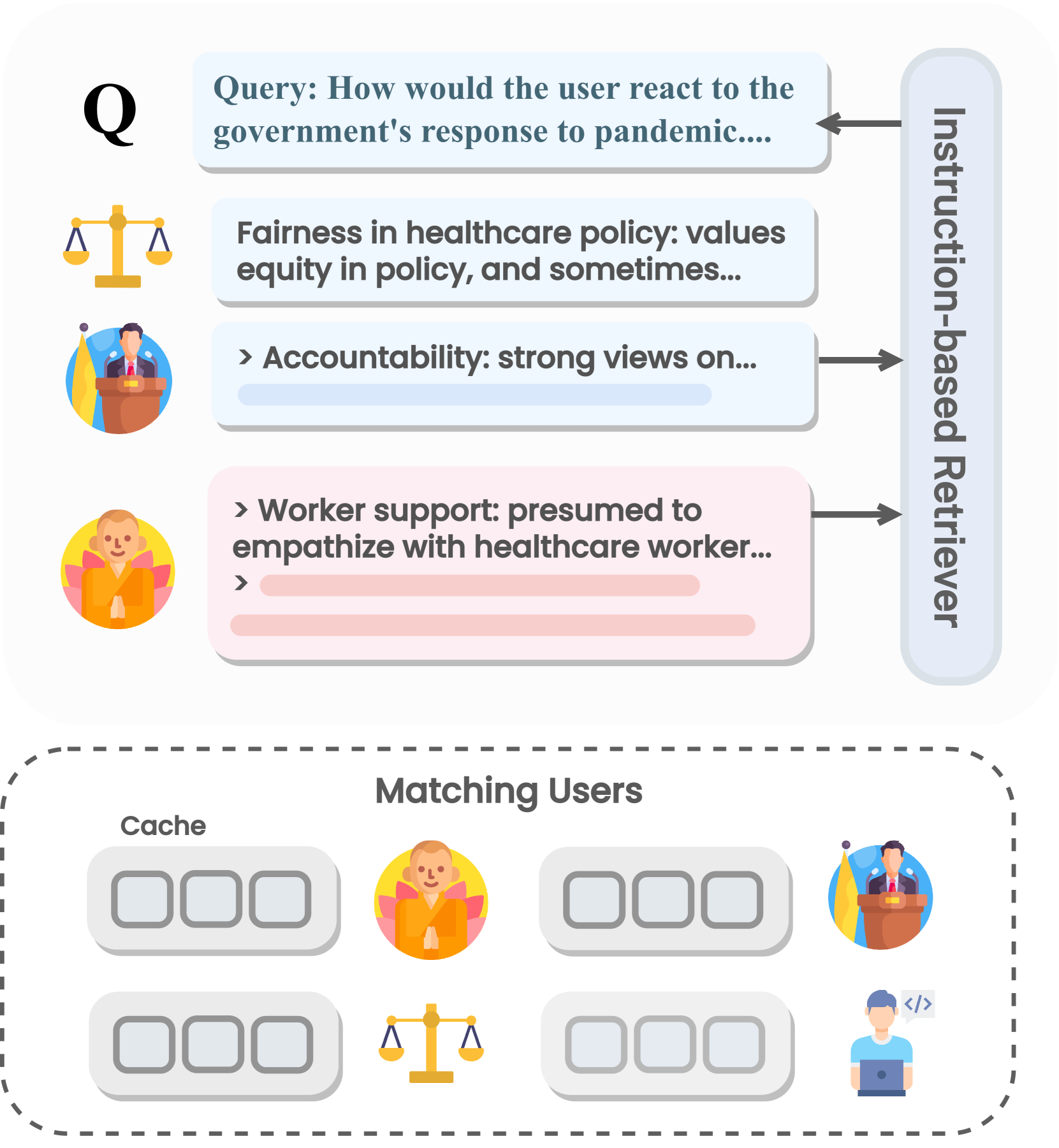
技术框架:Persona-DB框架包括两个主要模块:层次化构建过程和协作精炼过程。层次化构建通过多层次的数据组织提升检索效率,而协作精炼则通过用户间的知识共享来填补信息空白。
关键创新:最重要的创新在于通过协作精炼机制有效提升了用户间的知识共享,显著改善了个性化响应的准确性和效率。这一方法与传统的单一用户数据优化方法形成鲜明对比。
关键设计:在参数设置上,框架采用了动态调整的检索规模策略,以适应不同用户的历史数据。同时,损失函数设计上考虑了用户偏好与上下文信息的结合,确保模型在多样化场景下的表现。
🖼️ 关键图片
📊 实验亮点
实验结果显示,Persona-DB在响应预测任务中表现出色,尤其在冷启动场景下,用户数据稀疏时提升超过10%。此外,模型在保持准确性的同时,显著减少了检索规模,展现出优越的上下文效率。
🎯 应用场景
Persona-DB框架具有广泛的应用潜力,尤其适用于需要个性化响应的对话系统、客户服务和社交媒体等领域。通过提高用户交互的个性化程度,能够显著提升用户体验和满意度,未来可能推动相关领域的技术进步和商业应用。
📄 摘要(原文)
The increasing demand for personalized interactions with large language models (LLMs) calls for methodologies capable of accurately and efficiently identifying user opinions and preferences. Retrieval augmentation emerges as an effective strategy, as it can accommodate a vast number of users without the costs from fine-tuning. Existing research, however, has largely focused on enhancing the retrieval stage and devoted limited exploration toward optimizing the representation of the database, a crucial aspect for tasks such as personalization. In this work, we examine the problem from a novel angle, focusing on how data can be better represented for more data-efficient retrieval in the context of LLM customization. To tackle this challenge, we introduce Persona-DB, a simple yet effective framework consisting of a hierarchical construction process to improve generalization across task contexts and collaborative refinement to effectively bridge knowledge gaps among users. In the evaluation of response prediction, Persona-DB demonstrates superior context efficiency in maintaining accuracy with a significantly reduced retrieval size, a critical advantage in scenarios with extensive histories or limited context windows. Our experiments also indicate a marked improvement of over 10% under cold-start scenarios, when users have extremely sparse data. Furthermore, our analysis reveals the increasing importance of collaborative knowledge as the retrieval capacity expands.