How Reliable Are Automatic Evaluation Methods for Instruction-Tuned LLMs?
作者: Ehsan Doostmohammadi, Oskar Holmström, Marco Kuhlmann
分类: cs.CL, cs.AI
发布日期: 2024-02-16 (更新: 2024-10-02)
💡 一句话要点
提出自动评估方法以提升指令调优LLM的可靠性
🎯 匹配领域: 支柱九:具身大模型 (Embodied Foundation Models)
关键词: 自动评估 指令调优 大型语言模型 成对准确性 自然语言处理 模型评估 跨语言评估
📋 核心要点
- 现有的自动评估方法在处理不同任务时的可靠性存在显著差异,尤其是在自由生成和跨语言场景中表现不佳。
- 本文提出使用成对准确性作为替代标准相关性度量,以更好地评估自动评估方法与人类评估的一致性。
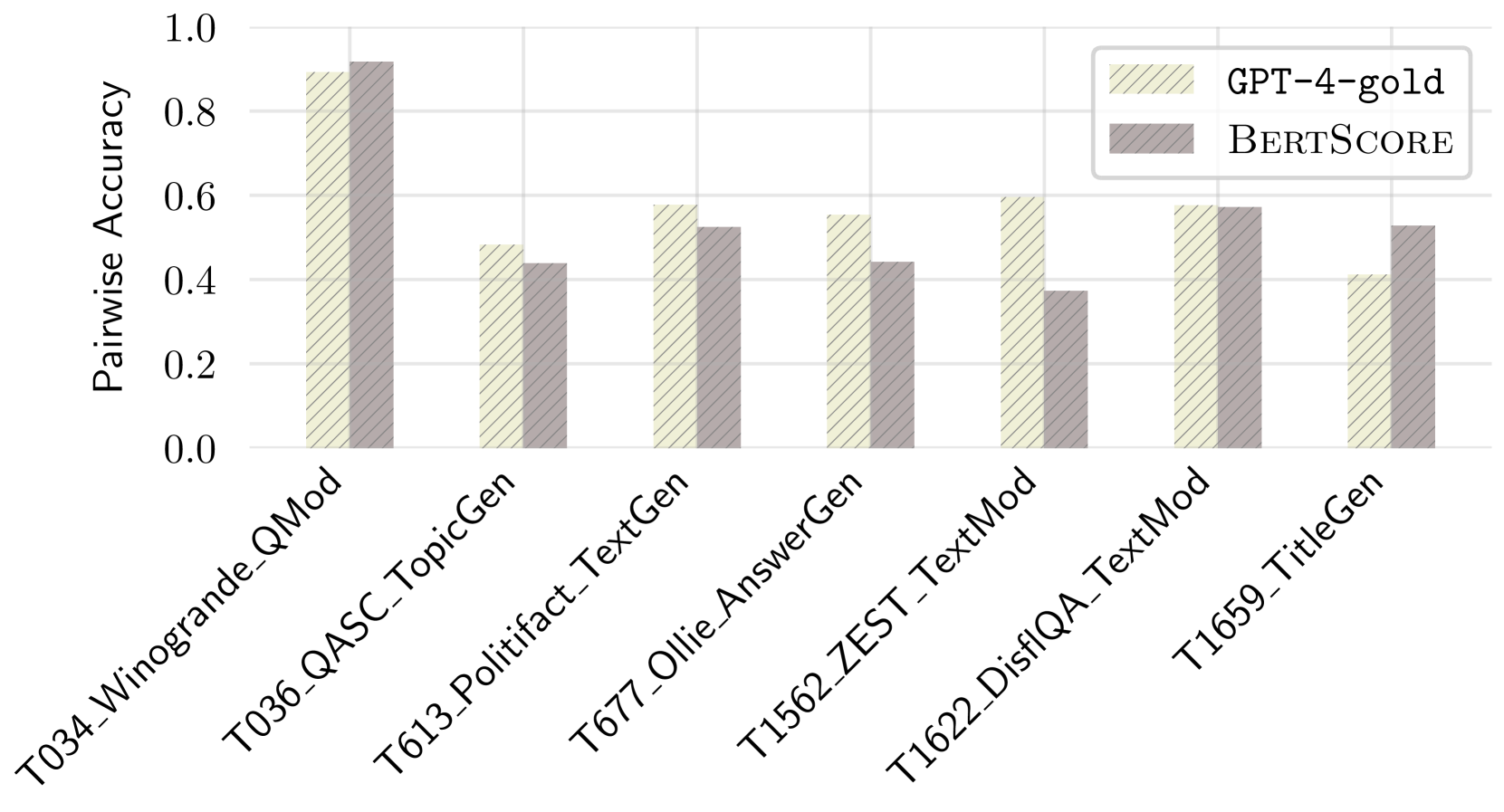
- 研究结果表明,自动评估方法在特定条件下能够近似人类评分,但其有效性依赖于上下文,尤其是参考答案的提供情况。
📝 摘要(中文)
针对指令调优的大型语言模型(LLMs),现有研究采用基于文本重叠和LLM判断的自动评估方法作为人类评估的成本效益替代方案。本文对这些方法进行了元评估,评估其在多种任务中的可靠性。尽管相关性指标是最常用的评估方法,但在处理平局和不同尺度时存在固有局限。为了解决这些问题,本文采用成对准确性作为标准相关性度量的替代方法。研究发现,自动评估方法在特定条件下可以近似人类评分,但其有效性高度依赖于上下文。简单的ROUGE-L指标在短答案英语任务中与人类评分高度相关,但在自由形式生成任务和跨语言场景中不可靠。使用GPT-4作为评判者的高级方法在未包含参考答案的情况下效果显著下降。我们的研究增强了对自动评估方法在开发和评估指令调优LLMs时的应用和解读的理解。
🔬 方法详解
问题定义:本文旨在解决现有自动评估方法在指令调优LLMs中的可靠性问题,尤其是在不同任务和上下文下的表现不一致。现有方法如ROUGE-L在自由生成任务和跨语言场景中效果不佳。
核心思路:论文提出使用成对准确性作为评估标准,以克服传统相关性度量在处理平局和不同尺度时的局限性。通过这种方式,能够更准确地反映自动评估与人类评估之间的一致性。
技术框架:研究首先对现有自动评估方法进行分析,然后引入成对准确性作为新的评估标准,最后通过多种任务进行实验验证其有效性。主要模块包括数据集选择、评估指标设计和实验结果分析。
关键创新:最重要的创新点在于引入成对准确性作为评估标准,提供了一种新的视角来理解自动评估方法的有效性,与传统的相关性度量方法相比,能够更好地处理复杂的评估场景。
关键设计:在实验中,选择了多种任务进行评估,特别关注短答案和自由生成任务的表现。参数设置方面,确保了评估的一致性和可重复性,损失函数的设计也考虑了不同任务的特性。实验中还探讨了参考答案对评估结果的影响。
🖼️ 关键图片


📊 实验亮点
实验结果显示,ROUGE-L指标在短答案任务中与人类评分的相关性高达0.85,但在自由生成任务中的相关性显著下降至0.4。使用GPT-4作为评判者时,未包含参考答案的情况下,评估效果下降了约30%。这些结果强调了上下文对自动评估方法有效性的影响。
🎯 应用场景
该研究的潜在应用领域包括自然语言处理中的模型评估、教育领域的自动评分系统以及多语言翻译的质量评估。通过提高自动评估方法的可靠性,能够降低人力成本并提升评估效率,未来可能推动更广泛的自动化评估工具的开发与应用。
📄 摘要(原文)
Work on instruction-tuned Large Language Models (LLMs) has used automatic methods based on text overlap and LLM judgments as cost-effective alternatives to human evaluation. In this paper, we perform a meta-evaluation of such methods and assess their reliability across a broad range of tasks. In evaluating how well automatic methods align with human evaluations, correlation metrics are the most commonly employed method despite their inherent limitations when dealing with ties and different scales. To address these shortcomings, we use Pairwise Accuracy as an alternative to standard correlation measures. We observe that while automatic evaluation methods can approximate human ratings under specific conditions, their validity is highly context-dependent. Specifically, the simple ROUGE-L metric correlates very well with human ratings for short-answer English tasks but is unreliable in free-form generation tasks and cross-lingual scenarios. The effectiveness of the more advanced method of using GPT-4 as a judge diminishes significantly if reference answers are not included in the prompt, which is the scenario where this method has the potential to provide the most value compared to other metrics. Our findings enhance the understanding of how automatic methods should be applied and interpreted when developing and evaluating instruction-tuned LLMs.