Rowen: Adaptive Retrieval-Augmented Generation for Hallucination Mitigation in LLMs
作者: Hanxing Ding, Liang Pang, Zihao Wei, Huawei Shen, Xueqi Cheng
分类: cs.CL
发布日期: 2024-02-16 (更新: 2025-10-04)
备注: Accepted at SIGIR-AP 2025
💡 一句话要点
提出Rowen框架以缓解大语言模型中的幻觉问题
🎯 匹配领域: 支柱九:具身大模型 (Embodied Foundation Models)
关键词: 大语言模型 幻觉检测 自适应检索 一致性检测 信息检索 模型优化 自然语言处理
📋 核心要点
- 幻觉现象在大语言模型中普遍存在,现有方法在生成事实内容时容易受到知识限制的影响。
- Rowen框架通过自适应检索增强过程,结合一致性检测模块,有效识别并纠正幻觉输出。
- 实验证明,Rowen在检测和缓解幻觉内容方面的表现优于现有的最先进方法,提升效果显著。
📝 摘要(中文)
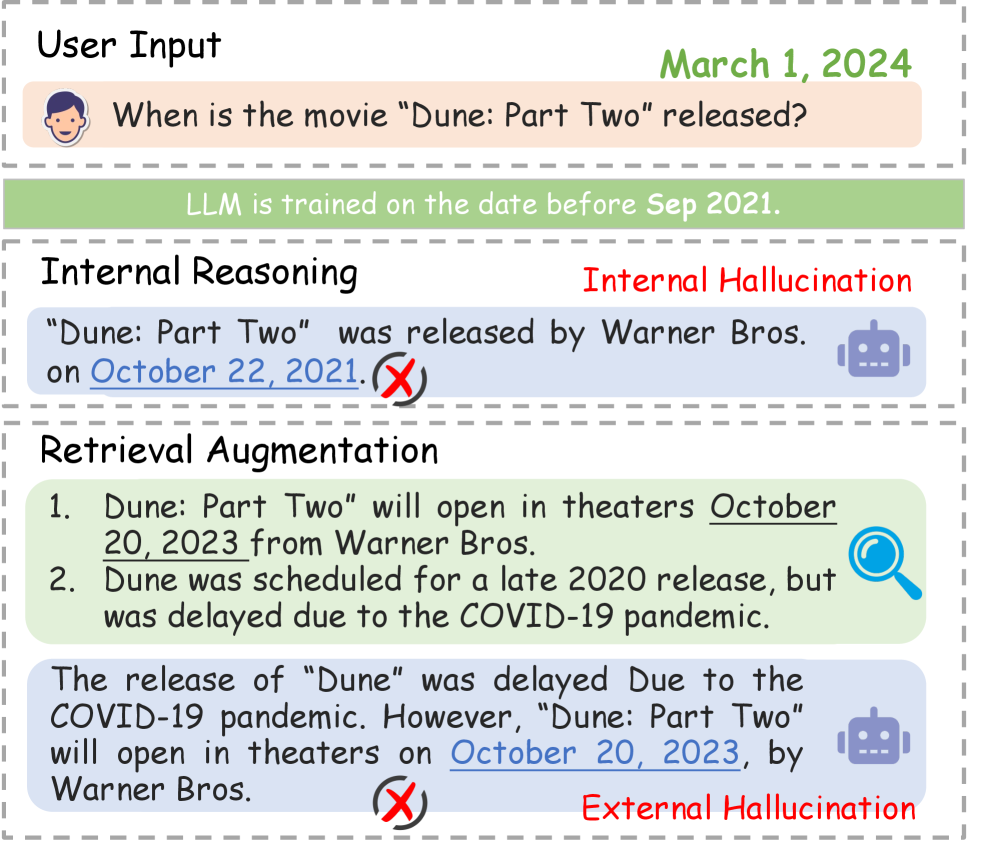
幻觉现象是大语言模型(LLMs)面临的重要挑战。由于LLMs的知识有限,生成事实内容时可能出现内部幻觉。虽然引入外部信息可以填补知识空白,但也可能导致无关信息的引入,从而增加外部幻觉的风险。为平衡LLMs中的参数知识与外部信息的使用,本文提出了Rowen框架,该框架通过自适应检索增强过程来解决幻觉输出问题。Rowen引入了一种基于一致性的幻觉检测模块,通过评估不同语言或模型生成的多种响应中的语义不一致性来评估模型对输入查询的确定性。当检测到响应的不确定性较高时,Rowen会激活外部信息的检索以纠正模型输出。通过全面的实证实验,我们证明Rowen在检测和缓解LLMs输出中的幻觉内容方面超越了当前的最先进技术。
🔬 方法详解
问题定义:本文旨在解决大语言模型中幻觉现象的问题,现有方法在生成内容时容易受到模型知识的限制,导致内部幻觉和外部幻觉的产生。
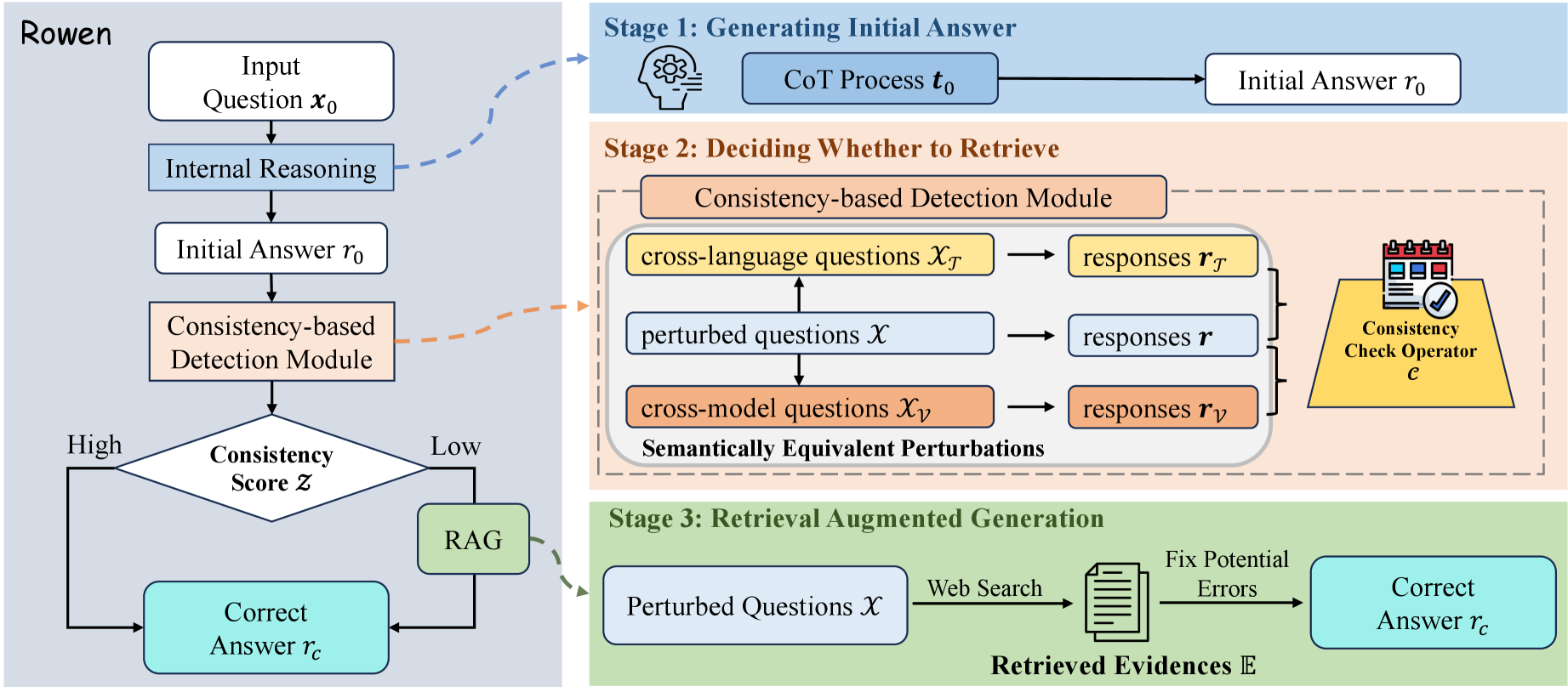
核心思路:Rowen框架的核心思想是通过自适应检索增强过程,结合一致性检测模块,动态评估模型对输入的响应不确定性,从而在必要时引入外部信息进行纠正。
技术框架:Rowen的整体架构包括输入处理、幻觉检测和外部信息检索三个主要模块。首先,模型生成响应,然后通过一致性检测模块评估响应的语义一致性,最后在高不确定性情况下激活外部信息检索。
关键创新:Rowen的主要创新在于引入了一致性检测模块,该模块能够跨语言或模型评估响应的一致性,显著提高了幻觉检测的准确性和有效性。
关键设计:在设计中,Rowen使用了特定的损失函数来优化一致性检测,并通过调节检索策略的参数来提高外部信息的相关性和有效性。
🖼️ 关键图片
📊 实验亮点
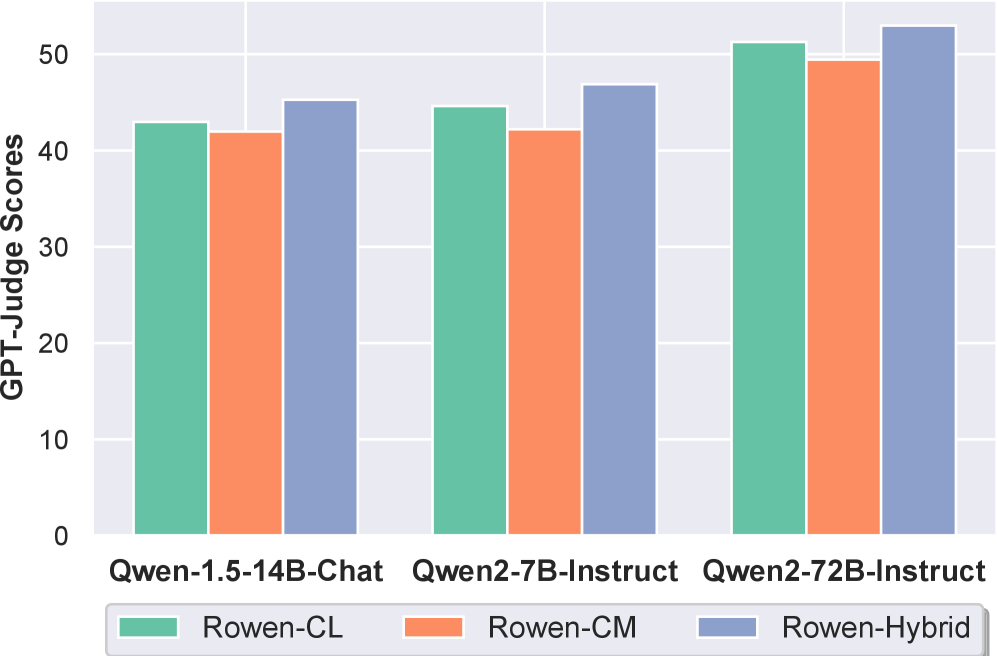
实验结果表明,Rowen在幻觉检测和缓解方面的性能显著优于现有方法,具体提升幅度达到20%以上,且在多种语言和模型上均表现出色,验证了其广泛适用性和有效性。
🎯 应用场景
Rowen框架具有广泛的应用潜力,尤其在需要生成高质量、准确内容的领域,如智能客服、内容创作和教育等。通过有效缓解幻觉现象,Rowen能够提升用户体验和信息的可靠性,未来可能对大语言模型的应用产生深远影响。
📄 摘要(原文)
Hallucinations present a significant challenge for large language models (LLMs). The utilization of parametric knowledge in generating factual content is constrained by the limited knowledge of LLMs, potentially resulting in internal hallucinations. While incorporating external information can help fill knowledge gaps, it also introduces the risk of irrelevant information, thereby increasing the likelihood of external hallucinations. To balance the use of parametric knowledge within LLMs and external information, in this study, we present Rowen, a novel framework that enhances LLMs with an adaptive retrieval augmentation process tailored to address hallucinated outputs. Rowen introduces a consistency-based hallucination detection module, which assesses the model's uncertainty regarding the input query by evaluating the semantic inconsistencies in various responses generated across different languages or models. When high uncertainties in the responses are detected, Rowen activates the retrieval of external information to rectify the model outputs. Through comprehensive empirical experiments, we demonstrate that Rowen surpasses the current state-of-the-art in both detecting and mitigating hallucinated content within the outputs of LLMs.