G-SciEdBERT: A Contextualized LLM for Science Assessment Tasks in German
作者: Ehsan Latif, Gyeong-Geon Lee, Knut Neumann, Tamara Kastorff, Xiaoming Zhai
分类: cs.CL, cs.AI
发布日期: 2024-02-09 (更新: 2024-08-16)
备注: Accepted by EDM and Submitted to JEDM
💡 一句话要点
提出G-SciEdBERT以解决德语科学评估任务的自动评分问题
🎯 匹配领域: 支柱九:具身大模型 (Embodied Foundation Models)
关键词: 德语自动评分 科学教育 上下文化模型 G-BERT 机器学习 自然语言处理 教育技术
📋 核心要点
- 现有的G-BERT模型在德语科学问题的自动评分中表现不佳,缺乏科学领域的上下文知识,难以适应学生的写作风格。
- 论文提出了G-SciEdBERT,一个专门为德语科学任务评分而设计的上下文化大语言模型,通过在特定语料上进行预训练和微调来提升性能。
- 实验结果表明,G-SciEdBERT在评分准确性上相比G-BERT有显著提升,二次加权Kappa值提高了10.2%,显示出其在教育领域的潜在应用价值。
📝 摘要(中文)
自然语言处理的进步为多种语言的自动评分系统铺平了道路,尤其是在德语领域。自动评分德语科学问题的书面回答是一项复杂的任务,标准的G-BERT模型在科学领域缺乏上下文知识,且与学生的写作风格不匹配。本文提出了一种针对德语科学教育的上下文化BERT模型(G-SciEdBERT),该模型专门用于评分德语书写的科学任务。通过在PISA 2018的数据集上对30K德语科学回答进行预训练,并在20K学生书写的回答上进行微调,实验结果显示G-SciEdBERT在评分准确性上显著提升,较G-BERT提高了10.2%的二次加权Kappa值,强调了专门化语言模型在教育领域的重要性。
🔬 方法详解
问题定义:本文旨在解决现有G-BERT模型在德语科学问题自动评分中的不足,主要体现在缺乏科学领域的上下文知识和与学生写作风格的不匹配。
核心思路:提出G-SciEdBERT模型,通过在特定的科学回答语料上进行预训练和微调,使其能够更好地理解和评分德语科学任务的书面回答。
技术框架:G-SciEdBERT的整体架构包括预训练和微调两个阶段。首先在包含30K德语科学回答的语料库上进行预训练,然后在额外的20K学生书写的回答上进行微调,以提高模型的评分准确性。
关键创新:G-SciEdBERT的主要创新在于其专门针对科学教育任务进行的训练,显著提高了模型在特定领域的上下文理解能力,与传统的G-BERT模型相比,具有更强的适应性和准确性。
关键设计:在训练过程中,使用了包含3M tokens的PISA 2018数据集进行预训练,并在微调阶段使用了2M tokens的额外数据,采用了适合科学任务的损失函数和网络结构设计,以优化评分性能。
🖼️ 关键图片

📊 实验亮点
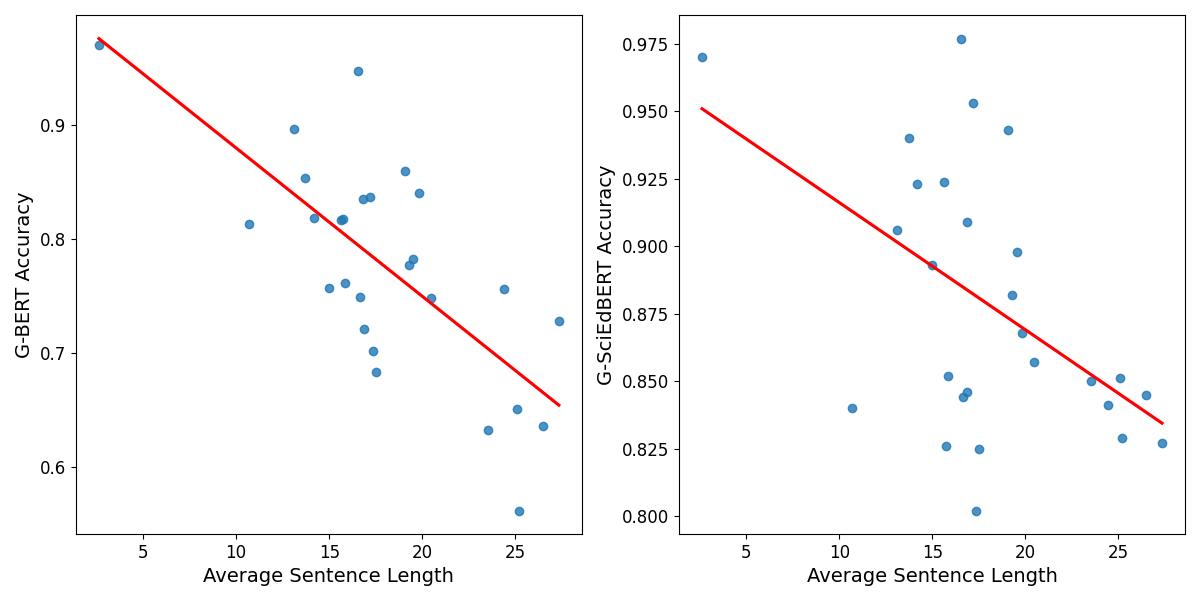
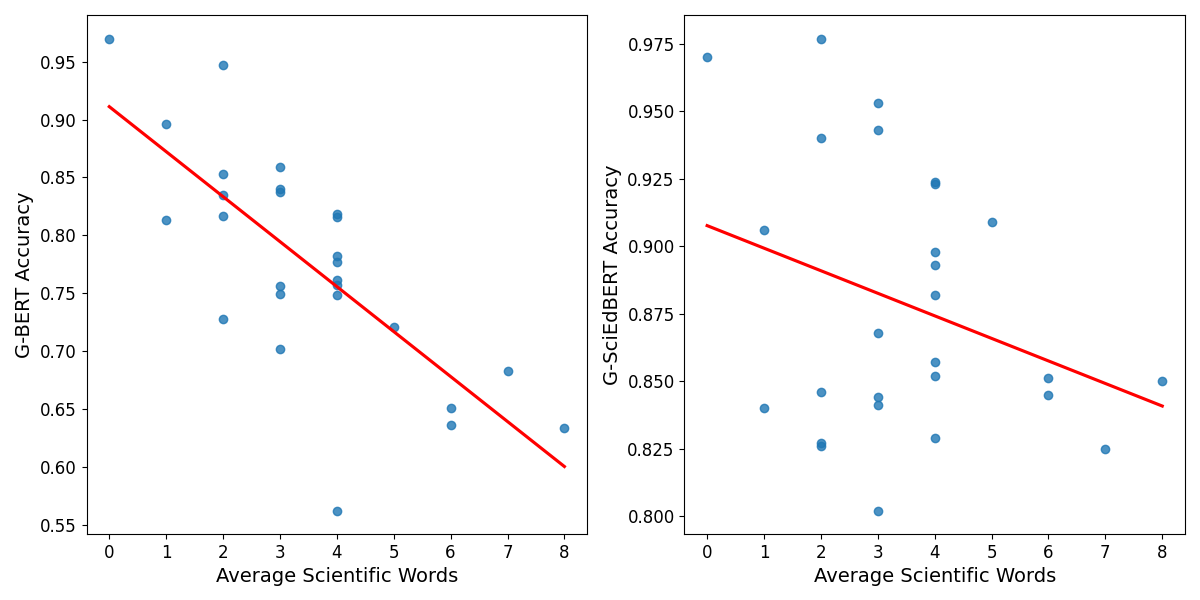
实验结果显示,G-SciEdBERT在评分准确性上较G-BERT有显著提升,二次加权Kappa值提高了10.2%(均值差异为0.1026,标准差为0.069),证明了其在科学教育评估中的有效性和重要性。
🎯 应用场景
G-SciEdBERT的研究成果具有广泛的应用潜力,尤其是在教育领域的自动评分系统中。其能够有效提升德语科学任务的评分准确性,为教师和教育机构提供更为精准的学生评估工具,未来可能扩展到其他语言和学科的自动评分任务中。
📄 摘要(原文)
The advancement of natural language processing has paved the way for automated scoring systems in various languages, such as German (e.g., German BERT [G-BERT]). Automatically scoring written responses to science questions in German is a complex task and challenging for standard G-BERT as they lack contextual knowledge in the science domain and may be unaligned with student writing styles. This paper presents a contextualized German Science Education BERT (G-SciEdBERT), an innovative large language model tailored for scoring German-written responses to science tasks and beyond. Using G-BERT, we pre-trained G-SciEdBERT on a corpus of 30K German written science responses with 3M tokens on the Programme for International Student Assessment (PISA) 2018. We fine-tuned G-SciEdBERT on an additional 20K student-written responses with 2M tokens and examined the scoring accuracy. We then compared its scoring performance with G-BERT. Our findings revealed a substantial improvement in scoring accuracy with G-SciEdBERT, demonstrating a 10.2% increase of quadratic weighted Kappa compared to G-BERT (mean difference = 0.1026, SD = 0.069). These insights underline the significance of specialized language models like G-SciEdBERT, which is trained to enhance the accuracy of contextualized automated scoring, offering a substantial contribution to the field of AI in education.