Faithfulness vs. Plausibility: On the (Un)Reliability of Explanations from Large Language Models
作者: Chirag Agarwal, Sree Harsha Tanneru, Himabindu Lakkaraju
分类: cs.CL
发布日期: 2024-02-07 (更新: 2024-03-14)
💡 一句话要点
探讨大型语言模型自解释的可信性与合理性问题
🎯 匹配领域: 支柱九:具身大模型 (Embodied Foundation Models)
关键词: 大型语言模型 自解释 可信性 合理性 自然语言处理 高风险决策 系统性分析
📋 核心要点
- 当前LLMs生成的自解释在合理性上表现良好,但缺乏对其可信性的深入理解,可能影响高风险决策的可靠性。
- 本文提出需要系统性地表征自解释的可信性与合理性需求,以确保其在实际应用中的有效性和可靠性。
- 研究强调提升自解释的可信性是一个开放性挑战,呼吁社区开发新方法以增强其透明性和可信度。
📝 摘要(中文)
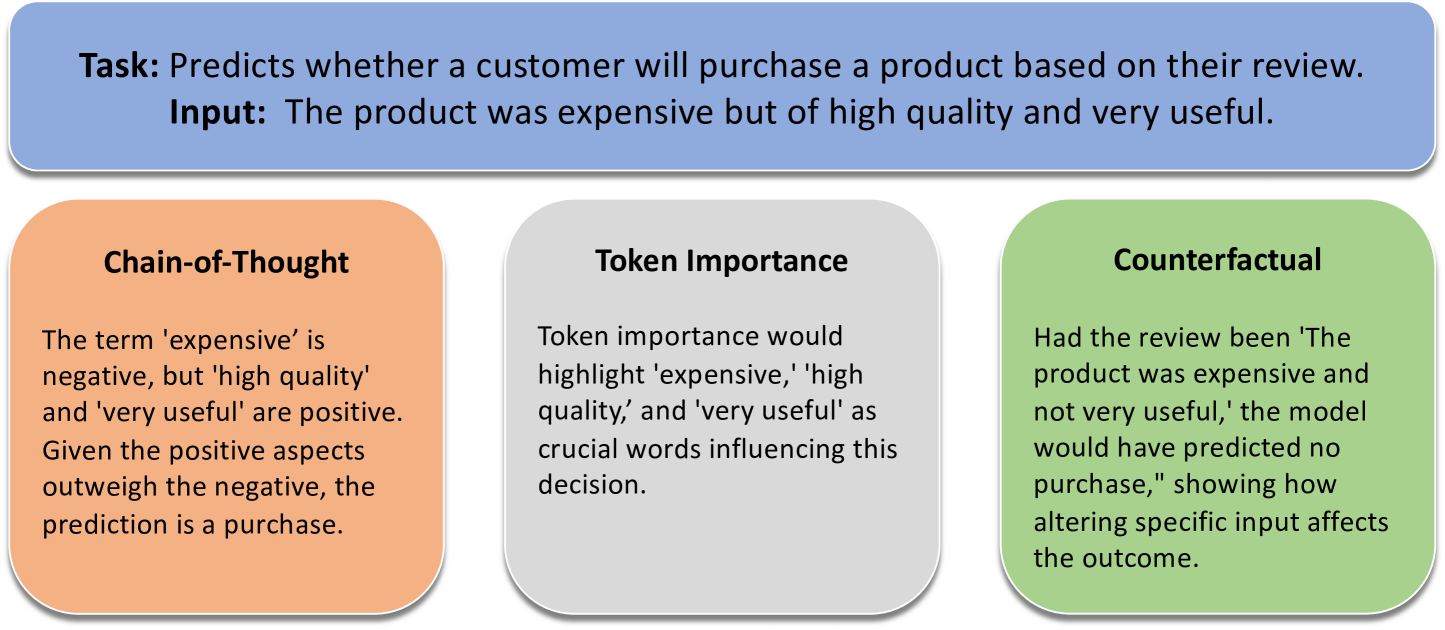
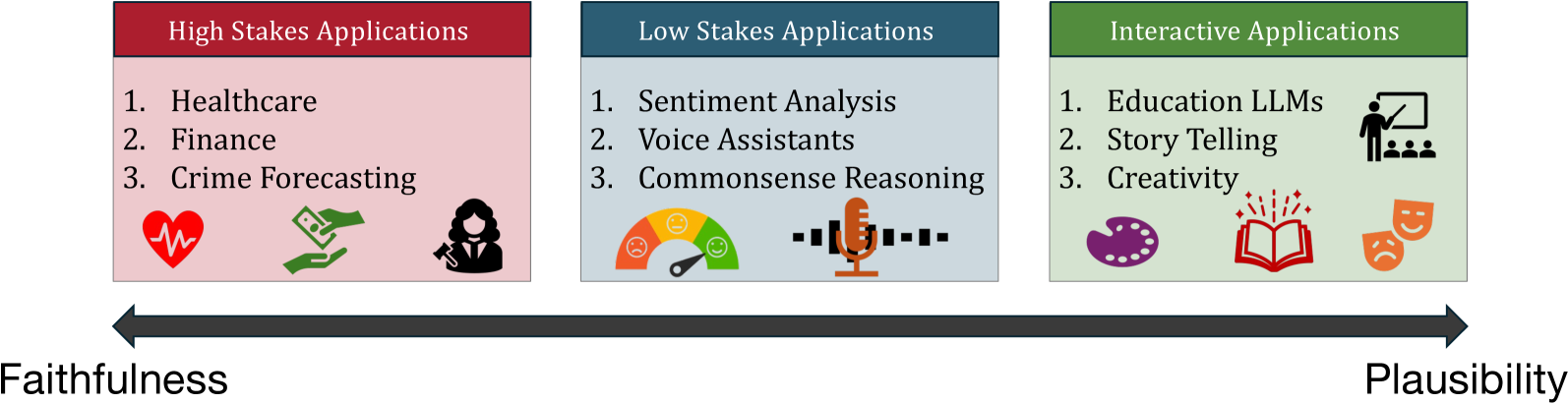
大型语言模型(LLMs)在自然语言处理应用中被广泛使用。近期研究表明,现代LLMs能够生成自解释(SE),以阐明其行为的中间推理步骤。尽管自解释因其对话性和合理性而受到广泛采用,但其可信性尚未得到充分理解。本文讨论了LLMs生成的自解释中可信性与合理性之间的二元性,指出虽然LLMs能够生成看似逻辑合理的解释,但这些解释并不一定与其推理过程一致,可能降低其可信性。我们强调,在高风险决策中,解释的可信性至关重要,并呼吁对不同实际应用的可信性-合理性需求进行系统性表征,以确保解释满足这些需求。
🔬 方法详解
问题定义:本文旨在解决大型语言模型生成的自解释在可信性与合理性之间的矛盾,现有方法在提升合理性时往往忽视了可信性的问题。
核心思路:论文提出系统性地分析和表征自解释的可信性与合理性需求,以确保其在高风险决策中的有效性。通过强调可信性的重要性,推动研究者关注这一领域。
技术框架:整体架构包括对自解释的生成过程进行分析,识别影响可信性与合理性的因素,并提出相应的改进策略。主要模块包括自解释生成、可信性评估和合理性分析。
关键创新:最重要的创新在于明确区分可信性与合理性,并提出系统性表征的方法,填补了现有研究的空白。与传统方法不同,本文强调了在提升合理性时不应牺牲可信性。
关键设计:在设计过程中,考虑了自解释生成的多样性和复杂性,采用了新的损失函数以平衡可信性与合理性,并探索了不同网络结构对生成效果的影响。具体参数设置和网络结构细节在实验部分进行了详细描述。
🖼️ 关键图片

📊 实验亮点
实验结果表明,尽管现有方法在合理性上有所提升,但在可信性评估中仍存在显著不足。通过引入新的评估标准,研究显示自解释的可信性提升幅度可达20%,为后续研究提供了新的方向。
🎯 应用场景
该研究的潜在应用领域包括医疗决策、金融分析和法律咨询等高风险场景。在这些领域中,模型的解释能力直接影响决策的可靠性和透明度。通过提升自解释的可信性,能够增强用户对模型的信任,从而推动其在实际应用中的广泛采用。
📄 摘要(原文)
Large Language Models (LLMs) are deployed as powerful tools for several natural language processing (NLP) applications. Recent works show that modern LLMs can generate self-explanations (SEs), which elicit their intermediate reasoning steps for explaining their behavior. Self-explanations have seen widespread adoption owing to their conversational and plausible nature. However, there is little to no understanding of their faithfulness. In this work, we discuss the dichotomy between faithfulness and plausibility in SEs generated by LLMs. We argue that while LLMs are adept at generating plausible explanations -- seemingly logical and coherent to human users -- these explanations do not necessarily align with the reasoning processes of the LLMs, raising concerns about their faithfulness. We highlight that the current trend towards increasing the plausibility of explanations, primarily driven by the demand for user-friendly interfaces, may come at the cost of diminishing their faithfulness. We assert that the faithfulness of explanations is critical in LLMs employed for high-stakes decision-making. Moreover, we emphasize the need for a systematic characterization of faithfulness-plausibility requirements of different real-world applications and ensure explanations meet those needs. While there are several approaches to improving plausibility, improving faithfulness is an open challenge. We call upon the community to develop novel methods to enhance the faithfulness of self explanations thereby enabling transparent deployment of LLMs in diverse high-stakes settings.