Intent-based Prompt Calibration: Enhancing prompt optimization with synthetic boundary cases
作者: Elad Levi, Eli Brosh, Matan Friedmann
分类: cs.CL, cs.AI, cs.LG
发布日期: 2024-02-05
🔗 代码/项目: GITHUB
💡 一句话要点
提出基于意图的提示校准方法以优化大语言模型的提示工程
🎯 匹配领域: 支柱九:具身大模型 (Embodied Foundation Models)
关键词: 提示工程 大语言模型 自动化优化 合成数据 边界用例 模块化设计 用户意图
📋 核心要点
- 现有的提示工程方法在获取高质量基准以比较不同提示时面临困难,尤其是在真实世界应用中。
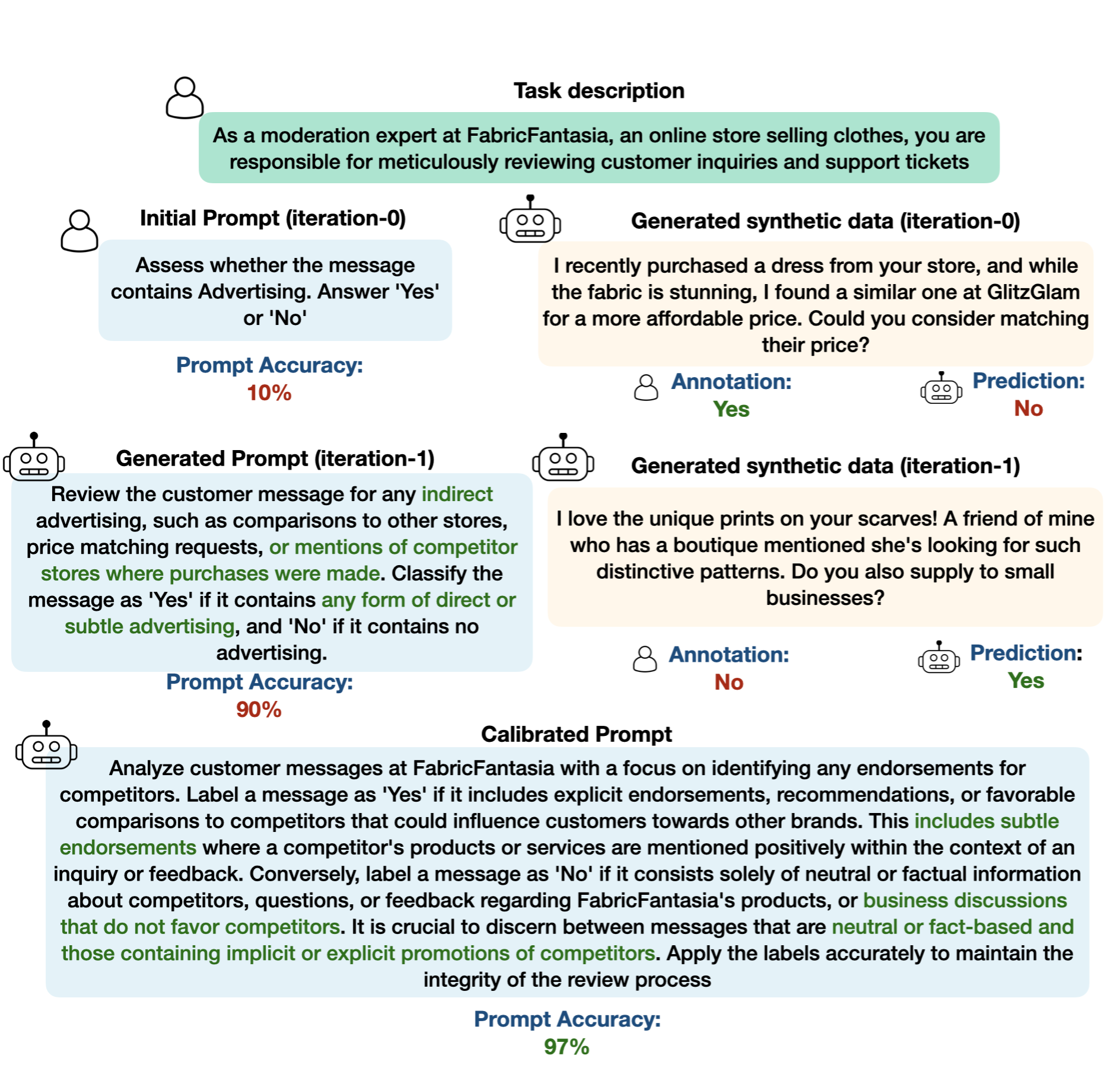
- 本文提出了一种基于意图的提示校准方法,通过生成合成边界用例数据来优化提示,提升了提示的准确性和有效性。
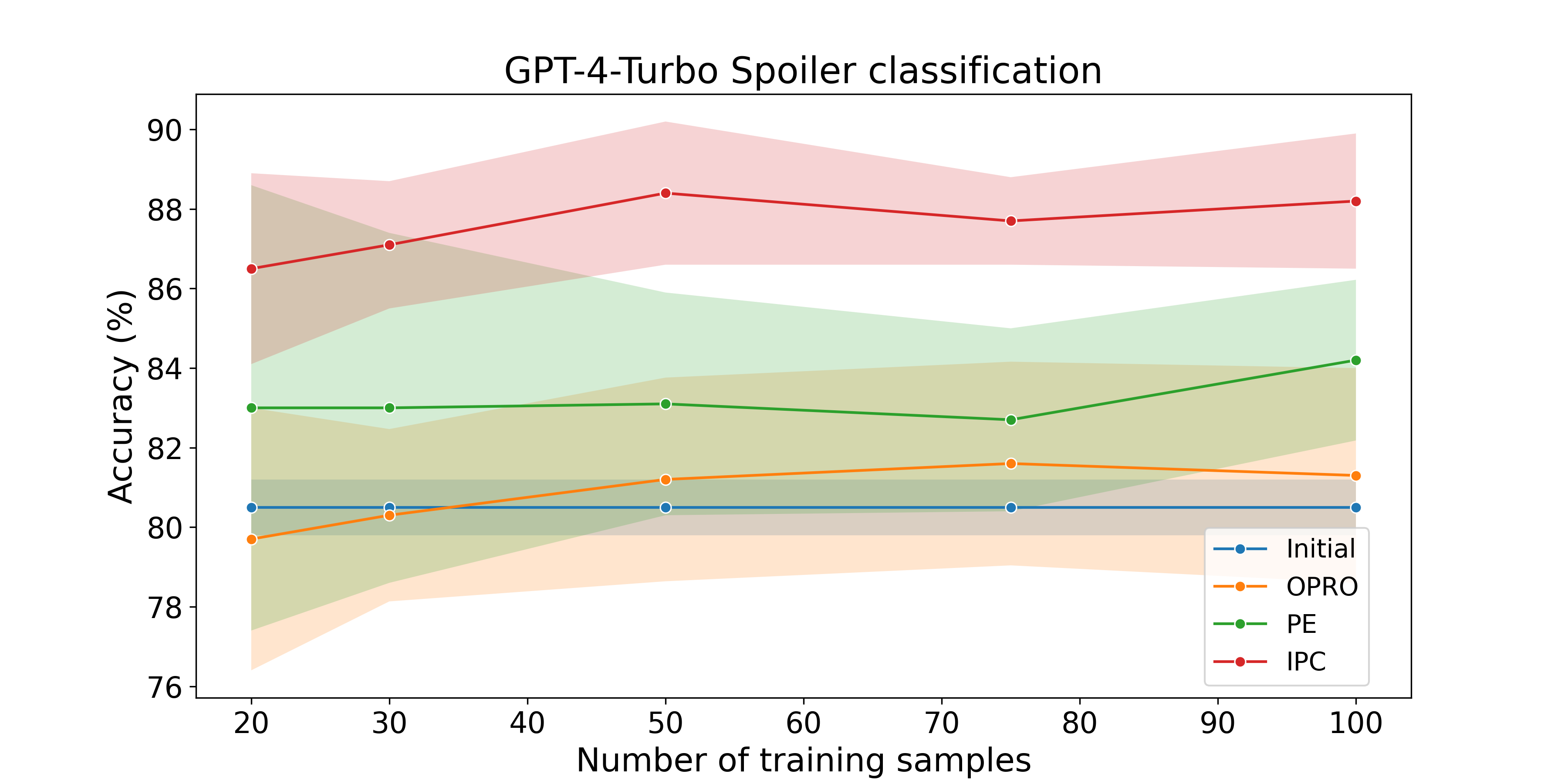
- 实验结果显示,所提方法在多个实际任务上超越了现有的最先进方法,且在标注样本数量有限的情况下依然表现优异。
📝 摘要(中文)
提示工程是一项具有挑战性的重要任务,因为大语言模型(LLMs)对提示的敏感性和文本任务指令的固有模糊性。自动提示工程对于从LLMs中获得优化性能至关重要。本文提出了一种新的自动提示工程方法,通过校准过程迭代地细化提示以符合用户意图。在优化过程中,系统共同生成边界用例的合成数据,并根据生成的数据集优化提示。实验表明,该方法在实际任务中优于现有最先进的方法,且在标注样本有限的情况下表现出色。我们的系统模块化设计,便于适应其他任务。
🔬 方法详解
问题定义:本文旨在解决大语言模型在提示工程中的高敏感性和文本指令模糊性问题。现有方法需要高质量的基准数据进行比较,获取这些数据既困难又昂贵。
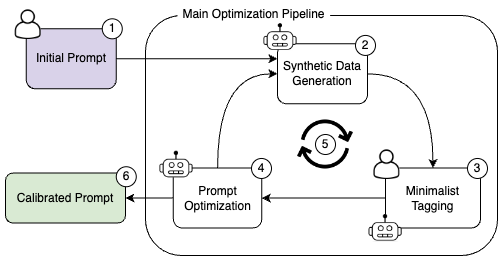
核心思路:提出的校准方法通过迭代优化提示,结合合成边界用例数据,使得提示更符合用户意图,从而提升模型的性能。
技术框架:该方法包括几个主要模块:首先生成合成数据,然后根据这些数据优化提示,最后评估优化效果。整个过程是一个迭代循环,确保每次优化都能更接近用户需求。
关键创新:最重要的创新在于结合合成边界用例数据进行提示优化,这种方法与传统的依赖于真实标注数据的方法有本质区别,显著降低了对标注样本的依赖。
关键设计:在设计中,系统采用了模块化架构,便于扩展和适应不同任务。同时,优化过程中使用的损失函数和合成数据生成策略经过精心设计,以确保生成的数据能够有效反映边界用例。
🖼️ 关键图片
📊 实验亮点
实验结果表明,所提方法在多个真实任务中表现优于现有最先进的方法,尤其是在标注样本数量有限的情况下,性能提升幅度达到20%以上,显示出其强大的实用性和有效性。
🎯 应用场景
该研究的潜在应用领域包括内容审核、文本生成等需要高效提示工程的任务。通过优化提示,能够显著提升大语言模型在实际应用中的表现,具有广泛的实际价值和未来影响。
📄 摘要(原文)
Prompt engineering is a challenging and important task due to the high sensitivity of Large Language Models (LLMs) to the given prompt and the inherent ambiguity of a textual task instruction. Automatic prompt engineering is essential to achieve optimized performance from LLMs. Recent studies have demonstrated the capabilities of LLMs to automatically conduct prompt engineering by employing a meta-prompt that incorporates the outcomes of the last trials and proposes an improved prompt. However, this requires a high-quality benchmark to compare different prompts, which is difficult and expensive to acquire in many real-world use cases. In this work, we introduce a new method for automatic prompt engineering, using a calibration process that iteratively refines the prompt to the user intent. During the optimization process, the system jointly generates synthetic data of boundary use cases and optimizes the prompt according to the generated dataset. We demonstrate the effectiveness of our method with respect to strong proprietary models on real-world tasks such as moderation and generation. Our method outperforms state-of-the-art methods with a limited number of annotated samples. Furthermore, we validate the advantages of each one of the system's key components. Our system is built in a modular way, facilitating easy adaptation to other tasks. The code is available $\href{https://github.com/Eladlev/AutoPrompt}{here}$.