Contextual Feature Extraction Hierarchies Converge in Large Language Models and the Brain
作者: Gavin Mischler, Yinghao Aaron Li, Stephan Bickel, Ashesh D. Mehta, Nima Mesgarani
分类: cs.CL, cs.AI, q-bio.NC
发布日期: 2024-01-31
备注: 19 pages, 5 figures and 4 supplementary figures
DOI: 10.1038/s42256-024-00925-4
💡 一句话要点
探讨大型语言模型与人脑语言处理的相似性
🎯 匹配领域: 支柱九:具身大模型 (Embodied Foundation Models)
关键词: 大型语言模型 人脑语言处理 特征提取 上下文信息 神经网络
📋 核心要点
- 现有研究虽然揭示了LLMs与人脑在语言处理上的相似性,但缺乏对其背后计算原理的深入理解。
- 本文通过分析多种高性能LLMs,探讨其特征提取路径与人脑语言处理机制的对齐情况,强调上下文信息的重要性。
- 研究结果表明,LLMs在性能提升的同时,其特征提取路径与人脑的映射更加紧密,且使用更少的层实现相同编码。
📝 摘要(中文)
近年来,人工智能的进展引发了对大型语言模型(LLMs)与人类神经处理之间相似性的关注,尤其是在语言理解方面。尽管已有研究确认了LLMs与大脑在表示上的相似性,但导致这种收敛的计算原理仍不明确。本文考察了一系列高性能的LLMs,发现随着模型在基准任务上的性能提升,它们的特征提取路径与人脑的对应关系更加紧密,同时使用更少的层进行相同的编码。此外,研究还强调了上下文信息在提升模型性能和与大脑相似性方面的重要性。这些发现揭示了大脑与LLMs在语言处理方面的收敛特征,并为开发更符合人类认知处理的模型提供了新方向。
🔬 方法详解
问题定义:本文旨在探讨大型语言模型(LLMs)与人脑在语言处理上的相似性及其背后的计算原理。现有方法未能有效揭示这种收敛的具体机制。
核心思路:通过对多种高性能LLMs进行比较,分析其特征提取路径与人脑的对应关系,发现高性能模型在特征提取层次上趋于一致,并强调上下文信息的作用。
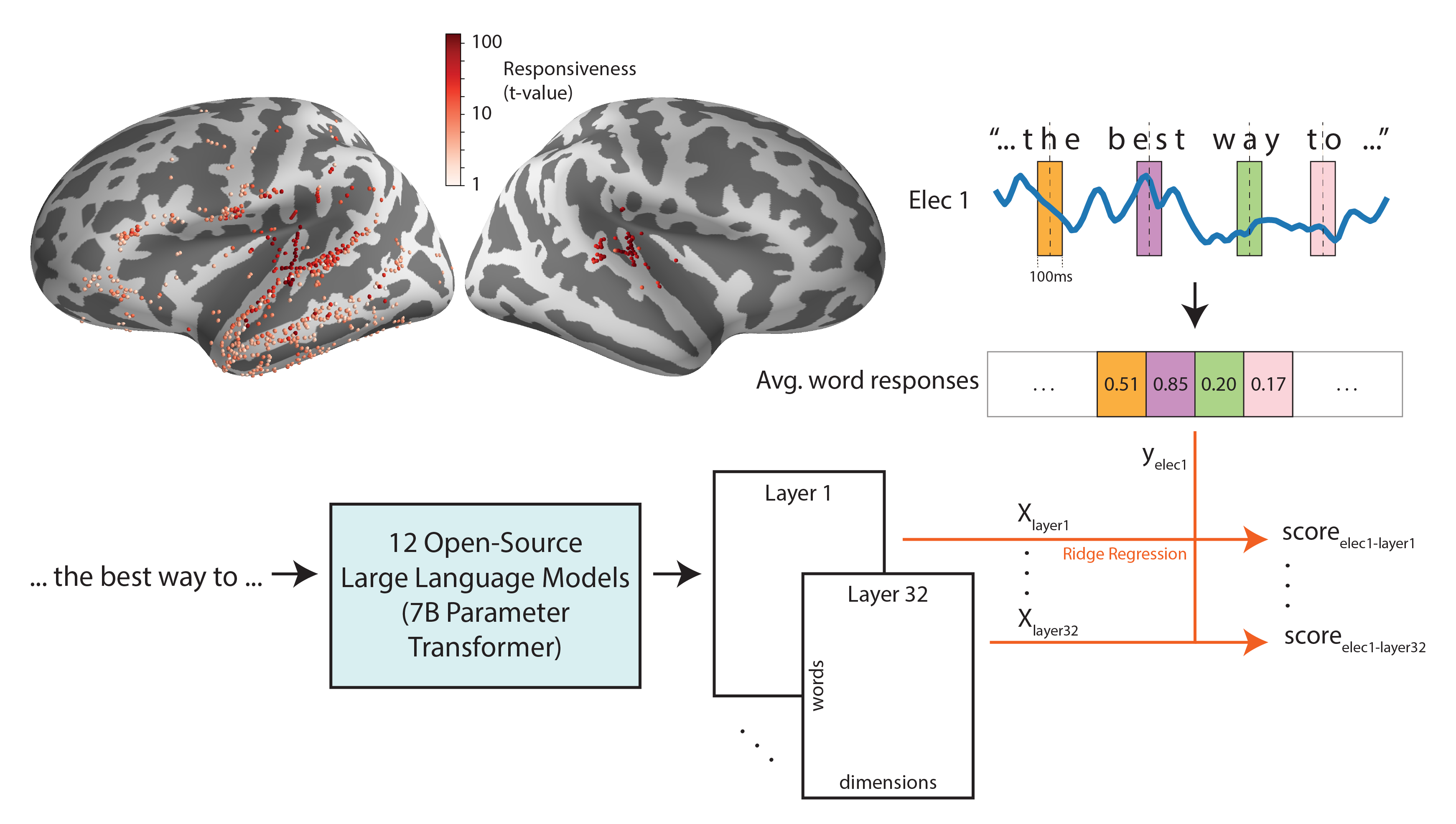
技术框架:研究首先选取一系列参数相似的高性能LLMs,随后通过实验评估其在语言理解任务中的表现,并与人脑的神经反应进行对比,最后分析其特征提取路径的层次结构。
关键创新:本研究的创新点在于揭示了LLMs在特征提取路径上与人脑的收敛性,尤其是在使用更少层数的情况下实现相似的编码效果,这与传统模型的设计思路存在显著区别。
关键设计:研究中对模型的参数设置进行了精细调整,采用了特定的损失函数以优化模型的上下文理解能力,同时在网络结构上探索了不同层次的特征提取机制。
🖼️ 关键图片
📊 实验亮点
实验结果显示,随着LLMs在基准任务上的性能提升,其对人脑神经反应的预测准确性显著提高,且在特征提取路径上趋于一致。具体而言,某些高性能模型在使用更少层的情况下,仍能达到与人脑相似的编码效果,展现出明显的性能提升。
🎯 应用场景
该研究的潜在应用领域包括自然语言处理、智能对话系统和人机交互等。通过深入理解LLMs与人脑的相似性,未来可以开发出更符合人类认知的智能系统,从而提升机器在语言理解和生成方面的能力。
📄 摘要(原文)
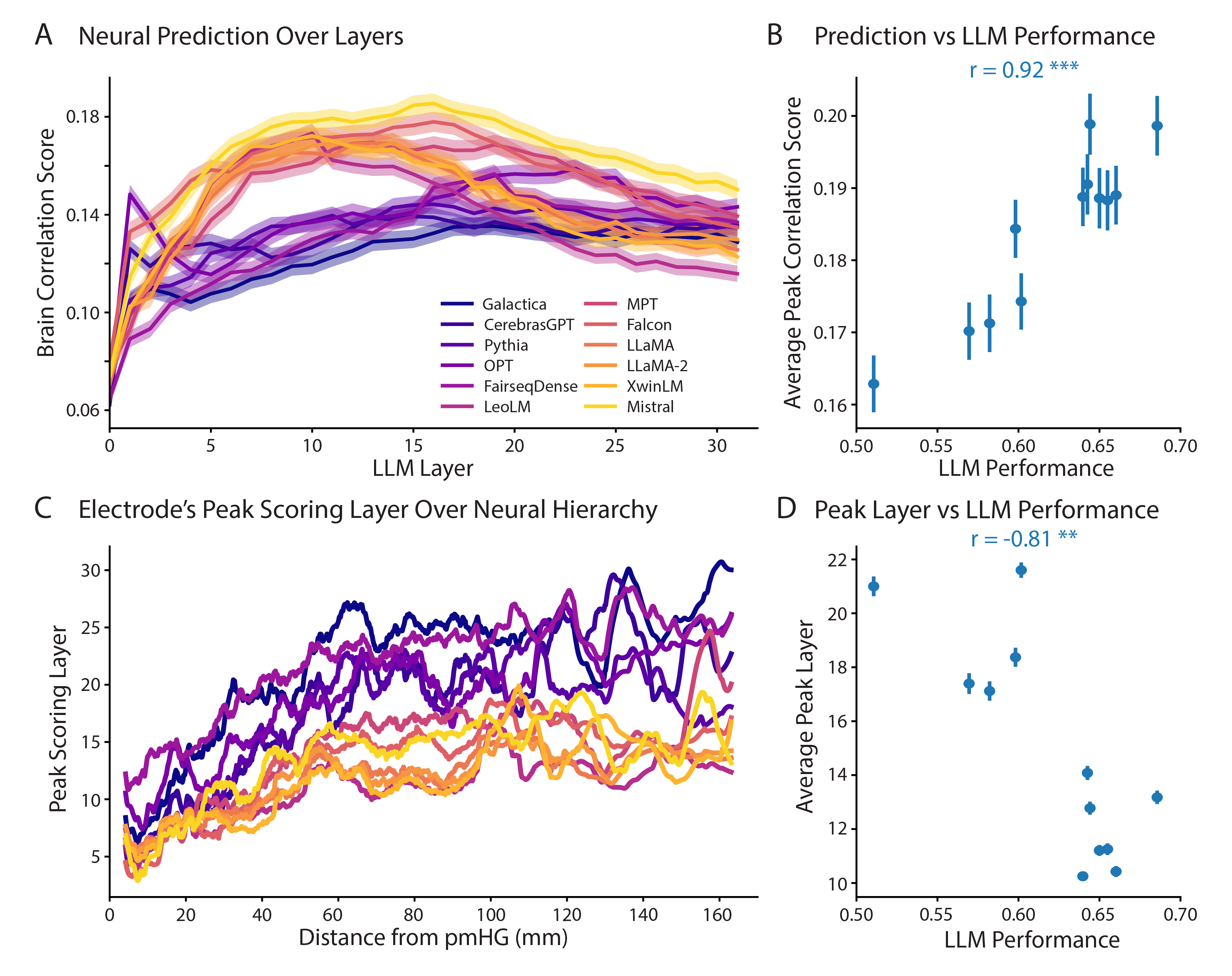
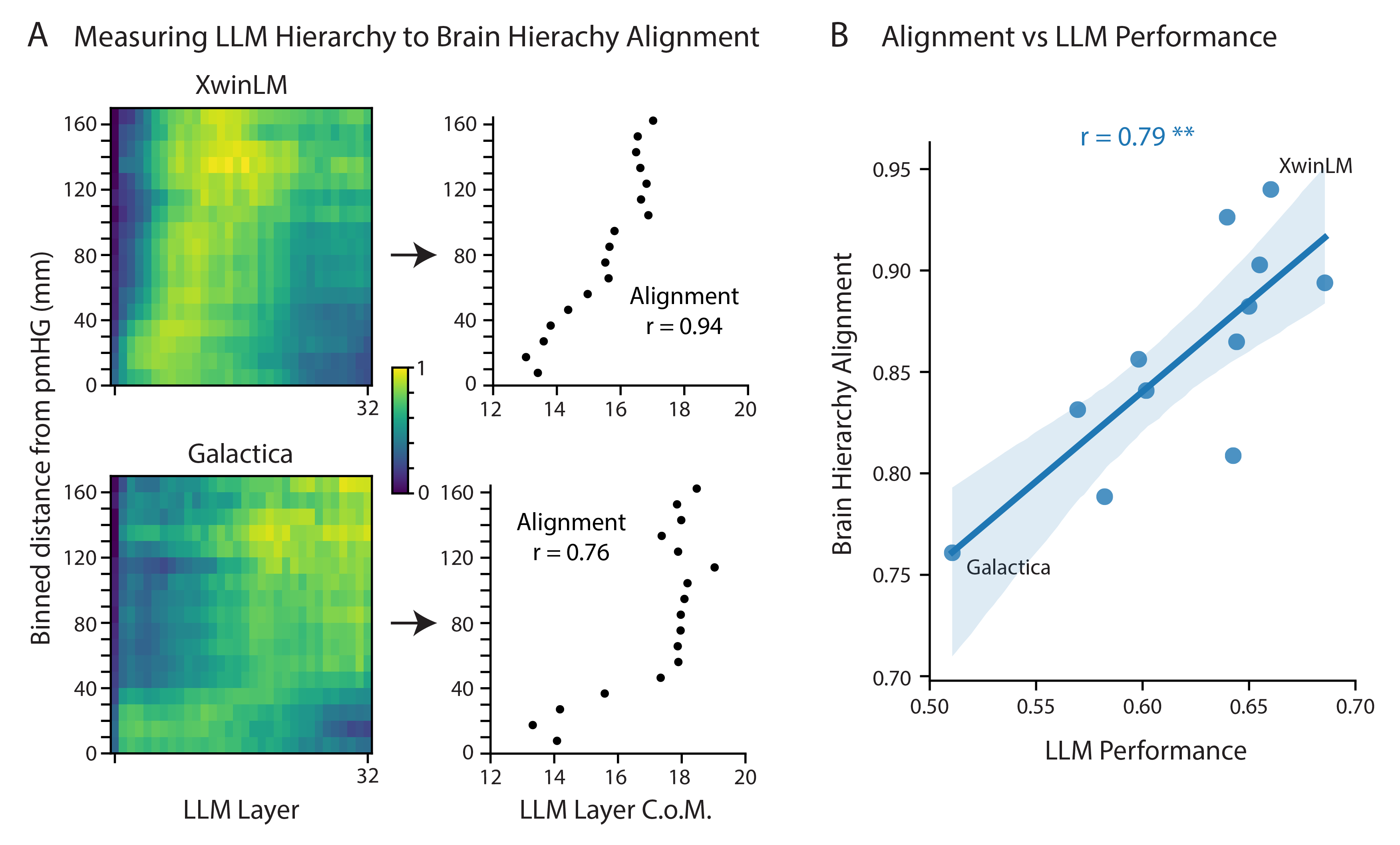
Recent advancements in artificial intelligence have sparked interest in the parallels between large language models (LLMs) and human neural processing, particularly in language comprehension. While prior research has established similarities in the representation of LLMs and the brain, the underlying computational principles that cause this convergence, especially in the context of evolving LLMs, remain elusive. Here, we examined a diverse selection of high-performance LLMs with similar parameter sizes to investigate the factors contributing to their alignment with the brain's language processing mechanisms. We find that as LLMs achieve higher performance on benchmark tasks, they not only become more brain-like as measured by higher performance when predicting neural responses from LLM embeddings, but also their hierarchical feature extraction pathways map more closely onto the brain's while using fewer layers to do the same encoding. We also compare the feature extraction pathways of the LLMs to each other and identify new ways in which high-performing models have converged toward similar hierarchical processing mechanisms. Finally, we show the importance of contextual information in improving model performance and brain similarity. Our findings reveal the converging aspects of language processing in the brain and LLMs and offer new directions for developing models that align more closely with human cognitive processing.