SelectLLM: Can LLMs Select Important Instructions to Annotate?
作者: Ritik Sachin Parkar, Jaehyung Kim, Jong Inn Park, Dongyeop Kang
分类: cs.CL, cs.AI
发布日期: 2024-01-29 (更新: 2024-08-27)
备注: First Authors: Ritik Sachin Parkar and Jaehyung Kim | Second Author: Jong Inn Park | PI: Dongyeop Kang
🔗 代码/项目: GITHUB
💡 一句话要点
提出SelectLLM以有效选择重要指令进行标注
🎯 匹配领域: 支柱九:具身大模型 (Embodied Foundation Models)
关键词: 指令调优 未标注数据 聚类方法 大型语言模型 数据集生成 机器学习 自然语言处理
📋 核心要点
- 现有方法在选择未标注指令时缺乏有效性,导致数据集质量不高。
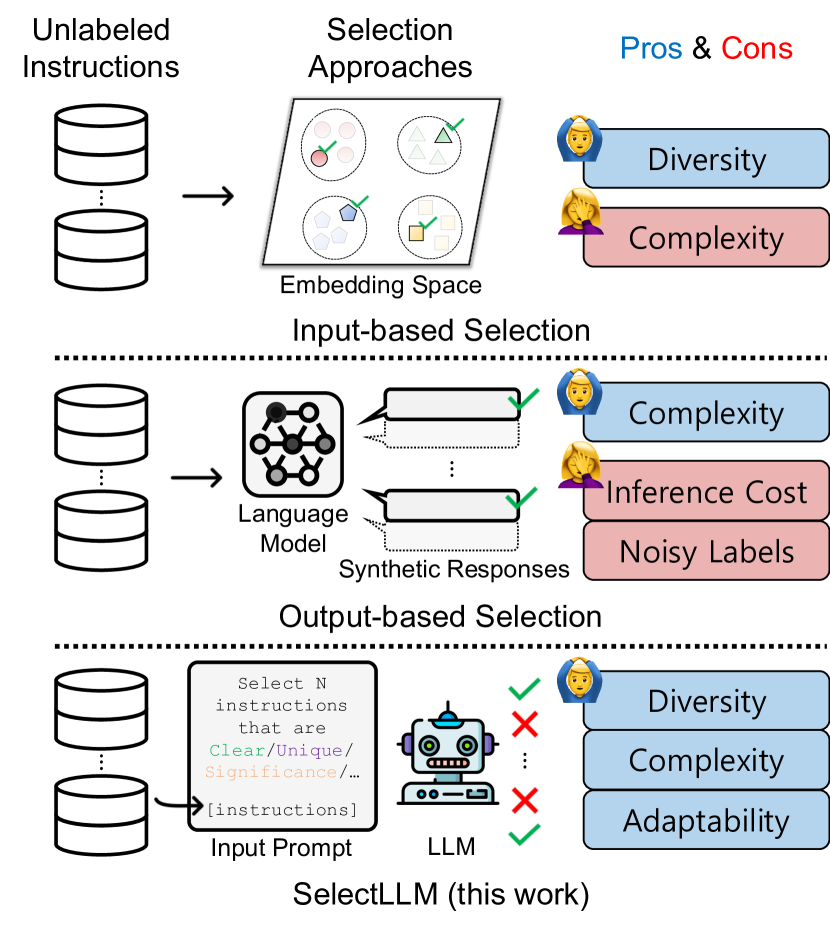
- SelectLLM通过核心集聚类和LLM提示,提升未标注指令的选择效率和质量。
- SelectLLM在多个基准测试中表现优异,超越了现有的最先进方法,显示出良好的适应性。
📝 摘要(中文)
指令调优受益于大规模多样化的数据集,但创建此类数据集需要高昂的人力标注成本。虽然大型语言模型(LLMs)生成的合成数据集在一定程度上解决了这一问题,但往往质量较低。为此,本文提出SelectLLM框架,通过对未标注指令进行选择性标注,利用LLMs的能力更有效地选择未标注指令。SelectLLM包括两个关键步骤:基于核心集的未标注指令聚类以增加多样性,以及提示LLM识别每个聚类中最有益的指令。实验结果表明,SelectLLM在AlpacaEval2和MT-Bench上超越了最先进的方法Alpagasus,并与多种LLMs(如ChatGPT、LLaMA-3.1-70B和Gemma-2-27b)进行了性能和兼容性比较。
🔬 方法详解
问题定义:本文旨在解决如何有效选择未标注指令的问题。现有方法在选择过程中往往忽视了指令的多样性和重要性,导致生成的数据集质量不高。
核心思路:SelectLLM的核心思路是利用LLMs的能力,通过聚类和提示机制来选择最有价值的未标注指令,从而提高数据集的质量和多样性。
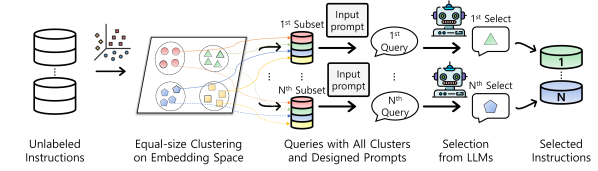
技术框架:SelectLLM的整体架构包括两个主要模块:首先是基于核心集的聚类步骤,用于对未标注指令进行多样性扩展;其次是通过提示LLM来识别每个聚类中最有益的指令。
关键创新:SelectLLM的创新之处在于其结合了聚类和LLM提示的双重机制,显著提升了未标注指令的选择效率,与传统方法相比,能够更好地捕捉指令的重要性。
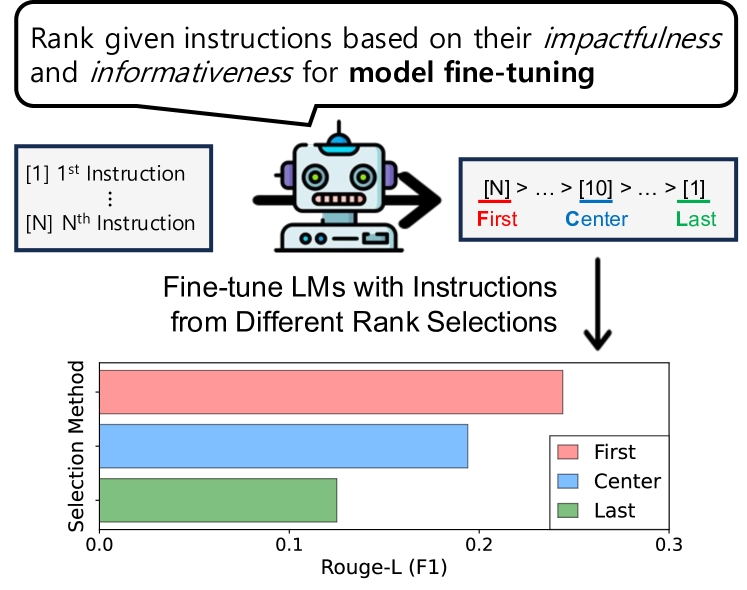
关键设计:在设计中,SelectLLM采用了特定的聚类算法以确保多样性,并通过精心设计的提示语句来引导LLM识别重要指令,确保了选择过程的高效性和准确性。
🖼️ 关键图片
📊 实验亮点
在实验中,SelectLLM在AlpacaEval2和MT-Bench上表现出色,超越了Alpagasus等最先进的方法,显示出在多个基准测试中具有显著的性能提升,具体提升幅度未知。其适应性和鲁棒性在不同数据集上均得到了验证。
🎯 应用场景
SelectLLM的研究成果具有广泛的应用潜力,尤其在需要大规模标注数据集的领域,如自然语言处理、对话系统和机器学习模型的训练中。通过提高未标注数据的选择效率,SelectLLM能够降低人力成本,并提升模型的性能和适应性,未来可能推动更多智能应用的发展。
📄 摘要(原文)
Instruction tuning benefits from large and diverse datasets; however, creating such datasets involves a high cost of human labeling. While synthetic datasets generated by large language models (LLMs) have partly solved this issue, they often contain low-quality data. One effective solution is selectively annotating unlabelled instructions, especially given the relative ease of acquiring unlabeled instructions or texts from various sources. However, how to select unlabelled instructions is not well-explored, especially in the context of LLMs. Therefore, we introduce SelectLLM, an alternative framework that leverages the capabilities of LLMs to select unlabeled instructions more effectively. Specifically, SelectLLM consists of two key steps: Coreset-based clustering of unlabelled instructions for enlarging diversity and prompting of LLM to identify the most beneficial instructions within each cluster. We evaluate SelectLLM on AlpacaEval2 and MT-Bench, demonstrating its ability to outperform state-of-the-art methods like Alpagasus. In addition, we compare the performance and compatibility of SelectLLM with various LLMs, such as ChatGPT, LLaMA-3.1-70B, and Gemma-2-27b. SelectLLM's adaptability and robustness are further evidenced by its ability to maintain high performance across both human and synthetic datasets. All code and data are publicly available (https://github.com/minnesotanlp/select-llm).