Evaluating LLM -- Generated Multimodal Diagnosis from Medical Images and Symptom Analysis
作者: Dimitrios P. Panagoulias, Maria Virvou, George A. Tsihrintzis
分类: cs.CL, cs.AI, cs.CV
发布日期: 2024-01-28
备注: Department of Informatics, University of Piraeus, Greece
💡 一句话要点
提出多模态LLM评估方法以提升医学诊断准确性
🎯 匹配领域: 支柱九:具身大模型 (Embodied Foundation Models)
关键词: 大型语言模型 医学诊断 多模态评估 病理学 知识图谱 命名实体识别 图像分析
📋 核心要点
- 现有大型语言模型在医学诊断中的应用缺乏系统的评估,导致其准确性和可靠性尚不明确。
- 本文提出的评估方法结合了多模态交互和领域特定分析,旨在全面评估LLM生成的医学诊断结果。
- 实验结果表明,GPT-4-Vision-Preview在病理学领域的诊断准确率达到约84%,并揭示了其在特定知识领域的不足。
📝 摘要(中文)
大型语言模型(LLMs)是快速发展的人工智能技术,能够辅助医学诊断。然而,其返回结果的正确性和准确性尚未得到充分评估。本文提出了一种LLM评估范式,包含两个独立步骤:通过结构化交互进行多模态LLM评估,以及基于前一步提取的数据进行后续领域特定分析。我们使用GPT-4-Vision-Preview对病理学领域的复杂医学问题进行评估,结果显示其正确诊断率约为84%。此外,分析揭示了GPT-4-Vision-Preview在特定知识路径上的不足,为进一步优化其他LLMs提供了思路。
🔬 方法详解
问题定义:本文旨在解决大型语言模型在医学诊断中的评估不足,特别是其返回结果的正确性和准确性未得到充分验证的问题。现有方法缺乏系统性和全面性,无法有效评估LLM的实际应用效果。
核心思路:论文提出了一种新的评估范式,分为两个步骤:首先通过结构化交互进行多模态评估,其次基于提取的数据进行深入的领域特定分析。这种设计旨在全面评估LLM在医学领域的表现,尤其是在处理复杂的多模态输入时。
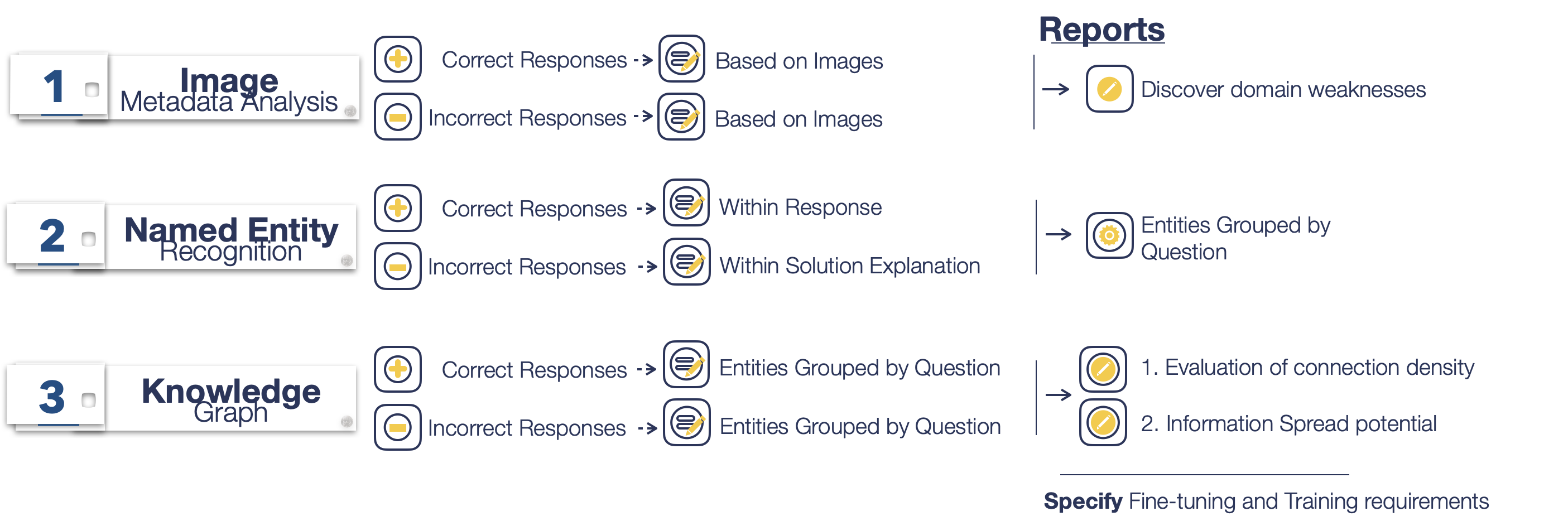
技术框架:整体架构包括两个主要模块:多模态LLM评估模块和后续分析模块。多模态评估模块利用GPT-4-Vision-Preview处理医学图像和文本问题,后续分析模块则对提取的结果进行系统分析,包括图像元数据分析、命名实体识别和知识图谱构建。
关键创新:最重要的创新点在于提出了结合多模态交互和领域特定分析的评估方法,这与现有单一评估方法有本质区别,能够更全面地反映LLM在医学诊断中的实际表现。
关键设计:在实验中,使用了GPT-4-Vision-Preview作为LLM,评估过程中设置了多种复杂医学问题,采用了标准的多项选择题格式,确保了评估的系统性和科学性。
🖼️ 关键图片

📊 实验亮点
实验结果显示,GPT-4-Vision-Preview在处理病理学领域的复杂医学问题时,正确诊断率达到了约84%。此外,分析揭示了其在特定知识路径上的不足,为后续优化提供了重要依据。这一成果为LLM在医学领域的应用奠定了基础。
🎯 应用场景
该研究的潜在应用领域包括医学影像分析、临床决策支持系统和智能医疗助手等。通过提升LLM在医学诊断中的准确性和可靠性,能够为医生提供更为有效的辅助工具,进而改善患者的诊疗体验和结果。未来,该方法也可扩展至其他领域的LLM评估,推动人工智能技术的广泛应用。
📄 摘要(原文)
Large language models (LLMs) constitute a breakthrough state-of-the-art Artificial Intelligence technology which is rapidly evolving and promises to aid in medical diagnosis. However, the correctness and the accuracy of their returns has not yet been properly evaluated. In this work, we propose an LLM evaluation paradigm that incorporates two independent steps of a novel methodology, namely (1) multimodal LLM evaluation via structured interactions and (2) follow-up, domain-specific analysis based on data extracted via the previous interactions. Using this paradigm, (1) we evaluate the correctness and accuracy of LLM-generated medical diagnosis with publicly available multimodal multiple-choice questions(MCQs) in the domain of Pathology and (2) proceed to a systemic and comprehensive analysis of extracted results. We used GPT-4-Vision-Preview as the LLM to respond to complex, medical questions consisting of both images and text, and we explored a wide range of diseases, conditions, chemical compounds, and related entity types that are included in the vast knowledge domain of Pathology. GPT-4-Vision-Preview performed quite well, scoring approximately 84\% of correct diagnoses. Next, we further analyzed the findings of our work, following an analytical approach which included Image Metadata Analysis, Named Entity Recognition and Knowledge Graphs. Weaknesses of GPT-4-Vision-Preview were revealed on specific knowledge paths, leading to a further understanding of its shortcomings in specific areas. Our methodology and findings are not limited to the use of GPT-4-Vision-Preview, but a similar approach can be followed to evaluate the usefulness and accuracy of other LLMs and, thus, improve their use with further optimization.