Hardware Phi-1.5B: A Large Language Model Encodes Hardware Domain Specific Knowledge
作者: Weimin Fu, Shijie Li, Yifang Zhao, Haocheng Ma, Raj Dutta, Xuan Zhang, Kaichen Yang, Yier Jin, Xiaolong Guo
分类: cs.CL, cs.AI, cs.AR
发布日期: 2024-01-27
备注: 6 pages, 6 figures
期刊: 29th IEEE/ACM Asia and South Pacific Design Automation Conference (ASP-DAC); 2024 January; Incheon Songdo Convensia, South Korea
💡 一句话要点
提出Hardware Phi-1.5B以解决半导体硬件领域知识不足问题
🎯 匹配领域: 支柱九:具身大模型 (Embodied Foundation Models)
关键词: 大型语言模型 硬件设计 半导体 数据集构建 预训练 AI应用 安全验证
📋 核心要点
- 现有大型语言模型在硬件设计和验证中面临硬件特定问题的复杂性和数据集稀缺的挑战。
- 本文提出Hardware Phi-1.5B,专为半导体行业硬件领域设计,采用分层数据集进行预训练。
- 该模型在硬件设计和验证任务中表现出显著的性能提升,展示了AI在半导体领域的应用前景。
📝 摘要(中文)
在快速发展的半导体行业中,研究、设计、验证和制造紧密相连,大型语言模型在硬件设计和安全验证中的潜力巨大。然而,现有的自然语言或软件代码知识未能充分解决硬件特定问题,且硬件领域数据集稀缺。为此,本文提出了Hardware Phi-1.5B,一个专门针对半导体行业硬件领域的大型语言模型。我们开发了一个分层数据集,并重点使用中等规模的数据集进行预训练。这一首个预训练的硬件领域特定大型语言模型的创建,标志着重要进展,提升了硬件设计和验证任务的性能,为半导体行业的AI应用指明了前进方向。
🔬 方法详解
问题定义:本文旨在解决现有大型语言模型在硬件领域知识不足的问题,特别是针对硬件特定问题的复杂性和数据集稀缺的痛点。
核心思路:提出Hardware Phi-1.5B模型,专门针对半导体行业的硬件领域进行设计,通过构建分层数据集来增强模型的预训练效果。
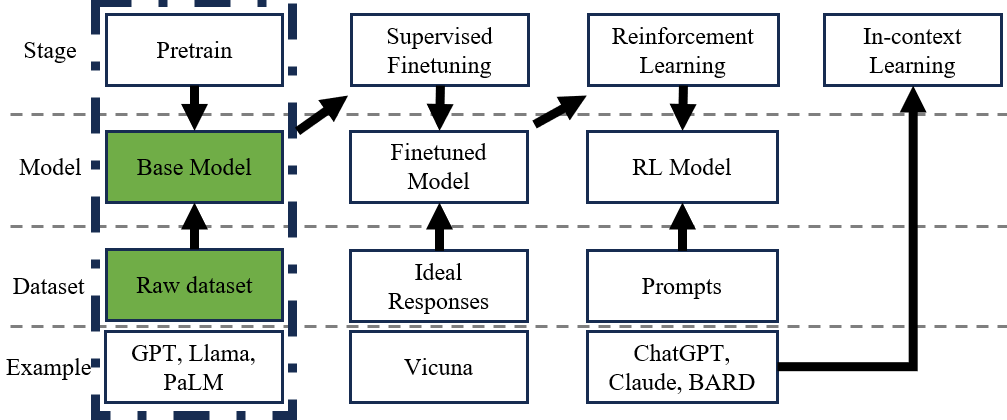
技术框架:整体架构包括数据集的构建、模型的预训练和评估阶段。数据集分为小、中、大三个子集,重点使用中等规模的数据集进行预训练,以提高模型的有效性。
关键创新:首个针对硬件领域的预训练大型语言模型,显著提升了在硬件设计和验证任务中的性能,区别于传统模型的通用性。
关键设计:模型采用紧凑高效的Phi 1.5B架构,预训练过程中使用了特定的损失函数和参数设置,以确保模型能够有效捕捉硬件领域的知识。
🖼️ 关键图片


📊 实验亮点
实验结果表明,Hardware Phi-1.5B在硬件设计和验证任务中相较于传统模型有显著提升,具体性能数据尚未披露,但提升幅度明显,展示了其在半导体行业的应用潜力。
🎯 应用场景
该研究的潜在应用领域包括半导体设计、验证和制造等环节,能够为工程师提供更高效的设计工具和验证手段,提升整体工作效率。未来,Hardware Phi-1.5B有望推动AI在硬件领域的广泛应用,促进技术创新与发展。
📄 摘要(原文)
In the rapidly evolving semiconductor industry, where research, design, verification, and manufacturing are intricately linked, the potential of Large Language Models to revolutionize hardware design and security verification is immense. The primary challenge, however, lies in the complexity of hardware specific issues that are not adequately addressed by the natural language or software code knowledge typically acquired during the pretraining stage. Additionally, the scarcity of datasets specific to the hardware domain poses a significant hurdle in developing a foundational model. Addressing these challenges, this paper introduces Hardware Phi 1.5B, an innovative large language model specifically tailored for the hardware domain of the semiconductor industry. We have developed a specialized, tiered dataset comprising small, medium, and large subsets and focused our efforts on pretraining using the medium dataset. This approach harnesses the compact yet efficient architecture of the Phi 1.5B model. The creation of this first pretrained, hardware domain specific large language model marks a significant advancement, offering improved performance in hardware design and verification tasks and illustrating a promising path forward for AI applications in the semiconductor sector.