Not My Voice! A Taxonomy of Ethical and Safety Harms of Speech Generators
作者: Wiebke Hutiri, Oresiti Papakyriakopoulos, Alice Xiang
分类: cs.CL, cs.AI, cs.CY, eess.AS
发布日期: 2024-01-25 (更新: 2024-05-15)
备注: 17 pages, 4 tables, 4 figures Accepted at the 2024 ACM Conference on Fairness, Accountability, and Transparency (ACM FAccT '24)
💡 一句话要点
提出语音生成模型的伦理与安全危害分类以应对社会风险
🎯 匹配领域: 支柱九:具身大模型 (Embodied Foundation Models)
关键词: 语音生成 伦理风险 安全危害 多模态AI 政策干预 技术框架 分类法
📋 核心要点
- 现有的语音生成技术在伦理和安全方面存在显著风险,尤其是在恶意使用的情况下。
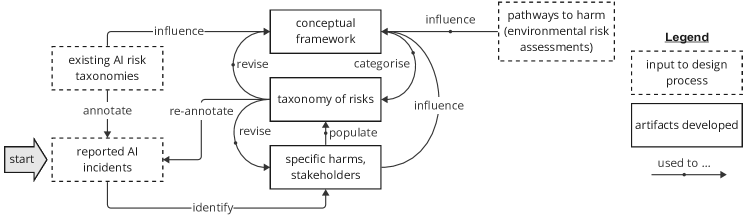
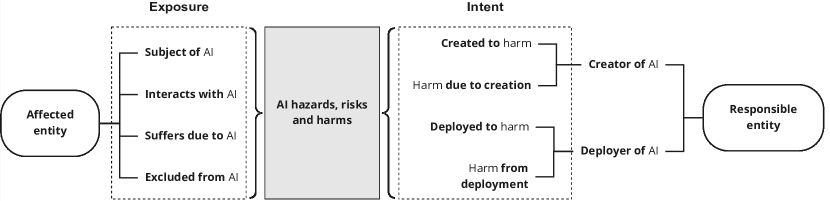
- 本文提出了一种概念框架,通过分析语音生成事件,分类不同的伦理和安全危害。
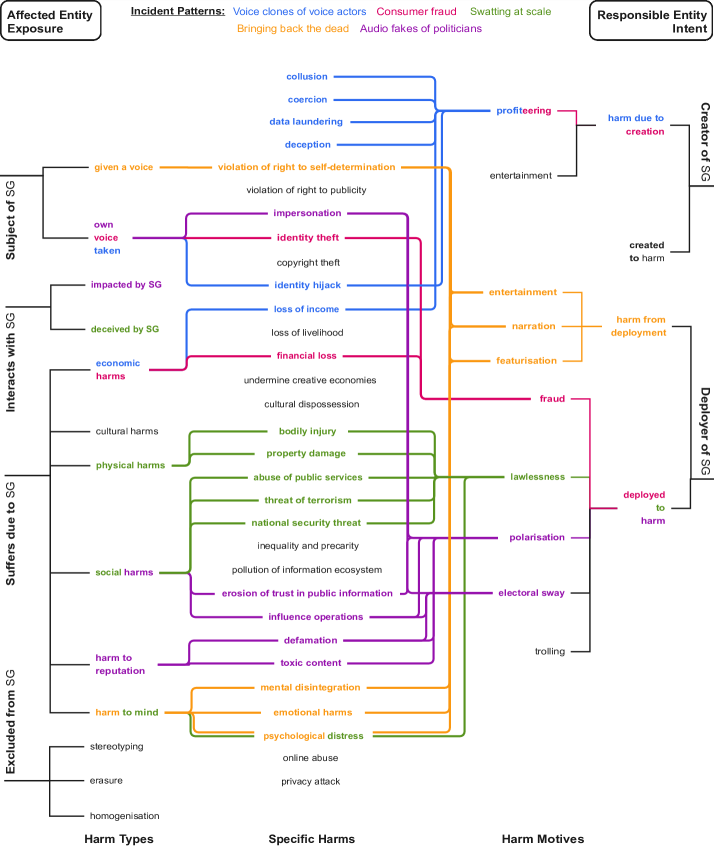
- 研究结果表明,特定危害可以根据受影响个体的暴露情况进行分类,支持政策干预和决策制定。
📝 摘要(中文)
随着人工智能在生成人类语音方面的快速广泛应用,社会面临一系列显著的伦理和安全风险。例如,越来越多的语音生成事件与美国的恶作剧攻击有关,匿名施害者利用合成语音拨打警察电话,导致学校和医院关闭,或暴力侵入无辜公民的家中。这些事件表明,多模态生成AI的风险和危害并非孤立存在,而是由多个利益相关者和技术AI系统的交互所引发。本文分析了语音生成事件,研究特定危害的模式,并提出了一个概念框架,用于建模AI的伦理和安全危害路径,进而开发出语音生成危害的分类法。
🔬 方法详解
问题定义:本文旨在解决语音生成技术带来的伦理和安全危害问题,现有方法未能有效识别和分类这些风险,导致社会安全隐患加剧。
核心思路:通过分析语音生成事件,识别特定危害的模式,并提出一个概念框架,以便更好地理解和应对这些风险。
技术框架:整体架构包括对语音生成事件的分析、危害模式的识别、以及基于受影响个体和创作者动机的分类,形成一个系统的危害分类法。
关键创新:本研究的主要创新在于提出了一个多维度的危害分类框架,强调了利益相关者之间的互动关系,这与现有单一维度的分析方法有本质区别。
关键设计:在分类过程中,考虑了受影响个体的不同角色(如主体、互动者、受害者等)以及创作者的动机,确保分类的全面性和准确性。
🖼️ 关键图片
📊 实验亮点
研究结果表明,提出的分类法有效识别了多种语音生成相关的伦理和安全危害,能够支持政策干预和决策制定。通过对比分析,新的框架在识别危害的全面性和准确性上显著优于现有方法。
🎯 应用场景
该研究的潜在应用领域包括政策制定、技术开发和社会安全管理。通过对语音生成技术的伦理和安全危害进行系统分类,可以为相关政策的制定提供依据,促进负责任的技术开发和应用,减少社会风险。
📄 摘要(原文)
The rapid and wide-scale adoption of AI to generate human speech poses a range of significant ethical and safety risks to society that need to be addressed. For example, a growing number of speech generation incidents are associated with swatting attacks in the United States, where anonymous perpetrators create synthetic voices that call police officers to close down schools and hospitals, or to violently gain access to innocent citizens' homes. Incidents like this demonstrate that multimodal generative AI risks and harms do not exist in isolation, but arise from the interactions of multiple stakeholders and technical AI systems. In this paper we analyse speech generation incidents to study how patterns of specific harms arise. We find that specific harms can be categorised according to the exposure of affected individuals, that is to say whether they are a subject of, interact with, suffer due to, or are excluded from speech generation systems. Similarly, specific harms are also a consequence of the motives of the creators and deployers of the systems. Based on these insights we propose a conceptual framework for modelling pathways to ethical and safety harms of AI, which we use to develop a taxonomy of harms of speech generators. Our relational approach captures the complexity of risks and harms in sociotechnical AI systems, and yields a taxonomy that can support appropriate policy interventions and decision making for the responsible development and release of speech generation models.