Identifying and Analyzing Performance-Critical Tokens in Large Language Models
作者: Yu Bai, Heyan Huang, Cesare Spinoso-Di Piano, Marc-Antoine Rondeau, Sanxing Chen, Yang Gao, Jackie Chi Kit Cheung
分类: cs.CL
发布日期: 2024-01-20 (更新: 2025-11-14)
备注: AAAI 2026
💡 一句话要点
提出性能关键标记识别方法以提升大语言模型表现
🎯 匹配领域: 支柱九:具身大模型 (Embodied Foundation Models)
关键词: 大语言模型 上下文学习 性能关键标记 消融实验 自然语言处理 少量学习 模型优化
📋 核心要点
- 现有研究对大语言模型如何通过示例进行任务学习的机制探讨不足,尤其是不同类型标记的影响。
- 本文提出了一种新的标记分类方法,将ICL提示中的标记分为内容、停用词和模板标记,以识别性能关键标记。
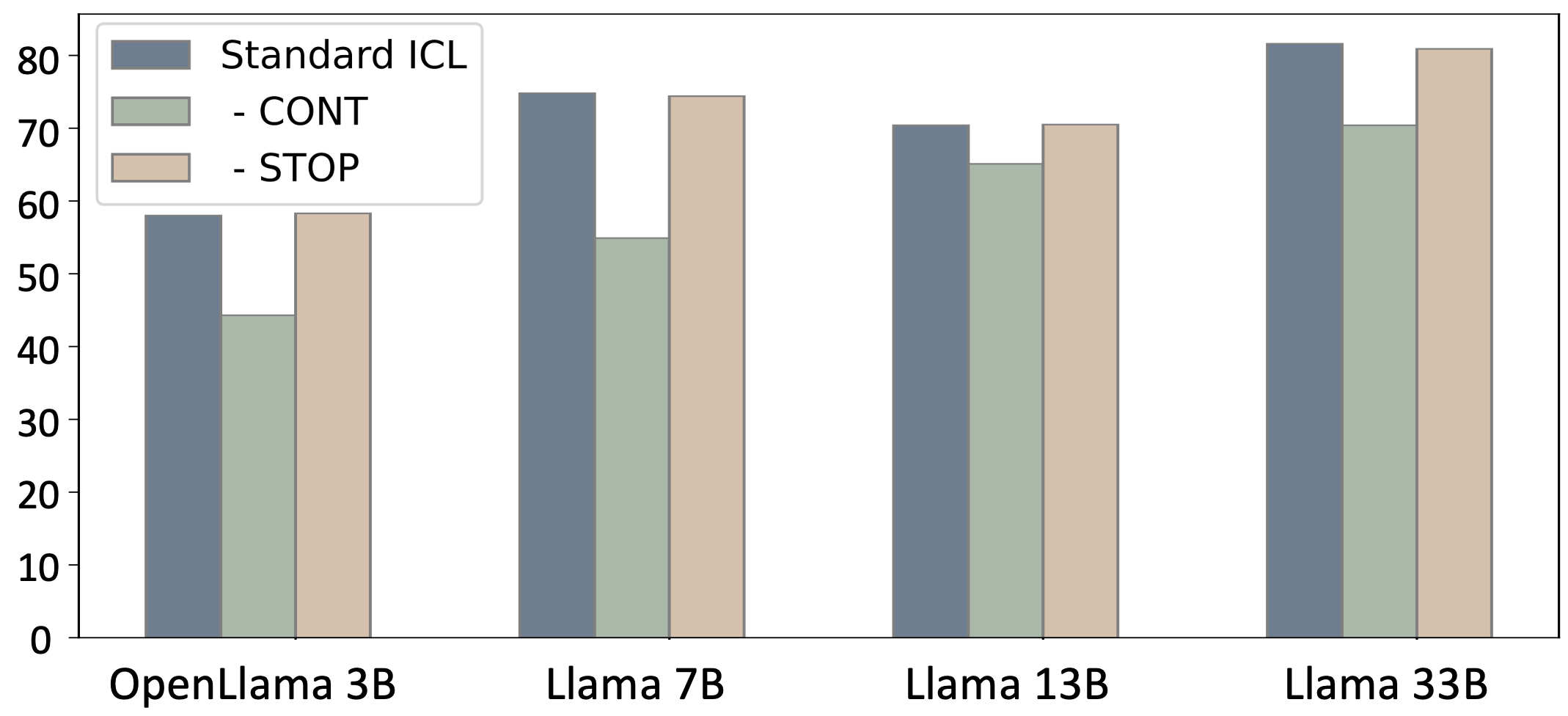
- 实验结果表明,模板和停用词对模型性能的影响显著高于内容标记,揭示了标记类型对学习过程的重要性。
📝 摘要(中文)
在上下文学习(ICL)中,大语言模型(LLMs)通过示例进行少量学习的有效性已得到认可。然而,LLMs如何利用示例来指定任务并学习相应的计算功能尚未得到充分研究。本文将ICL提示中的标记分为内容、停用词和模板标记,旨在识别直接影响LLM性能的标记类型。通过对测试示例的注意力进行消融实验,发现信息内容标记的表现对性能的影响小于模板和停用词,这与人类对信息词的关注形成对比。研究表明,性能关键标记的表示聚合了内容标记的信息,并且词汇意义、重复性和结构线索是这些标记的主要特征。该研究加深了我们对大语言模型如何从示例中学习执行任务的理解。
🔬 方法详解
问题定义:本文旨在解决大语言模型在上下文学习中对不同类型标记的依赖性及其对性能的影响,现有方法未能深入探讨标记的分类和作用。
核心思路:通过将ICL提示中的标记分为内容、停用词和模板标记,识别出哪些标记对模型性能至关重要,从而更好地理解模型的学习机制。
技术框架:研究采用消融实验的方法,通过对测试示例的注意力进行分析,评估不同类型标记的影响。主要模块包括标记分类、性能评估和信息聚合分析。
关键创新:提出了性能关键标记的概念,发现模板和停用词在模型性能中起到更为重要的作用,这一发现与人类的学习方式形成鲜明对比。
关键设计:在实验中,设计了特定的消融实验来评估标记的影响,并分析了词汇意义、重复性和结构线索等特征对标记性能的影响。通过这些设计,研究揭示了标记在模型学习中的不同角色。
🖼️ 关键图片


📊 实验亮点
实验结果显示,模板和停用词的表示对模型性能的影响显著高于内容标记,揭示了不同类型标记在学习过程中的重要性。这一发现为优化大语言模型的训练策略提供了新的方向。
🎯 应用场景
该研究为大语言模型的优化提供了新的视角,尤其是在少量学习和上下文学习的应用场景中。通过识别性能关键标记,模型的训练和调优可以更加高效,未来可能在自然语言处理、对话系统和智能助手等领域产生深远影响。
📄 摘要(原文)
In-context learning (ICL) has emerged as an effective solution for few-shot learning with large language models (LLMs). However, how LLMs leverage demonstrations to specify a task and learn a corresponding computational function through ICL is underexplored. Drawing from the way humans learn from content-label mappings in demonstrations, we categorize the tokens in an ICL prompt into content, stopword, and template tokens. Our goal is to identify the types of tokens whose representations directly influence LLM's performance, a property we refer to as being performance-critical. By ablating representations from the attention of the test example, we find that the representations of informative content tokens have less influence on performance compared to template and stopword tokens, which contrasts with the human attention to informative words. We give evidence that the representations of performance-critical tokens aggregate information from the content tokens. Moreover, we demonstrate experimentally that lexical meaning, repetition, and structural cues are the main distinguishing characteristics of these tokens. Our work sheds light on how large language models learn to perform tasks from demonstrations and deepens our understanding of the roles different types of tokens play in large language models.