Quantum Transfer Learning for Acceptability Judgements
作者: Giuseppe Buonaiuto, Raffaele Guarasci, Aniello Minutolo, Giuseppe De Pietro, Massimo Esposito
分类: cs.CL, physics.comp-ph, quant-ph
发布日期: 2024-01-15
💡 一句话要点
提出量子迁移学习以解决自然语言处理中的可接受性判断问题
🎯 匹配领域: 支柱九:具身大模型 (Embodied Foundation Models)
关键词: 量子迁移学习 自然语言处理 可接受性判断 量子计算 嵌入向量 分类算法 人工智能
📋 核心要点
- 现有的自然语言处理方法在处理复杂句子时表现不足,尤其是在可接受性判断任务上。
- 论文提出了一种量子迁移学习方法,通过量子电路微调经典模型,以提高可接受性判断的准确性。
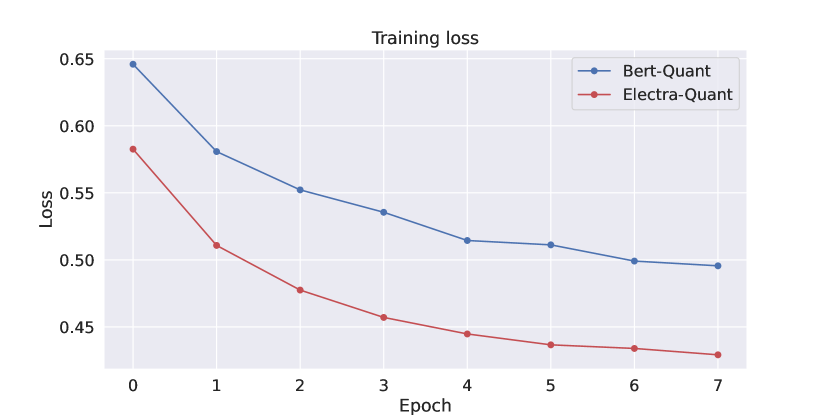
- 实验结果显示,量子迁移学习在可接受性判断任务上与经典方法相当,且在处理复杂句子时表现更佳。
📝 摘要(中文)
混合量子-经典分类器有望对自然语言处理任务,特别是分类相关任务产生积极影响。量子迁移学习,即利用量子电路对预训练的经典模型进行微调,正在吸引广泛关注。本研究展示了基于大语言模型提取的嵌入向量训练的量子迁移学习算法在可接受性判断任务中的潜在优势。实验结果表明,量子迁移学习管道的表现与最先进的经典迁移学习算法相当,证明了当前量子计算机在自然语言处理任务中的能力。此外,通过可解释人工智能方法的定性语言分析显示,量子迁移学习算法在分类复杂和结构化句子方面的能力优于经典方法,为未来量子优势在自然语言处理领域的量化奠定了基础。
🔬 方法详解
问题定义:本论文旨在解决自然语言处理中的可接受性判断问题,现有方法在处理复杂句子时的表现不足,难以准确判断句子的自然性和结构合理性。
核心思路:论文提出的量子迁移学习方法利用量子电路对预训练的经典模型进行微调,旨在提升模型在特定任务上的表现,尤其是对复杂句子的分类能力。
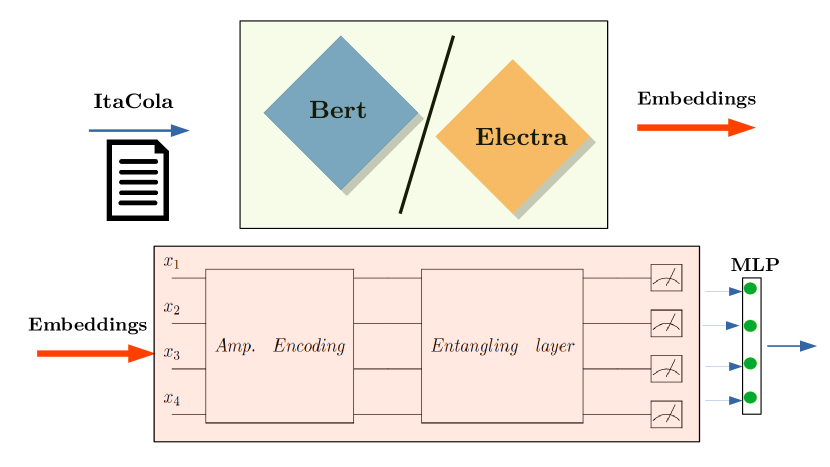
技术框架:整体架构包括数据预处理、嵌入向量提取、量子电路设计和训练、以及最终的分类评估。主要模块涵盖了从经典模型到量子模型的迁移过程。
关键创新:最重要的技术创新在于将量子计算与经典迁移学习相结合,利用量子电路的特性提升模型的表达能力和性能,这与传统的仅依赖经典计算的方法有本质区别。
关键设计:在参数设置上,采用了适合量子电路的损失函数和优化算法,网络结构设计上结合了量子态的特性,以提高对复杂句子的分类能力。具体细节包括量子比特的选择和量子门的配置。
🖼️ 关键图片
📊 实验亮点
实验结果表明,量子迁移学习管道在可接受性判断任务上的表现与最先进的经典迁移学习算法相当,且在处理复杂句子时的分类准确率有所提升,显示出量子计算在自然语言处理中的潜力。
🎯 应用场景
该研究的潜在应用领域包括自然语言处理中的句子分类、语法检查和语言生成等任务。量子迁移学习的引入可能会显著提升这些任务的性能,推动智能助手、翻译系统等实际应用的发展,并为未来量子计算在人工智能领域的广泛应用奠定基础。
📄 摘要(原文)
Hybrid quantum-classical classifiers promise to positively impact critical aspects of natural language processing tasks, particularly classification-related ones. Among the possibilities currently investigated, quantum transfer learning, i.e., using a quantum circuit for fine-tuning pre-trained classical models for a specific task, is attracting significant attention as a potential platform for proving quantum advantage. This work shows potential advantages, both in terms of performance and expressiveness, of quantum transfer learning algorithms trained on embedding vectors extracted from a large language model to perform classification on a classical Linguistics task: acceptability judgments. Acceptability judgment is the ability to determine whether a sentence is considered natural and well-formed by a native speaker. The approach has been tested on sentences extracted from ItaCoLa, a corpus that collects Italian sentences labeled with their acceptability judgment. The evaluation phase shows results for the quantum transfer learning pipeline comparable to state-of-the-art classical transfer learning algorithms, proving current quantum computers' capabilities to tackle NLP tasks for ready-to-use applications. Furthermore, a qualitative linguistic analysis, aided by explainable AI methods, reveals the capabilities of quantum transfer learning algorithms to correctly classify complex and more structured sentences, compared to their classical counterpart. This finding sets the ground for a quantifiable quantum advantage in NLP in the near future.