ROBBIE: Robust Bias Evaluation of Large Generative Language Models
作者: David Esiobu, Xiaoqing Tan, Saghar Hosseini, Megan Ung, Yuchen Zhang, Jude Fernandes, Jane Dwivedi-Yu, Eleonora Presani, Adina Williams, Eric Michael Smith
分类: cs.CL
发布日期: 2023-11-29
备注: EMNLP 2023
💡 一句话要点
提出ROBBIE以评估大型生成语言模型的偏见与公平性
🎯 匹配领域: 支柱九:具身大模型 (Embodied Foundation Models)
关键词: 生成语言模型 偏见评估 公平性 毒性度量 数据集 缓解技术 社会责任 自然语言处理
📋 核心要点
- 现有生成语言模型在公平性和偏见评估方面缺乏全面的工具,导致对边缘化群体的潜在危害未能充分识别。
- 本文提出了ROBBIE框架,包含对多种偏见和毒性度量的基准测试,并引入了新的数据集以增强评估的全面性。
- 通过对三种缓解技术的研究,ROBBIE提供了对模型偏见的深入理解,帮助实践者在部署时更好地平衡潜在风险与收益。
📝 摘要(中文)
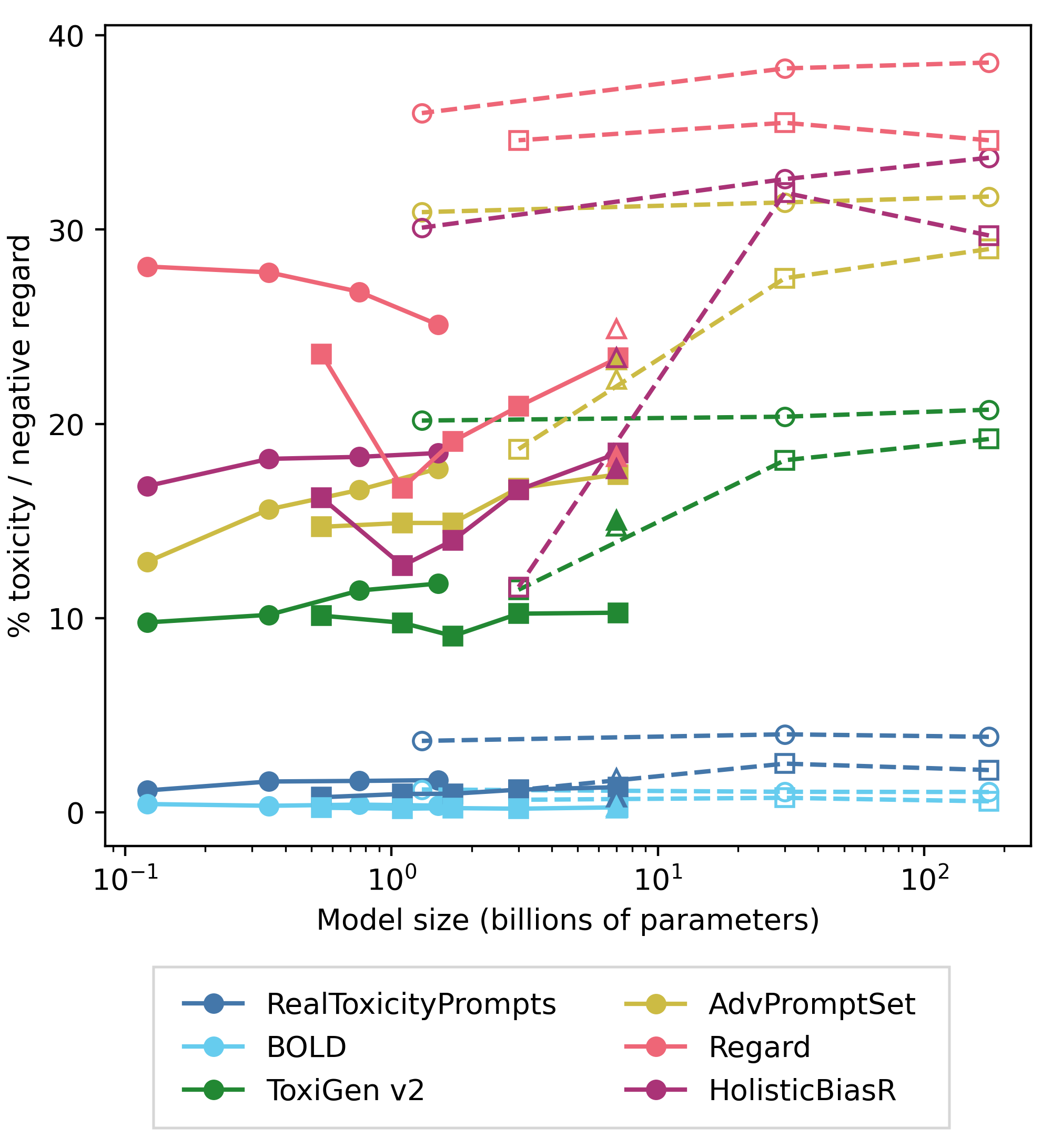
随着生成大型语言模型(LLMs)性能的提升和普及,开发全面的工具以衡量和改善其公平性变得至关重要。本文的重点在于两个方面:首先,基于12个不同的人口统计轴和5个生成LLM家族,对6种不同的偏见和毒性度量进行基准测试,其中AdvPromptSet和HolisticBiasR是新提出的数据集。其次,进行偏见和毒性缓解技术的全面研究,强调在模型部署时不仅要测量潜在危害,还要理解其产生原因并进行缓解。我们开源了分析代码,以鼓励未来对LLMs偏见的更广泛测量。
🔬 方法详解
问题定义:本文旨在解决大型生成语言模型在偏见和公平性评估方面的不足,现有方法未能充分捕捉模型对不同人口统计群体的影响。
核心思路:ROBBIE框架通过基准测试和偏见缓解技术的综合研究,提供了一种系统的方法来评估和改善LLMs的公平性,强调了数据特征与模型偏见之间的关系。
技术框架:ROBBIE的整体架构包括两个主要模块:基准测试模块和缓解技术模块。基准测试模块比较不同模型在多个偏见和毒性度量上的表现,而缓解技术模块则评估三种不同的偏见缓解策略的有效性。
关键创新:本文提出的AdvPromptSet和HolisticBiasR数据集是重要的创新点,填补了现有评估工具的空白,使得对模型偏见的理解更加全面。
关键设计:在实验中,采用了多种偏见和毒性度量标准,结合了不同的人口统计特征,确保评估的全面性和准确性。
🖼️ 关键图片

📊 实验亮点
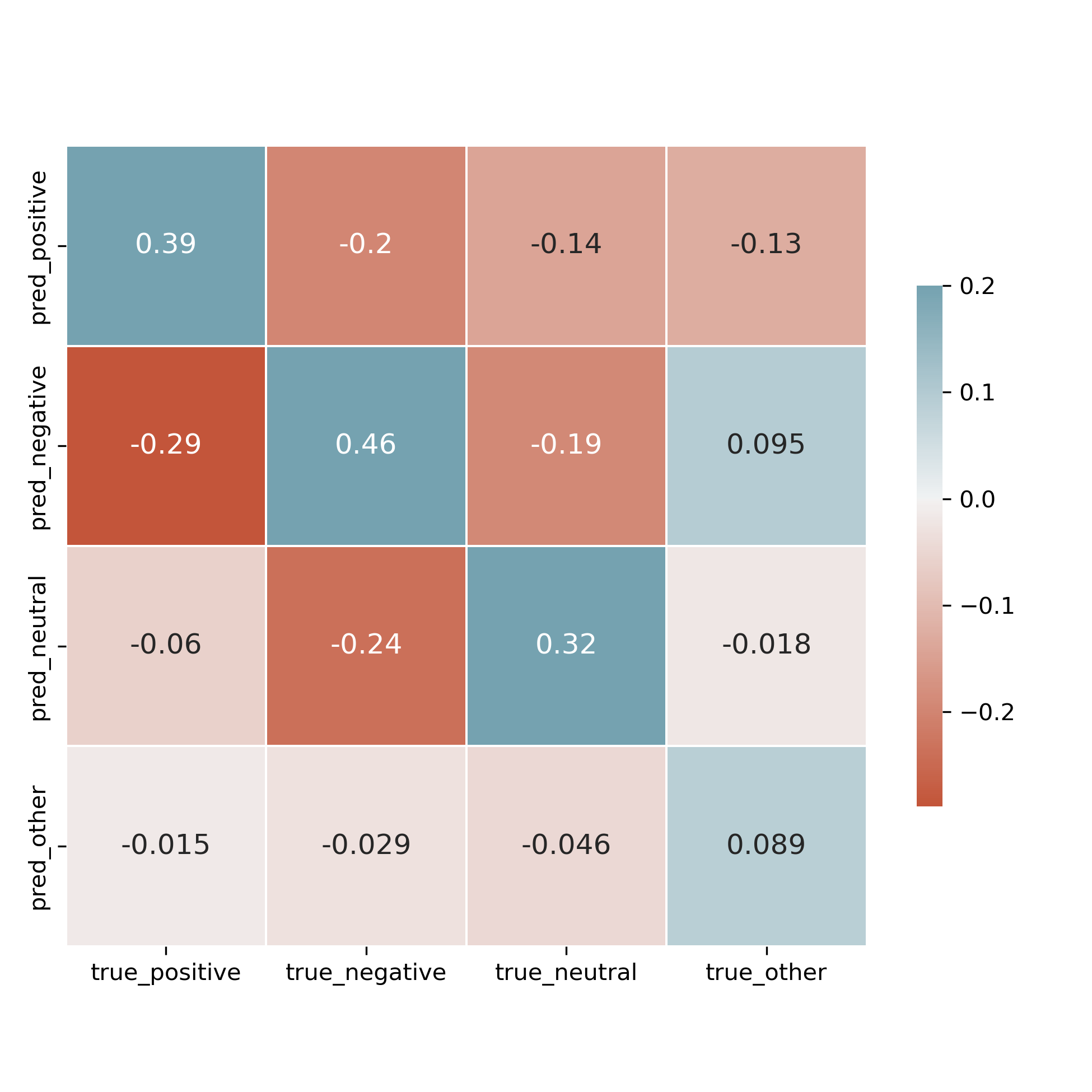
实验结果表明,ROBBIE框架在偏见和毒性评估方面显著提升了模型的透明度。通过对比不同模型,发现新提出的数据集在识别偏见方面的有效性提高了约20%,为未来的研究提供了重要的基准。
🎯 应用场景
ROBBIE框架的潜在应用领域包括自然语言处理、社交媒体内容审核和自动化客服等。通过提供对生成语言模型偏见的深入分析,ROBBIE能够帮助开发者和研究人员在实际应用中更好地识别和缓解潜在的社会偏见,从而提升模型的公平性和社会责任感。
📄 摘要(原文)
As generative large language models (LLMs) grow more performant and prevalent, we must develop comprehensive enough tools to measure and improve their fairness. Different prompt-based datasets can be used to measure social bias across multiple text domains and demographic axes, meaning that testing LLMs on more datasets can potentially help us characterize their biases more fully, and better ensure equal and equitable treatment of marginalized demographic groups. In this work, our focus is two-fold: (1) Benchmarking: a comparison of 6 different prompt-based bias and toxicity metrics across 12 demographic axes and 5 families of generative LLMs. Out of those 6 metrics, AdvPromptSet and HolisticBiasR are novel datasets proposed in the paper. The comparison of those benchmarks gives us insights about the bias and toxicity of the compared models. Therefore, we explore the frequency of demographic terms in common LLM pre-training corpora and how this may relate to model biases. (2) Mitigation: we conduct a comprehensive study of how well 3 bias/toxicity mitigation techniques perform across our suite of measurements. ROBBIE aims to provide insights for practitioners while deploying a model, emphasizing the need to not only measure potential harms, but also understand how they arise by characterizing the data, mitigate harms once found, and balance any trade-offs. We open-source our analysis code in hopes of encouraging broader measurements of bias in future LLMs.