Structured Chemistry Reasoning with Large Language Models
作者: Siru Ouyang, Zhuosheng Zhang, Bing Yan, Xuan Liu, Yejin Choi, Jiawei Han, Lianhui Qin
分类: cs.CL, cs.AI
发布日期: 2023-11-16 (更新: 2024-02-09)
备注: Work in progress
🔗 代码/项目: GITHUB
💡 一句话要点
提出StructChem以提升大语言模型在化学推理中的能力
🎯 匹配领域: 支柱九:具身大模型 (Embodied Foundation Models)
关键词: 大型语言模型 化学推理 StructChem 知识提取 逐步推理 科学研究 模型优化
📋 核心要点
- 现有的大语言模型在处理复杂化学推理时常常出现错误,主要由于缺乏有效的推理结构。
- 论文提出StructChem作为一种提示策略,旨在为LLMs提供更好的推理指导,从而提升其化学推理能力。
- 实验结果显示,StructChem在多个化学领域显著提升了GPT-4的性能,最高可达30%的提升幅度。
📝 摘要(中文)
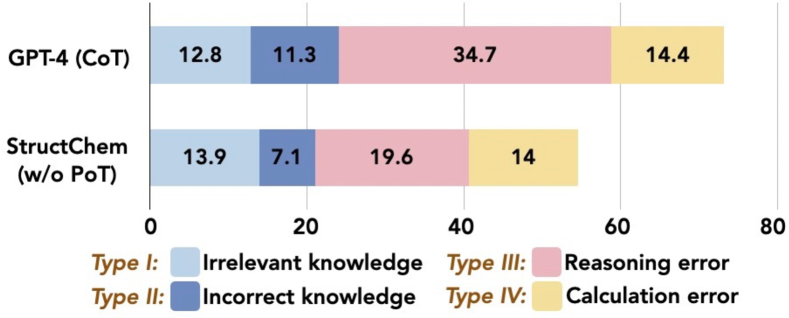
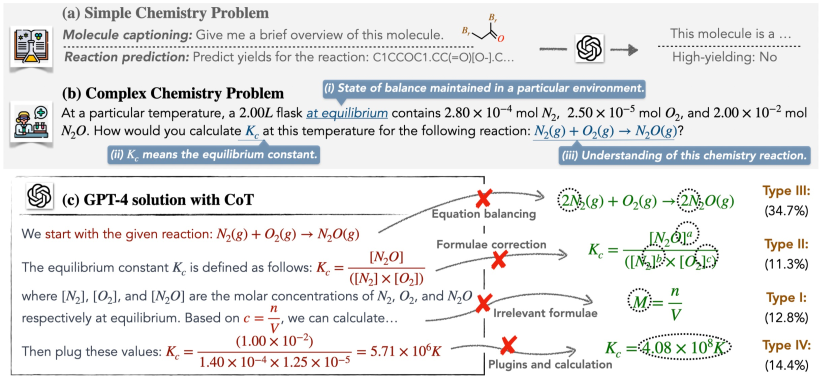
大型语言模型(LLMs)在多个领域表现出色,但在复杂科学推理,尤其是化学领域却面临挑战。与以往研究中处理的简单化学任务不同,复杂化学问题不仅需要广泛的知识和精确的计算,还需对不同概念的动态交互进行组合推理。我们的研究表明,即使是先进的LLMs如GPT-4也容易出错,错误往往源于缺乏有效的推理结构。基于此,我们提出了StructChem,这是一种简单而有效的提示策略,能够为LLMs提供所需的指导,显著提升其化学推理能力。通过在量子化学、力学、物理化学和动力学四个领域的测试,StructChem使GPT-4的性能提升高达30%。
🔬 方法详解
问题定义:本论文旨在解决大型语言模型在复杂化学推理中的不足,现有方法往往无法有效引导模型进行准确的知识提取和推理。
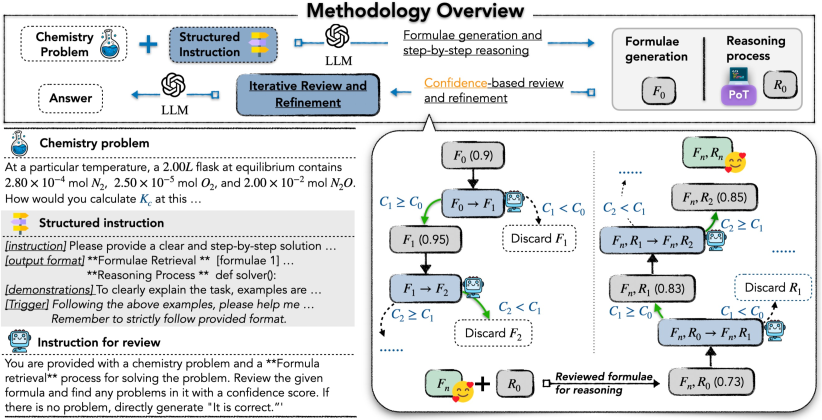
核心思路:通过引入StructChem提示策略,为LLMs提供结构化的推理指导,使其能够更好地进行逐步推理和结果迭代优化。
技术框架:整体架构包括输入提示、知识提取、逐步推理和结果优化四个主要模块。首先,输入提示为模型提供必要的上下文信息;其次,模型提取相关知识并进行初步推理;然后,通过逐步推理和迭代优化,提升结果的准确性。
关键创新:StructChem的最大创新在于其提供了一种有效的推理结构,帮助LLMs在复杂科学问题中更好地整合和应用知识,这与以往的简单任务处理方法有本质区别。
关键设计:在设计上,StructChem采用了特定的提示格式和参数设置,以确保模型能够在推理过程中有效地利用已有知识,并通过损失函数优化推理结果的准确性。具体的网络结构和参数设置在实验中进行了详细调优。
🖼️ 关键图片
📊 实验亮点
实验结果表明,StructChem在四个化学领域的测试中显著提升了GPT-4的性能,最高可达30%的提升幅度。这一成果不仅验证了方法的有效性,也揭示了LLMs在科学推理中的独特挑战。
🎯 应用场景
该研究的潜在应用领域包括化学教育、药物发现和材料科学等。通过提升LLMs在化学推理中的能力,StructChem能够帮助研究人员和学生更好地理解复杂化学概念,促进科学研究的进展。未来,该方法可能会扩展到其他科学领域,推动跨学科的研究与应用。
📄 摘要(原文)
Large Language Models (LLMs) excel in diverse areas, yet struggle with complex scientific reasoning, especially in the field of chemistry. Different from the simple chemistry tasks (e.g., molecule classification) addressed in previous studies, complex chemistry problems require not only vast knowledge and precise calculation, but also compositional reasoning about rich dynamic interactions of different concepts (e.g., temperature changes). Our study shows that even advanced LLMs, like GPT-4, can fail easily in different ways. Interestingly, the errors often stem not from a lack of domain knowledge within the LLMs, but rather from the absence of an effective reasoning structure that guides the LLMs to elicit the right knowledge, incorporate the knowledge in step-by-step reasoning, and iteratively refine results for further improved quality. On this basis, we introduce StructChem, a simple yet effective prompting strategy that offers the desired guidance and substantially boosts the LLMs' chemical reasoning capability. Testing across four chemistry areas -- quantum chemistry, mechanics, physical chemistry, and kinetics -- StructChem substantially enhances GPT-4's performance, with up to 30\% peak improvement. Our analysis also underscores the unique difficulties of precise grounded reasoning in science with LLMs, highlighting a need for more research in this area. Code is available at \url{https://github.com/ozyyshr/StructChem}.