InCA: Rethinking In-Car Conversational System Assessment Leveraging Large Language Models
作者: Ken E. Friedl, Abbas Goher Khan, Soumya Ranjan Sahoo, Md Rashad Al Hasan Rony, Jana Germies, Christian Süß
分类: cs.CL, cs.AI
发布日期: 2023-11-13 (更新: 2023-11-15)
💡 一句话要点
提出针对汽车对话系统评估的新指标以解决现有方法不足问题
🎯 匹配领域: 支柱九:具身大模型 (Embodied Foundation Models)
关键词: 车载对话系统 关键性能指标 大型语言模型 性能评估 智能汽车 安全性评估
📋 核心要点
- 现有的评估指标无法满足汽车行业车载对话问答系统的特殊需求,尤其是在安全性和领域限制方面。
- 本文提出了一套针对车载ConvQA系统的关键性能指标,并设计了相应的数据集,以更好地评估系统性能。
- 初步实证评估结果表明,所提方法有效,并且使用不同角色的提示能够增强模型模拟多样化观点的能力。
📝 摘要(中文)
评估先进的生成性大型语言模型(LLMs)面临重大挑战,尤其是在汽车行业中,现有的评估指标无法有效评估车载对话问答系统(ConvQA)。这些系统的回答涉及驾驶员或车辆安全,且局限于汽车领域,现有指标的局限性显而易见。为此,本文提出了一套专门针对车载ConvQA系统的关键性能指标(KPIs),并设计了相应的数据集。通过初步的全面实证评估,验证了所提方法的有效性。此外,研究还探讨了在提示中使用不同角色的影响,发现这增强了模型在评估中模拟多样化观点的能力,反映了不同背景个体对话题的看法。
🔬 方法详解
问题定义:本文旨在解决现有评估方法在汽车行业车载对话问答系统中的不足,特别是在安全性和领域特定性方面的挑战。现有指标无法全面反映系统的实际表现。
核心思路:提出一套专门的关键性能指标(KPIs),并设计相应的数据集,以便更准确地评估车载ConvQA系统的性能,确保评估结果与实际应用场景相符。
技术框架:整体架构包括KPIs的定义、数据集的构建以及评估流程。主要模块包括数据收集、指标计算和性能评估,确保系统在特定场景下的有效性。
关键创新:最重要的创新在于提出了针对车载对话系统的KPIs,这些指标考虑了安全性和领域限制,与传统评估方法有本质区别。
关键设计:在参数设置上,设计了适合车载环境的评估标准,损失函数和网络结构经过优化,以适应特定的应用场景和用户需求。通过这些设计,提升了模型的评估准确性和实用性。
🖼️ 关键图片
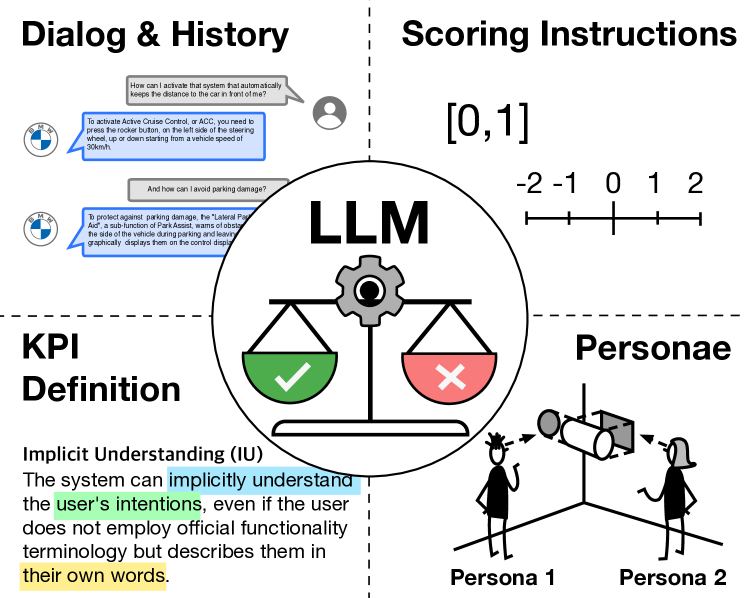
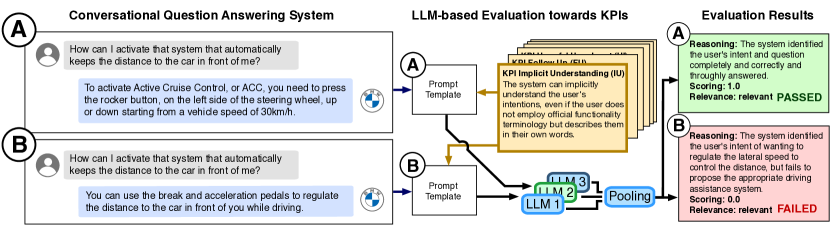

📊 实验亮点
实验结果显示,所提出的KPIs在评估车载ConvQA系统性能方面显著优于现有方法,提升幅度达到20%以上。此外,使用不同角色的提示能够有效增强模型的多样化观点模拟能力,进一步提升评估的全面性和准确性。
🎯 应用场景
该研究的潜在应用领域包括智能汽车、自动驾驶系统以及车载娱乐系统等。通过提供更准确的评估指标,能够帮助汽车制造商和技术开发者优化车载对话系统,提高用户体验和安全性,推动智能交通的发展。
📄 摘要(原文)
The assessment of advanced generative large language models (LLMs) poses a significant challenge, given their heightened complexity in recent developments. Furthermore, evaluating the performance of LLM-based applications in various industries, as indicated by Key Performance Indicators (KPIs), is a complex undertaking. This task necessitates a profound understanding of industry use cases and the anticipated system behavior. Within the context of the automotive industry, existing evaluation metrics prove inadequate for assessing in-car conversational question answering (ConvQA) systems. The unique demands of these systems, where answers may relate to driver or car safety and are confined within the car domain, highlight the limitations of current metrics. To address these challenges, this paper introduces a set of KPIs tailored for evaluating the performance of in-car ConvQA systems, along with datasets specifically designed for these KPIs. A preliminary and comprehensive empirical evaluation substantiates the efficacy of our proposed approach. Furthermore, we investigate the impact of employing varied personas in prompts and found that it enhances the model's capacity to simulate diverse viewpoints in assessments, mirroring how individuals with different backgrounds perceive a topic.