Exploring Recommendation Capabilities of GPT-4V(ision): A Preliminary Case Study
作者: Peilin Zhou, Meng Cao, You-Liang Huang, Qichen Ye, Peiyan Zhang, Junling Liu, Yueqi Xie, Yining Hua, Jaeboum Kim
分类: cs.IR, cs.CL
发布日期: 2023-11-07
备注: In Progress
🔗 代码/项目: GITHUB
💡 一句话要点
探索GPT-4V在推荐任务中的应用潜力
🎯 匹配领域: 支柱九:具身大模型 (Embodied Foundation Models)
关键词: 多模态模型 推荐系统 视觉辅助 GPT-4V 零-shot学习 用户体验 个性化推荐
📋 核心要点
- 现有的推荐系统在处理视觉信息时存在局限,未能充分利用多模态模型的潜力。
- 本文通过构建多领域的测试样本,评估GPT-4V在推荐任务中的表现,探索其应用潜力。
- 实验结果显示,GPT-4V在零-shot推荐能力上表现优异,但也存在响应相似性的问题。
📝 摘要(中文)
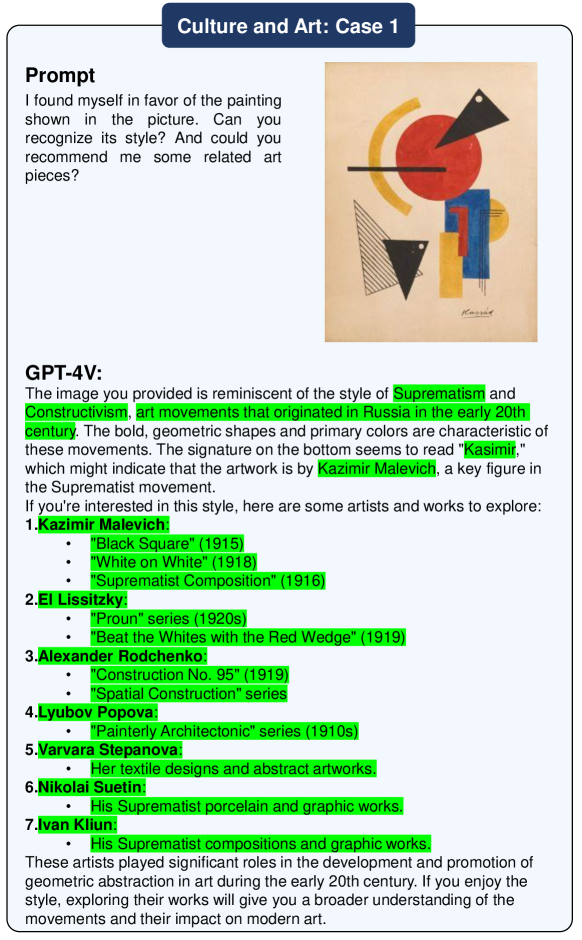
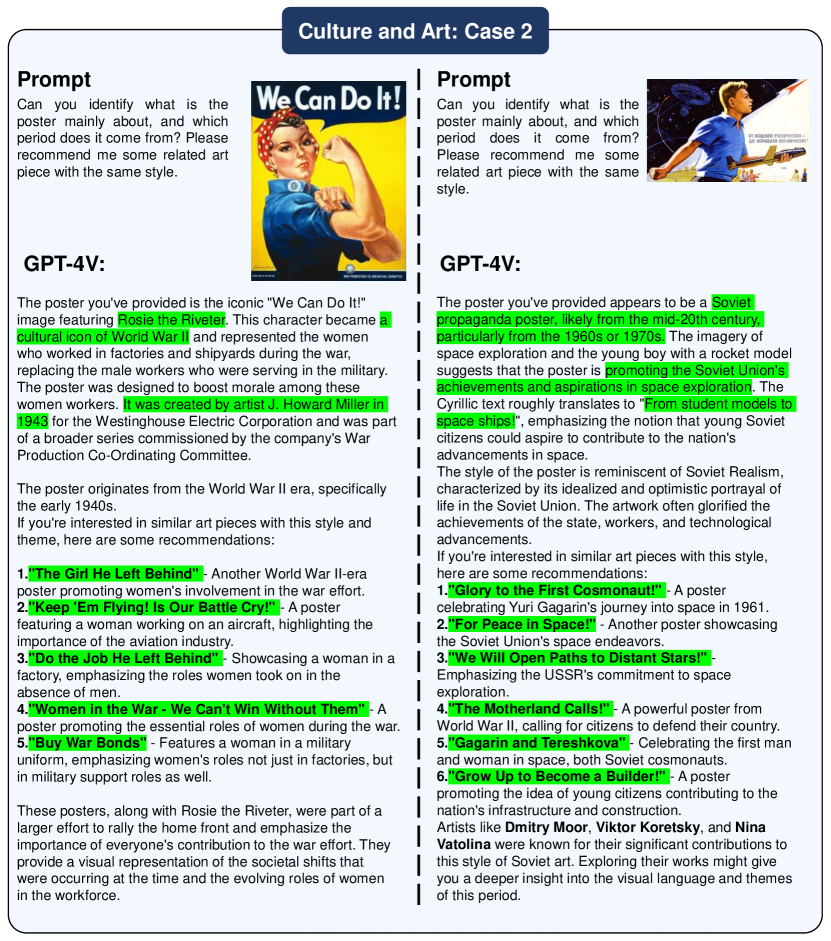
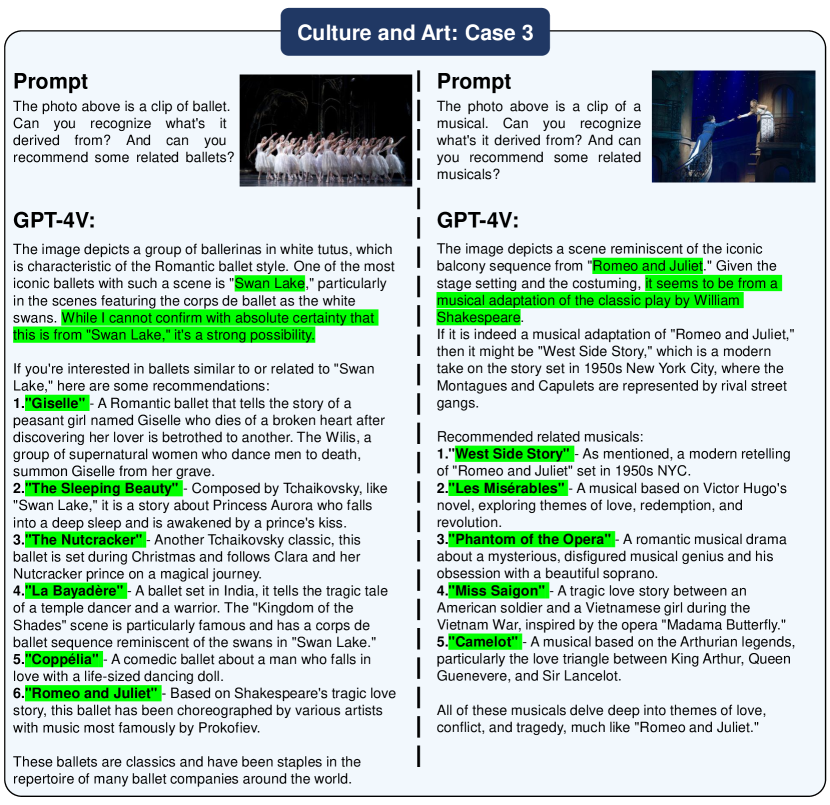
大型多模态模型(LMMs)在视觉和语言任务中表现出色,但其在视觉辅助推荐任务中的应用尚未被充分探索。为此,本文通过对OpenAI最近发布的LMM——GPT-4V(ision)进行初步案例研究,构建了一系列跨多个领域的定性测试样本,以评估其在推荐场景中的响应质量。评估结果表明,GPT-4V在多个领域展现出显著的零-shot推荐能力,得益于其强大的视觉-文本理解能力和广泛的知识储备。然而,研究也发现GPT-4V在推荐中存在一些局限性,例如在面对相似输入时倾向于给出相似的响应。本文最后讨论了利用GPT-4V进行推荐的挑战和研究机会,旨在激励对下一代多模态生成推荐模型的进一步研究,以提升用户体验,提供更大的多样性和互动性。
🔬 方法详解
问题定义:本文旨在解决大型多模态模型在推荐任务中的应用不足,现有方法未能充分利用视觉信息进行个性化推荐。
核心思路:通过构建多领域的定性测试样本,评估GPT-4V的推荐能力,探索其在推荐场景中的实际应用潜力。
技术框架:研究采用了GPT-4V模型,结合视觉和文本输入,构建了多样化的测试样本,评估其在不同领域的推荐效果。
关键创新:本文首次系统性地评估了GPT-4V在推荐任务中的能力,揭示了其在视觉辅助推荐中的潜力与局限性,与传统推荐系统相比,提供了新的视角。
关键设计:在实验中,使用了多种领域的样本,评估了模型的响应质量,关注其在相似输入下的响应多样性,提出了改进建议。
🖼️ 关键图片
📊 实验亮点
实验结果显示,GPT-4V在多个领域的零-shot推荐能力显著,能够提供高质量的推荐响应。然而,模型在处理相似输入时的响应相似性问题也被发现,提示未来需要进一步优化模型的多样性表现。
🎯 应用场景
该研究的潜在应用领域包括电子商务、社交媒体和内容推荐等,能够通过视觉信息提升用户的个性化推荐体验。未来,基于GPT-4V的推荐系统有望实现更高的用户满意度和互动性,推动多模态推荐技术的发展。
📄 摘要(原文)
Large Multimodal Models (LMMs) have demonstrated impressive performance across various vision and language tasks, yet their potential applications in recommendation tasks with visual assistance remain unexplored. To bridge this gap, we present a preliminary case study investigating the recommendation capabilities of GPT-4V(ison), a recently released LMM by OpenAI. We construct a series of qualitative test samples spanning multiple domains and employ these samples to assess the quality of GPT-4V's responses within recommendation scenarios. Evaluation results on these test samples prove that GPT-4V has remarkable zero-shot recommendation abilities across diverse domains, thanks to its robust visual-text comprehension capabilities and extensive general knowledge. However, we have also identified some limitations in using GPT-4V for recommendations, including a tendency to provide similar responses when given similar inputs. This report concludes with an in-depth discussion of the challenges and research opportunities associated with utilizing GPT-4V in recommendation scenarios. Our objective is to explore the potential of extending LMMs from vision and language tasks to recommendation tasks. We hope to inspire further research into next-generation multimodal generative recommendation models, which can enhance user experiences by offering greater diversity and interactivity. All images and prompts used in this report will be accessible at https://github.com/PALIN2018/Evaluate_GPT-4V_Rec.