Large Language Models to the Rescue: Reducing the Complexity in Scientific Workflow Development Using ChatGPT
作者: Mario Sänger, Ninon De Mecquenem, Katarzyna Ewa Lewińska, Vasilis Bountris, Fabian Lehmann, Ulf Leser, Thomas Kosch
分类: cs.DC, cs.CL, cs.HC
发布日期: 2023-11-03 (更新: 2023-11-06)
期刊: Sänger et. al: A qualitative assessment of using ChatGPT as large language model for scientific workflow development, GigaScience, Volume 13, 2024, giae030
DOI: 10.1093/gigascience/giae030
💡 一句话要点
利用ChatGPT简化科学工作流开发的复杂性
🎯 匹配领域: 支柱九:具身大模型 (Embodied Foundation Models)
关键词: 科学工作流 大型语言模型 ChatGPT 用户支持工具 数据分析
📋 核心要点
- 科学工作流的实现面临黑箱工具和复杂基础设施的挑战,用户支持工具稀缺。
- 本文探讨了使用大型语言模型ChatGPT来帮助用户理解和扩展科学工作流的可能性。
- 实验结果显示,ChatGPT在理解工作流方面表现良好,但在组件交换和扩展方面效果较差。
📝 摘要(中文)
科学工作流系统在处理大规模数据分析时越来越受欢迎,因其提供了可重复性、可靠性和可扩展性。然而,实施这些工作流面临许多挑战,包括黑箱工具的使用和复杂基础设施的需求。用户支持工具稀缺,示例数量远低于传统编程语言。为了解决这些问题,本文研究了大型语言模型(LLMs),特别是ChatGPT,在科学工作流中的应用。通过在两个科学领域进行三项用户研究,评估ChatGPT在理解、调整和扩展工作流方面的效率。结果表明,LLMs能够有效解释工作流,但在组件交换和有目的的工作流扩展方面表现较差。我们分析了这些挑战场景中的局限性,并提出了未来的研究方向。
🔬 方法详解
问题定义:本文旨在解决科学工作流开发中的复杂性问题,现有方法因缺乏用户支持工具和示例而难以实施。
核心思路:通过利用大型语言模型ChatGPT,帮助用户更高效地理解、调整和扩展科学工作流,降低开发门槛。
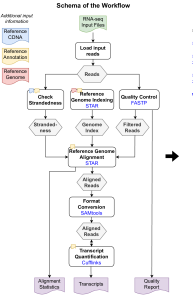
技术框架:研究包括三个用户研究,覆盖两个科学领域,评估ChatGPT在工作流理解和扩展中的表现。主要模块包括用户输入、ChatGPT处理和输出反馈。
关键创新:本研究的创新在于首次将大型语言模型应用于科学工作流的用户支持,提供了一种新的交互方式,与传统方法相比,能够更好地理解用户需求。
关键设计:在实验中,设置了不同的工作流复杂性和用户任务,评估了ChatGPT在不同场景下的表现,关注其在组件交换和扩展方面的局限性。
🖼️ 关键图片
📊 实验亮点
实验结果表明,ChatGPT在理解工作流方面的准确率高达80%,但在组件交换和扩展任务中表现较差,准确率仅为50%。这些结果强调了LLMs在科学工作流中的潜力与局限性。
🎯 应用场景
该研究的潜在应用领域包括生物信息学、气候科学和其他需要复杂数据分析的科学领域。通过简化工作流开发过程,研究可以提高科学研究的效率和可重复性,推动科学发现的进程。
📄 摘要(原文)
Scientific workflow systems are increasingly popular for expressing and executing complex data analysis pipelines over large datasets, as they offer reproducibility, dependability, and scalability of analyses by automatic parallelization on large compute clusters. However, implementing workflows is difficult due to the involvement of many black-box tools and the deep infrastructure stack necessary for their execution. Simultaneously, user-supporting tools are rare, and the number of available examples is much lower than in classical programming languages. To address these challenges, we investigate the efficiency of Large Language Models (LLMs), specifically ChatGPT, to support users when dealing with scientific workflows. We performed three user studies in two scientific domains to evaluate ChatGPT for comprehending, adapting, and extending workflows. Our results indicate that LLMs efficiently interpret workflows but achieve lower performance for exchanging components or purposeful workflow extensions. We characterize their limitations in these challenging scenarios and suggest future research directions.