From Text to Structure: Using Large Language Models to Support the Development of Legal Expert Systems
作者: Samyar Janatian, Hannes Westermann, Jinzhe Tan, Jaromir Savelka, Karim Benyekhlef
分类: cs.CL, cs.AI, cs.HC
发布日期: 2023-11-01
备注: To be published in the proceedings of the 36th International Conference on Legal Knowledge and Information Systems (JURIX 2023). Code and prompt available at https://github.com/samyarj/JCAPG-JURIX2023
💡 一句话要点
利用大型语言模型支持法律专家系统的开发
🎯 匹配领域: 支柱九:具身大模型 (Embodied Foundation Models)
关键词: 法律专家系统 大型语言模型 结构化表示 自动化法律服务 法律文本处理
📋 核心要点
- 现有方法在将立法文本转化为结构化表示时耗时且效率低下,成为法律专家系统开发的瓶颈。
- 论文提出利用大型语言模型自动提取立法的结构化表示,旨在提高开发效率并降低成本。
- 实验结果显示,60%的自动生成路径在质量上与手动创建的路径相当或更优,验证了方法的有效性。
📝 摘要(中文)
将立法文本编码为正式表示是人工智能与法律领域中多个任务的重要前提。例如,基于规则的专家系统可以帮助普通人理解立法如何适用于他们,并提供有用的背景和信息。然而,分析立法及其他来源并将其编码为所需的正式表示的过程可能耗时且成为此类系统开发的瓶颈。本文研究了大型语言模型(如GPT-4)在自动提取立法结构化表示方面的能力。我们使用LLM根据JusticeBot方法论创建法律决策支持系统的路径,评估这些路径并与手动创建的路径进行比较。结果表明,60%的生成路径在盲比较中被评为等同或优于手动创建的路径。这一方法表明,利用LLM的能力可以减轻基于符号方法的透明和可解释系统的开发成本。
🔬 方法详解
问题定义:本文旨在解决将立法文本有效编码为结构化表示的挑战,现有方法通常耗时且效率低下,限制了法律专家系统的开发。
核心思路:通过利用大型语言模型(如GPT-4),自动提取和生成立法的结构化表示,从而简化编码过程,提升开发效率。
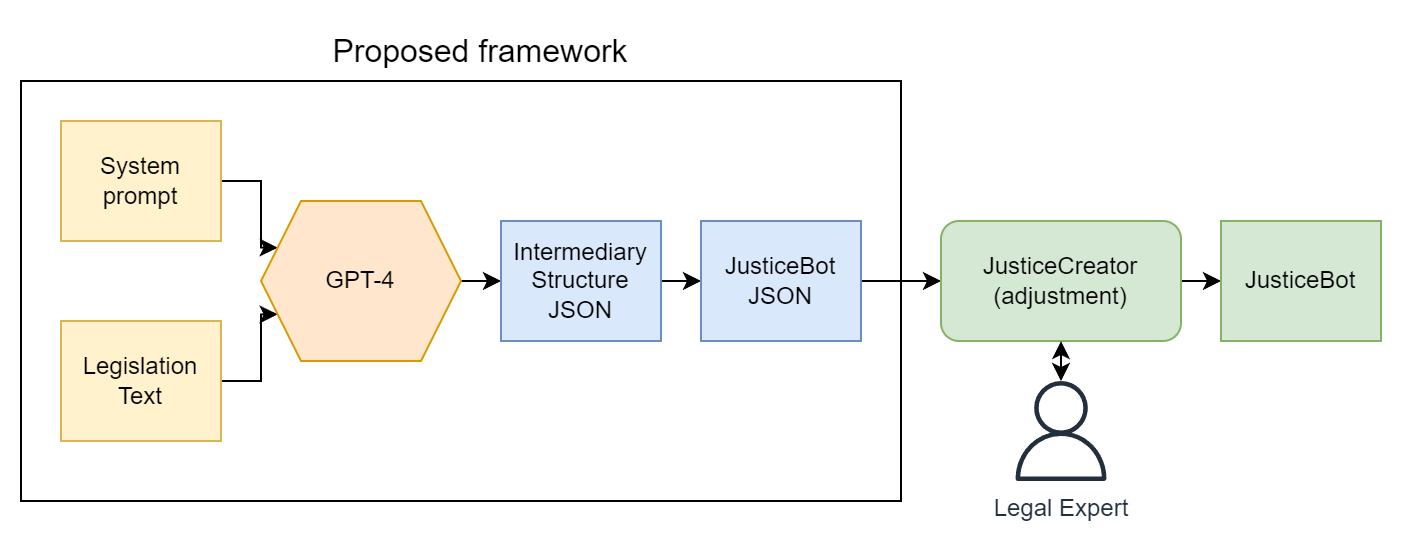
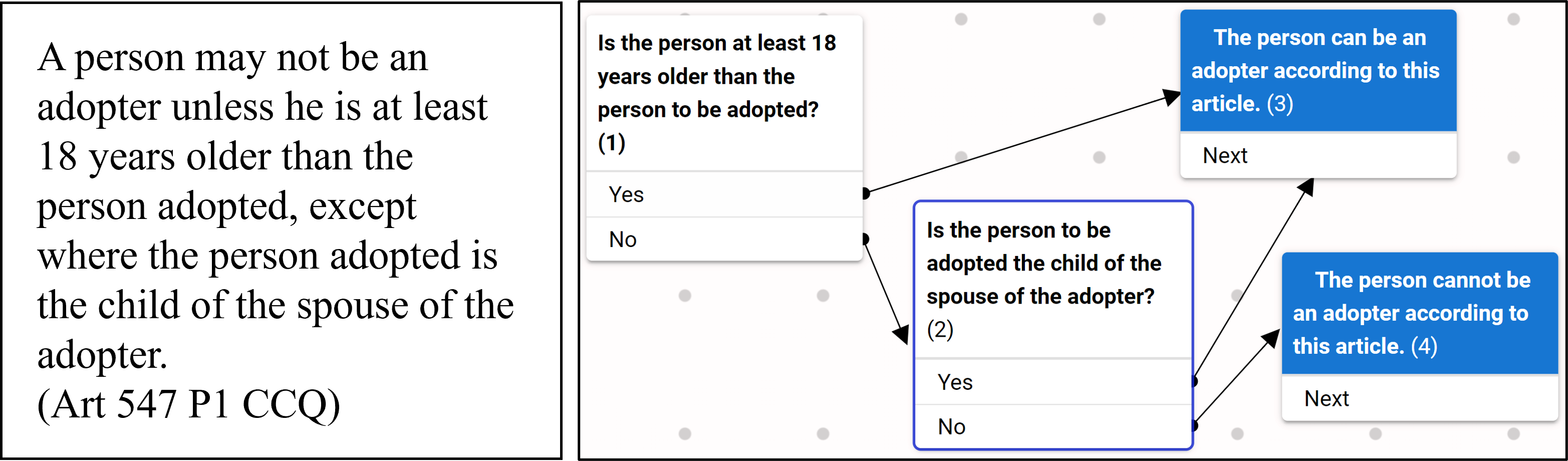
技术框架:整体架构包括数据输入(立法文本)、LLM处理模块(提取结构化信息)、路径生成模块(根据JusticeBot方法论创建路径)以及评估模块(比较生成路径与手动路径)。
关键创新:本研究的创新在于将大型语言模型应用于法律文本的结构化表示生成,显著提高了路径生成的效率和质量,相较于传统手动编码方法具有明显优势。
关键设计:在模型训练和路径生成过程中,采用了特定的参数设置和损失函数,以确保生成路径的准确性和可解释性。
🖼️ 关键图片
📊 实验亮点
实验结果显示,60%的自动生成路径在盲比较中被评为等同或优于手动创建的路径,表明该方法在结构化表示生成方面具有显著的有效性和潜力,能够有效降低法律专家系统的开发成本。
🎯 应用场景
该研究的潜在应用领域包括法律咨询、法律教育和自动化法律服务等。通过提高法律文本的结构化处理效率,能够帮助普通人更好地理解法律条款,促进法律信息的透明化和可获取性,未来可能对法律行业产生深远影响。
📄 摘要(原文)
Encoding legislative text in a formal representation is an important prerequisite to different tasks in the field of AI & Law. For example, rule-based expert systems focused on legislation can support laypeople in understanding how legislation applies to them and provide them with helpful context and information. However, the process of analyzing legislation and other sources to encode it in the desired formal representation can be time-consuming and represents a bottleneck in the development of such systems. Here, we investigate to what degree large language models (LLMs), such as GPT-4, are able to automatically extract structured representations from legislation. We use LLMs to create pathways from legislation, according to the JusticeBot methodology for legal decision support systems, evaluate the pathways and compare them to manually created pathways. The results are promising, with 60% of generated pathways being rated as equivalent or better than manually created ones in a blind comparison. The approach suggests a promising path to leverage the capabilities of LLMs to ease the costly development of systems based on symbolic approaches that are transparent and explainable.