A Survey on Human-AI Collaboration with Large Foundation Models
作者: Vanshika Vats, Marzia Binta Nizam, Minghao Liu, Ziyuan Wang, Richard Ho, Mohnish Sai Prasad, Vincent Titterton, Sai Venkat Malreddy, Riya Aggarwal, Yanwen Xu, Lei Ding, Jay Mehta, Nathan Grinnell, Li Liu, Sijia Zhong, Devanathan Nallur Gandamani, Xinyi Tang, Rohan Ghosalkar, Celeste Shen, Rachel Shen, Nafisa Hussain, Kesav Ravichandran, James Davis
分类: cs.AI, cs.CL, cs.HC
发布日期: 2024-03-07 (更新: 2025-09-02)
备注: Topic and scope refinement
💡 一句话要点
综述人机协作与大型基础模型的整合以应对决策挑战
🎯 匹配领域: 支柱九:具身大模型 (Embodied Foundation Models)
关键词: 人机协作 大型基础模型 伦理框架 高风险领域 人本设计 模型开发 决策支持
📋 核心要点
- 核心问题:现有的HAI系统在安全性、公平性和控制方面面临持续挑战,限制了其潜力的实现。
- 方法要点:论文提出通过人类引导的模型开发和协作设计原则,结合伦理与治理框架,来优化HAI系统的设计与应用。
- 实验或效果:通过识别关键开放挑战,论文为未来研究提供了方向,强调人本设计在HAI系统成功中的重要性。
📝 摘要(中文)
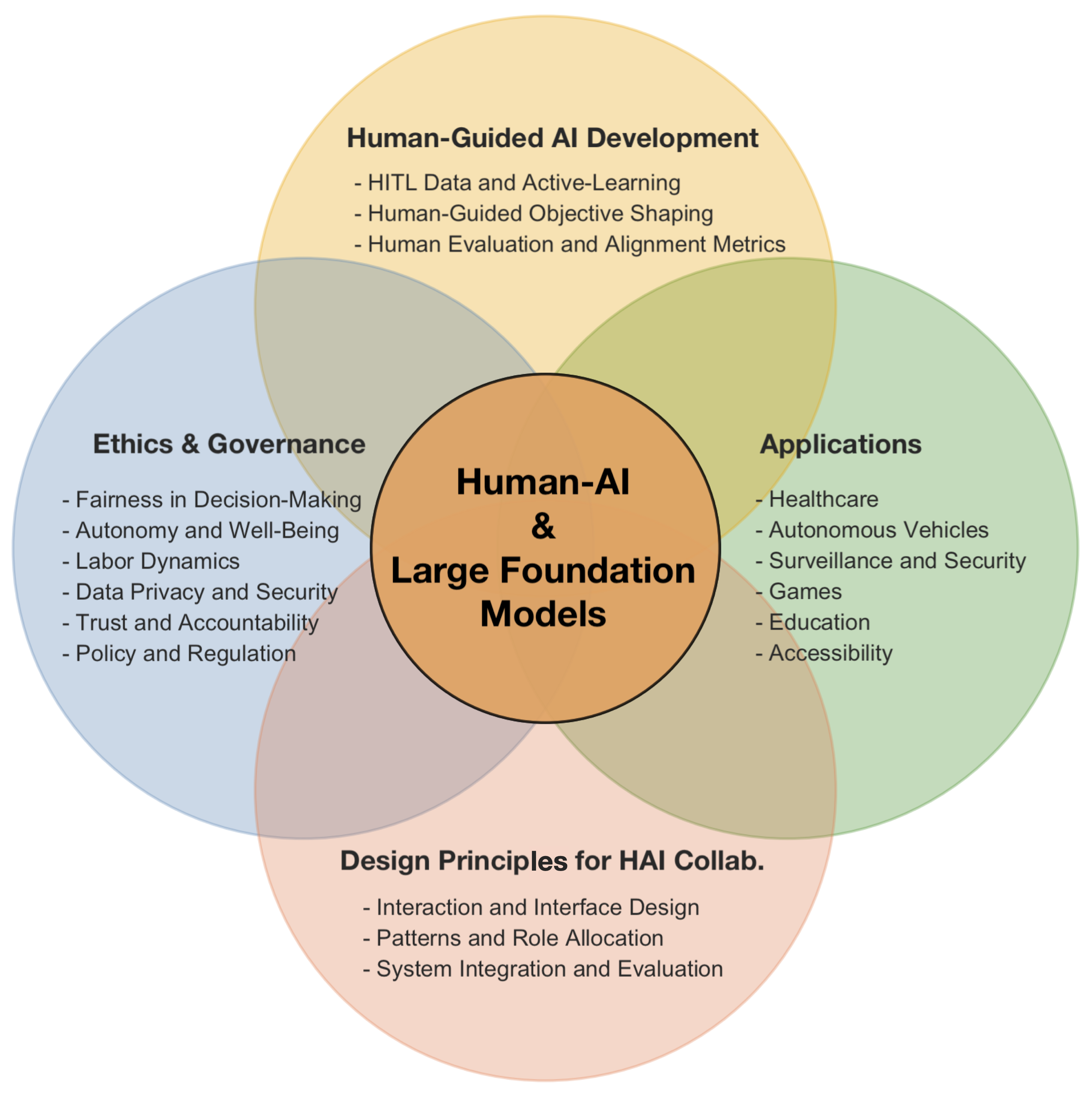
随着人工智能(AI)能力的快速扩展,人机协作(HAI)结合人类智慧与AI系统,已成为推动问题解决和决策过程的重要因素。大型基础模型(LFM)的出现极大地扩展了这一潜力,通过利用海量数据理解和预测复杂模式。然而,负责任地实现这一潜力需要解决与安全、公平和控制相关的持续挑战。本文回顾了LFM与HAI的关键整合,强调了机遇与风险。我们围绕人类引导的模型开发、协作设计原则、伦理与治理框架以及高风险领域的应用四个方面进行分析,表明成功的HAI系统并非更强模型的自动结果,而是经过精心的人本设计的产物。通过识别关键的开放挑战,本综述旨在为当前和未来的研究提供洞见,将LFM的原始力量转化为可靠、可信和对社会有益的合作关系。
🔬 方法详解
问题定义:本文旨在解决人机协作系统在安全、公平和控制方面的挑战,现有方法往往未能充分考虑人类因素,导致系统的可靠性和信任度不足。
核心思路:论文提出通过人类引导的模型开发和协作设计原则,强调人本设计的重要性,以确保HAI系统的有效性和安全性。
技术框架:整体架构包括四个主要模块:人类引导的模型开发、协作设计原则、伦理与治理框架,以及高风险领域的应用。这些模块相互关联,共同促进HAI系统的优化。
关键创新:最重要的技术创新在于强调人本设计在HAI系统中的核心地位,提出的框架与现有方法的本质区别在于更加注重人类因素的整合。
关键设计:在设计过程中,关注关键参数设置和伦理框架的构建,确保模型在实际应用中的公平性和安全性,同时采用适当的损失函数以优化模型性能。
🖼️ 关键图片
📊 实验亮点
论文通过系统性分析,指出成功的HAI系统并非仅依赖于更强的模型,而是需要经过精心的人本设计。通过识别关键开放挑战,提供了未来研究的方向,强调了人机协作在实际应用中的重要性。
🎯 应用场景
该研究的潜在应用领域包括医疗、金融、教育等高风险领域,能够通过优化人机协作提升决策质量和效率。未来,随着HAI系统的不断完善,其在社会各个层面的影响将更加深远,推动各行业的智能化转型。
📄 摘要(原文)
As the capabilities of artificial intelligence (AI) continue to expand rapidly, Human-AI (HAI) Collaboration, combining human intellect and AI systems, has become pivotal for advancing problem-solving and decision-making processes. The advent of Large Foundation Models (LFMs) has greatly expanded its potential, offering unprecedented capabilities by leveraging vast amounts of data to understand and predict complex patterns. At the same time, realizing this potential responsibly requires addressing persistent challenges related to safety, fairness, and control. This paper reviews the crucial integration of LFMs with HAI, highlighting both opportunities and risks. We structure our analysis around four areas: human-guided model development, collaborative design principles, ethical and governance frameworks, and applications in high-stakes domains. Our review shows that successful HAI systems are not the automatic result of stronger models but the product of careful, human-centered design. By identifying key open challenges, this survey aims to give insight into current and future research that turns the raw power of LFMs into partnerships that are reliable, trustworthy, and beneficial to society.