Evaluating and Optimizing Educational Content with Large Language Model Judgments
作者: Joy He-Yueya, Noah D. Goodman, Emma Brunskill
分类: cs.AI, cs.CL
发布日期: 2024-03-05 (更新: 2024-05-06)
备注: 11 pages
💡 一句话要点
利用大型语言模型优化教育内容以提升学习效果
🎯 匹配领域: 支柱九:具身大模型 (Embodied Foundation Models)
📋 核心要点
- 现有的教育材料评估方法通常需要大量的时间和资源,难以快速优化教学内容。
- 本文提出利用大型语言模型作为教育专家,评估和优化教学材料,以提高学习效果。
- 实验结果表明,LM生成的教学材料与人类教师的偏好高度一致,显示出良好的应用潜力。
📝 摘要(中文)
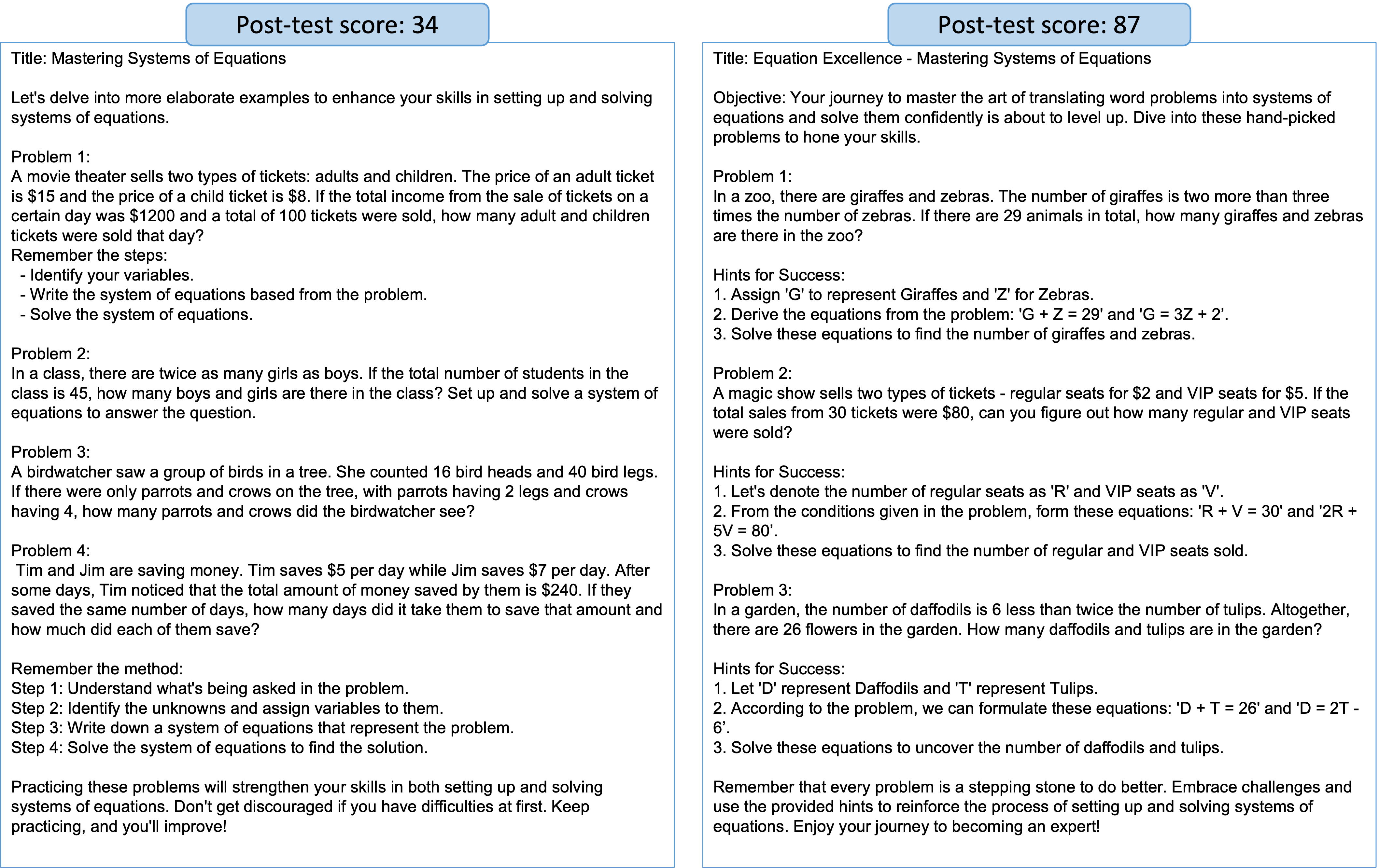
创建有效的教育材料通常需要昂贵且耗时的学生学习成果研究。为克服这一障碍,本文提出使用语言模型(LM)作为教育专家,评估不同教学材料对学习成果的影响。具体而言,我们利用GPT-3.5评估教学材料对不同学生群体的整体效果,发现其能够很好地复制已建立的教育发现,如专业知识逆转效应和变异效应。基于这一发现,我们引入了一种教学优化方法,其中一个LM生成教学材料,另一个LM的判断作为奖励函数。我们应用该方法创建旨在最大化学生学习收益的数学应用题工作表,并发现人类教师对这些LM生成的工作表的评估与LM判断高度一致。最后,我们讨论了人类与LM意见之间的潜在分歧及自动化教学设计的陷阱。
🔬 方法详解
问题定义:本文旨在解决传统教育材料评估方法耗时且成本高的问题,现有方法难以快速适应教学需求。
核心思路:通过使用大型语言模型(如GPT-3.5)作为教育专家,评估不同教学材料的效果,从而优化教学内容。该方法利用LM的判断作为生成新教学材料的奖励函数。
技术框架:整体架构包括两个主要模块:一个LM负责生成教学材料,另一个LM负责评估这些材料的有效性。评估结果用于指导生成过程,形成闭环优化。
关键创新:最重要的创新在于将LM作为教育内容的评估者,能够有效复制已知的教育理论,并在此基础上生成优化的教学材料。这一方法与传统依赖人类评估的方式有本质区别。
关键设计:在模型训练中,设置了特定的奖励函数以反映教育效果,并在生成过程中考虑了不同学生群体的需求,确保生成的材料能够最大化学习收益。
🖼️ 关键图片


📄 摘要(原文)
Creating effective educational materials generally requires expensive and time-consuming studies of student learning outcomes. To overcome this barrier, one idea is to build computational models of student learning and use them to optimize instructional materials. However, it is difficult to model the cognitive processes of learning dynamics. We propose an alternative approach that uses Language Models (LMs) as educational experts to assess the impact of various instructions on learning outcomes. Specifically, we use GPT-3.5 to evaluate the overall effect of instructional materials on different student groups and find that it can replicate well-established educational findings such as the Expertise Reversal Effect and the Variability Effect. This demonstrates the potential of LMs as reliable evaluators of educational content. Building on this insight, we introduce an instruction optimization approach in which one LM generates instructional materials using the judgments of another LM as a reward function. We apply this approach to create math word problem worksheets aimed at maximizing student learning gains. Human teachers' evaluations of these LM-generated worksheets show a significant alignment between the LM judgments and human teacher preferences. We conclude by discussing potential divergences between human and LM opinions and the resulting pitfalls of automating instructional design.